Case study · Hotel technology and guest registration · All CIS countries
EMISFour people now run a platform that registers 29 million hotel guests a year in the CIS, a job that took 25
EMIS registers 29 million hotel guests a year across the CIS, up to about 6,500 a minute at the daily peak, and delivers their personal data to the regulators. It scans documents in seconds, translates at the reception desk, signs digitally and lets guests check themselves in. I designed the whole system, made it secure and cut the team from 25 people to 4 while the product kept growing, with infrastructure costs down by half and uptime above 99.9%. Four people now carry a platform that usually takes a whole department.
- Client
- EMIS
- Product
- Guest registration and hotel services
- Market
- All CIS countries
- Hotels
- 350+, including Four Seasons, Lotte, Hilton and Radisson Collection
- Guests
- 29 million registered a year
- My role
- Fractional CTO
- Team
- 25 → 4 people
- Website
- g1sw.ru
In numbers
- guests registered a year, across every CIS country
- 29M
- people run the whole platform now, and it keeps growing
- 25 → 4
- registrations at the daily check-in peak, held by auto-scaling
- 6,500/min
- hotels rely on EMIS every day, global chains among them
- 350+
- infrastructure cost, with capacity that follows the load
- −50%
- uptime, the daily check-in peak included
- 99.9%+
The product
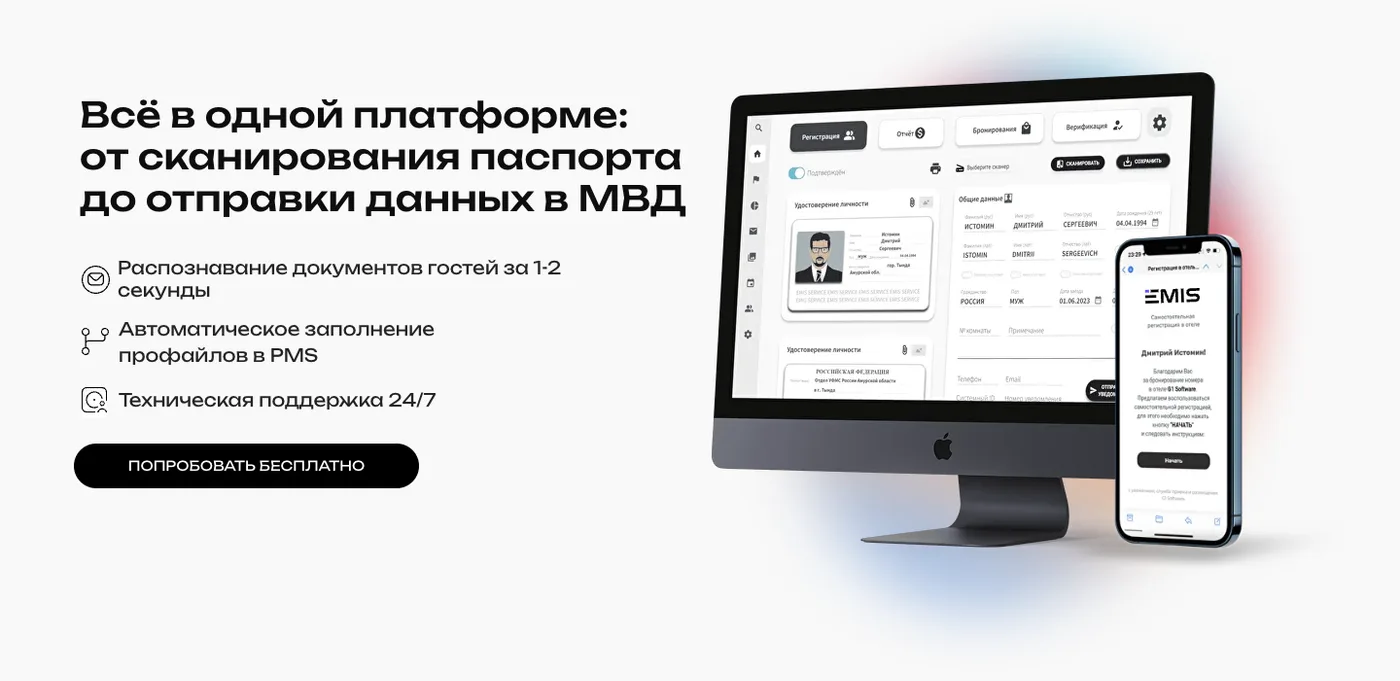
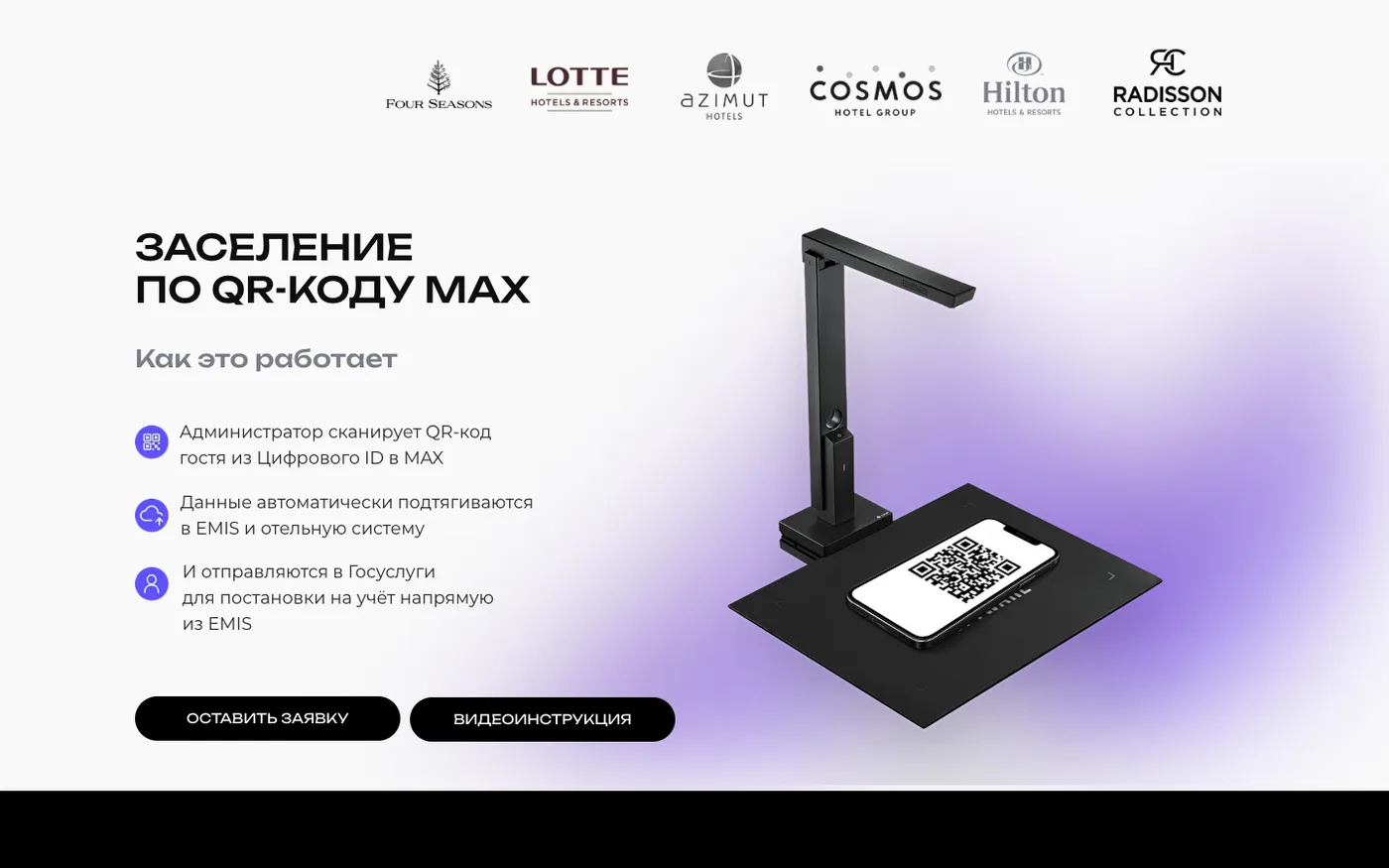
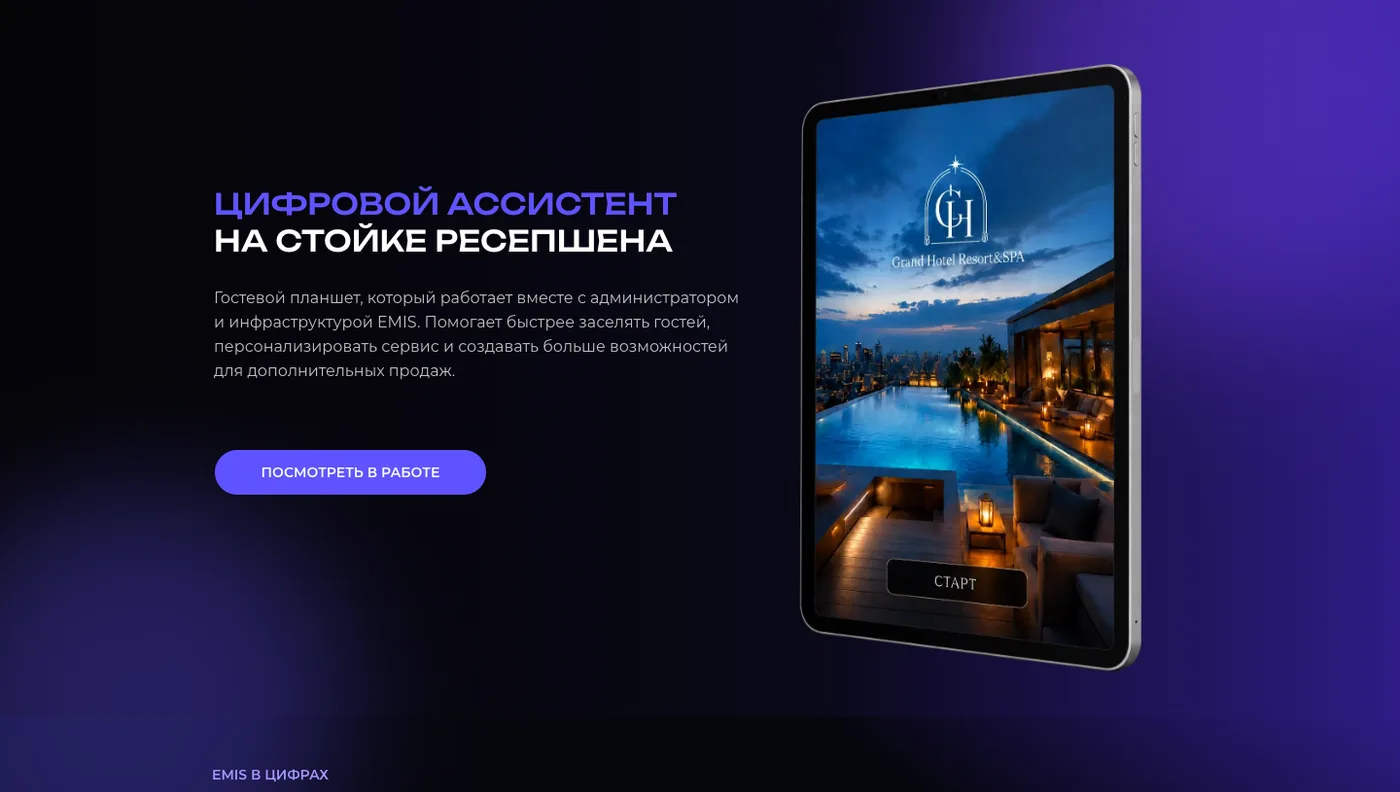
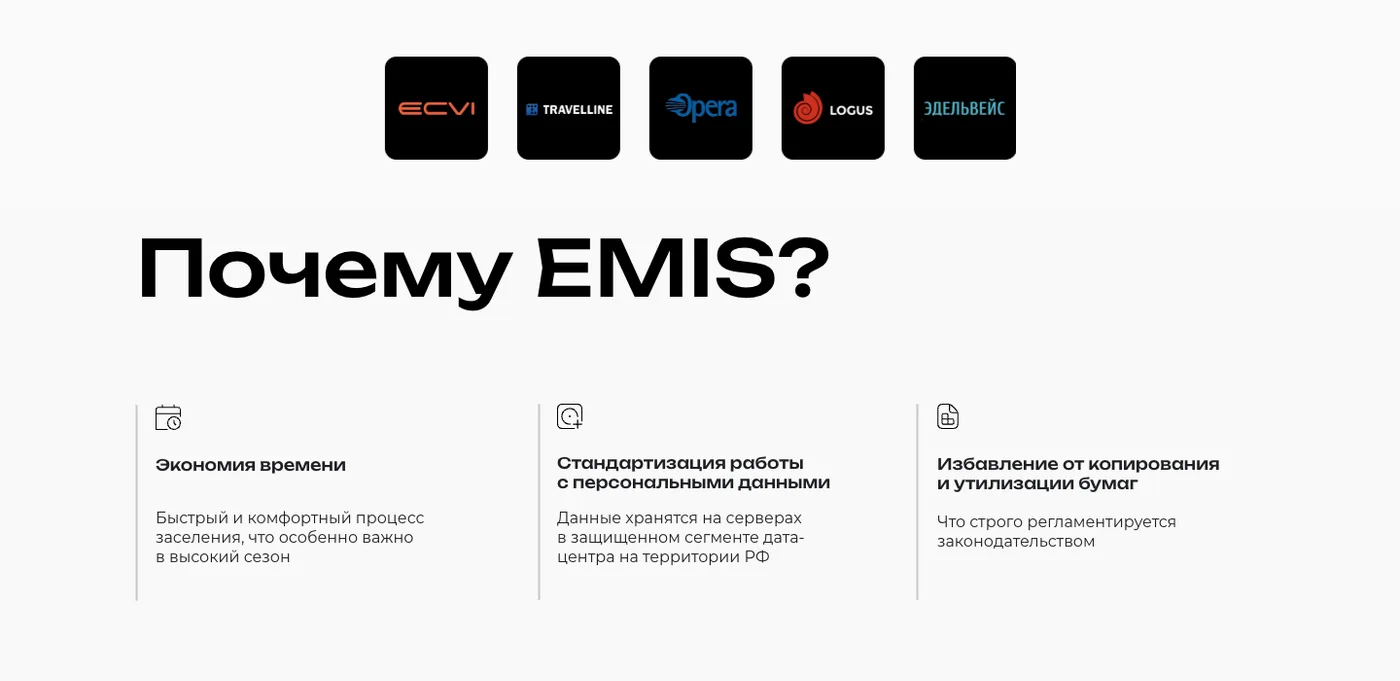
One platform covers everything from the passport scan to the report to the authorities. Guests check in with the QR code of their digital ID, a guest tablet stands at the reception desk, and EMIS connects to the hotel's own systems. Pictures from the product's site, g1sw.ru.
The starting point
EMIS is a large product used by hotels in every CIS country. It delivers guests' personal data to the regulatory authorities, scans documents automatically, translates at the reception desk, integrates with hotel systems, and provides digital signatures, guest IDs and self check-in.
The load is extreme, and it comes with the business: every day around 2 to 3 p.m., when hotels check guests in, a peak arrives that the system has to hold. When I started, 25 people ran the product.
What we did
Designed end to end, then made secure by design
I designed the entire system, then re-architected it to make it secure for real: every service, every integration and every path the personal data travels. The security lives in the architecture, so it does not take a large team to guard it.
Holds 6,500 registrations a minute at the daily check-in peak
The peak arrives every day around 2 to 3 p.m. and reaches about 6,500 registrations a minute, and the system scales automatically when it comes. Capacity follows the load, so guests do not wait at the desk, nobody pays for idle capacity the rest of the day, and infrastructure now costs half of what it did.
The data of 29 million guests a year reaches the regulators every time
The personal data of 29 million guests a year reaches the regulatory authorities reliably, over encrypted channels, so the hotels meet their reporting duty without extra work at the desk.
One product replaces a stack of reception tools
Automatic scanning reads a guest's document in 1 to 2 seconds with no typing at the desk, and translation at the reception desk, digital signatures, guest IDs, self check-in and integrations with hotel systems all work inside the same product, so a hotel runs one system where it would otherwise need several.
Setup in minutes and self-recovering desks, with no site visits
Our own provisioning system sets up every installation automatically, which is how EMIS goes live in a hotel within minutes. A separate agent on each reception computer recovers by itself after a failure, so nobody has to travel to fix a desk.
99.9%+ uptime, and a restore to any point in time
The platform runs at more than 99.9% uptime, and backups support point-in-time recovery, so the data can be restored to any moment and no mistake costs the hotels their records.
25 people down to 4, and the product still growing
I cut the team from 25 people to 4 while the product kept growing. I have worked with these engineers for three years, and they are excellent: four people run a product for a whole region and ship one strong solution after another, output you would expect from a department many times their size.
The result
EMIS registers 29 million guests a year in more than 350 hotels across the CIS and holds peaks of about 6,500 registrations a minute. Four people run it where 25 used to, at half the infrastructure cost and 99.9%+ uptime, and the platform is secure by design and keeps growing.
Full case · PDF
EMIS
Four people now run a platform that registers 29 million hotel guests a year in the CIS, a job that took 25
- 01The architecture after the re-design
- 02How the system holds the 2 to 3 p.m. check-in peak
- 03Delivering personal data to regulators: channels and encryption
- 04Provisioning and self-recovering reception agents
- 05Backups and point-in-time recovery
- 06How a team of 25 became a team of 4 while the product grew
The full EMIS case
The public story stops here. The PDF has the rest: the architecture before and after, the migration plan, how the team works with AI agents, what it all costs to run and where the savings came from.
More case studies
All case studies
Want the next case study to be about your company?
In a 30-minute call we pick the first task to hand to AI and estimate what it will save you.