Reduce staffing costs with AI
Developers, designers, QA and DevOps engineers, plus admin and support teams. I identify which roles AI can take over, implement my framework and train your team to run the agents.
In 30 minutes, we’ll choose your first task for AI. Free.
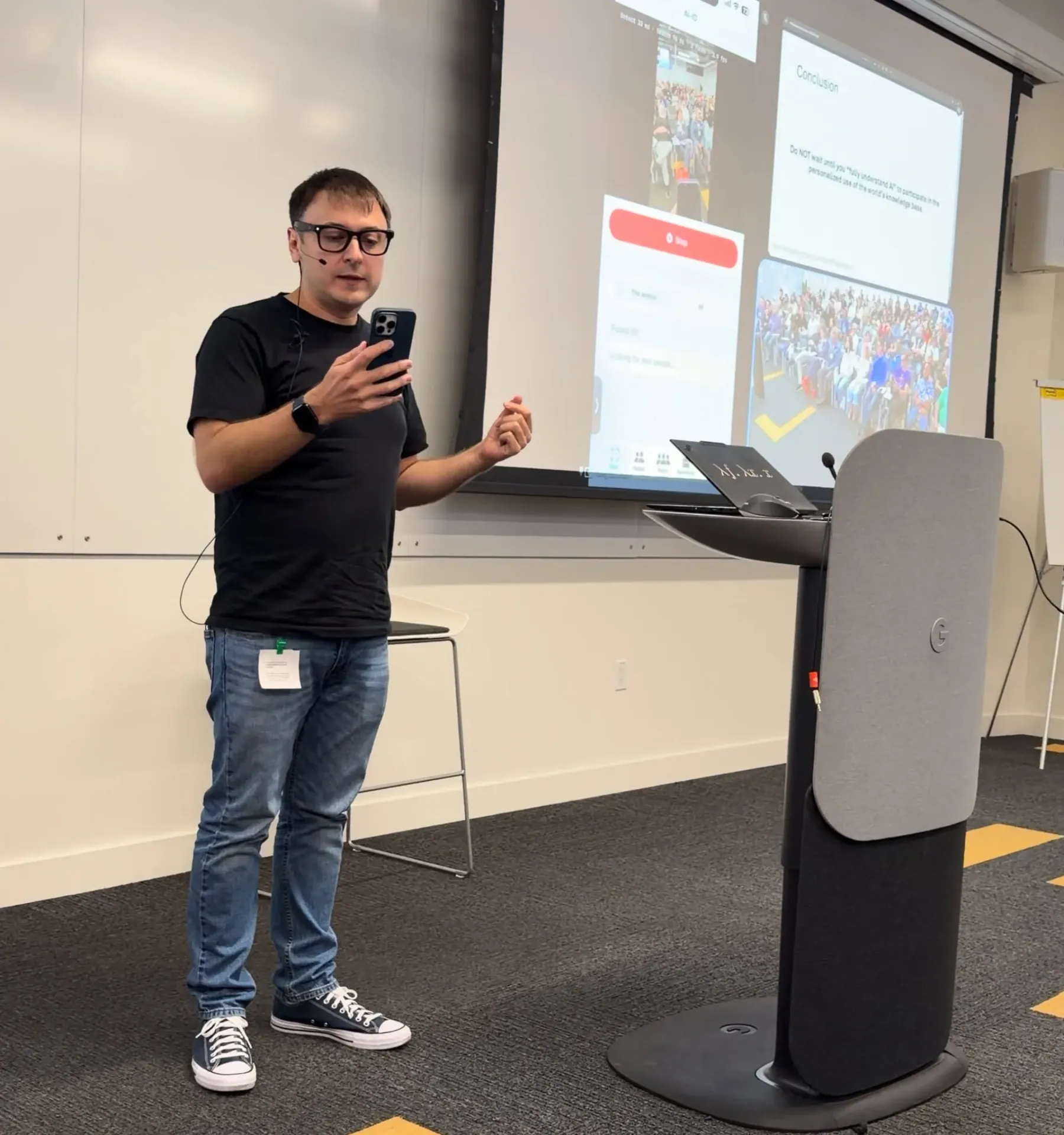
AI consulting reshapes how your business works: which functions to automate, who you need on the team and what the new system will cost. I did this at AppMaster, taking the team from 25 people to 2. Now I implement this approach for clients.
What an Engagement Covers
We use the initial review to identify the work your company needs.
A plan to replace manual work with AI
I review employee responsibilities and choose workflows to automate. I estimate implementation costs, savings and payback.
Replace technical roles with AI
I move development, design, QA and DevOps work to AI. I implement my framework on your project, help you reduce the team and train it to run the agents.
AI takes on assistant and administrative work
Enquiries, documents, reports and task coordination. I connect AI to your business systems and automate the complete workflow.
AI and infrastructure costs
I choose models for each task, manage usage and cut waste. You see what automation costs and can compare it with current spending.
AI governance and policy readiness
Data rules, tool choices and clear responsibilities, documented for review with your legal team.
Implementation on real work
I implement the first workflow using your tasks and data. We check the results, train your team and extend the approach to other functions.
How the Work Runs
Audit
Five business days at a fixed price. I go through your team structure, workflows, codebase, and LLM spend, then quantify what AI changes here and what it doesn't.
Pilot
One workflow or one team, taken to production on real data. Small enough to finish, big enough to confirm the numbers from the audit.
Rollout and operating rhythm
The pilot pattern spreads to the rest of the company, with weekly reviews, cost dashboards, and the governance rules written down. I stay on as your fractional CTO for as long as that takes.
Why Hire Me
- I ran this transformation on my own company: AppMaster went from 25 people to 2, held 99.99% uptime for users in 190+ countries, and now processes 11B+ tokens a month
- FluxoPay brought AI into a regulated financial-services product without chaos — team costs down, budget freed up for marketing (quote below)
- 25+ years in IT and 7 patents behind the advice — I was building production systems long before there was an AI market to consult on
“I'm really grateful to Oleg for the way he helped us at FluxoPay. One of the biggest wins was reducing our team costs without creating chaos, and that gave me room to move more budget into marketing, which I was very happy about. I was honestly quite worried about introducing AI into the product because we are in financial services, so for me this was a sensitive thing, but Oleg approached it very carefully and in the end my fears were not justified at all. He set things up really well, made the whole process feel much more manageable, and had a real impact on the business.”
Where to Go Next
Narrower pages for the parts of this work people usually arrive looking for.
Frequently Asked Questions
What does an AI consultant actually do?
I help you reduce headcount with AI. My main focus is developers, designers, QA and DevOps engineers; I also work with admin and support teams. I review responsibilities, implement my framework and train your team, drawing on my experience rebuilding AppMaster.
How much does AI consulting cost?
The entry point is a Team & AI Audit: five business days with a written plan at the end. Ongoing work can continue as fractional CTO leadership or advisory, month to month. We agree the scope and commercial terms after a free first conversation, before work starts.
Do you implement, or only advise?
I implement it: configure AI on my framework, connect your systems and take the workflow into production. If your team will do the work, I can train them and guide implementation. We choose the format around your task.
Which AI stack and models do you work with?
Anthropic Claude together with Claude Code, OpenAI together with Codex, MCP servers for access to internal tools, and open-weight models where privacy or cost makes them the better fit. Model choice is a routing decision per task rather than a loyalty test: cheap models carry most of the volume and frontier models take the hard calls. I revisit that routing regularly, because the price and capability lines move every few months.
How do you handle a regulated industry?
Carefully, and in writing. We start by mapping which data may leave your perimeter and which may not, then choose models and deployment options that respect that boundary — including open models on your own hardware where the rules require it. Audit logging, human approval on consequential actions, and a documented rollback path arrive with the first pilot rather than after it. That is how it went at FluxoPay, inside financial services.
Which work in your business can AI take over?
Start with a free call. We’ll discuss what your employees do, where you spend too much and which function to automate first.
The first call is free. You work directly with me.
Let’s discuss your project
A free 30-minute call with Oleg to discuss your situation and choose a practical first step. No commitment.
A couple of sentences is enough: what does your company do, and what do you want to improve?
Related reading
Notes on running AI inside real companies: tooling, cost, and the parts that break.


