Give your team confidence with AI
Practical training on the work your team does every day. Your people leave with useful habits, shared rules and examples they can use.
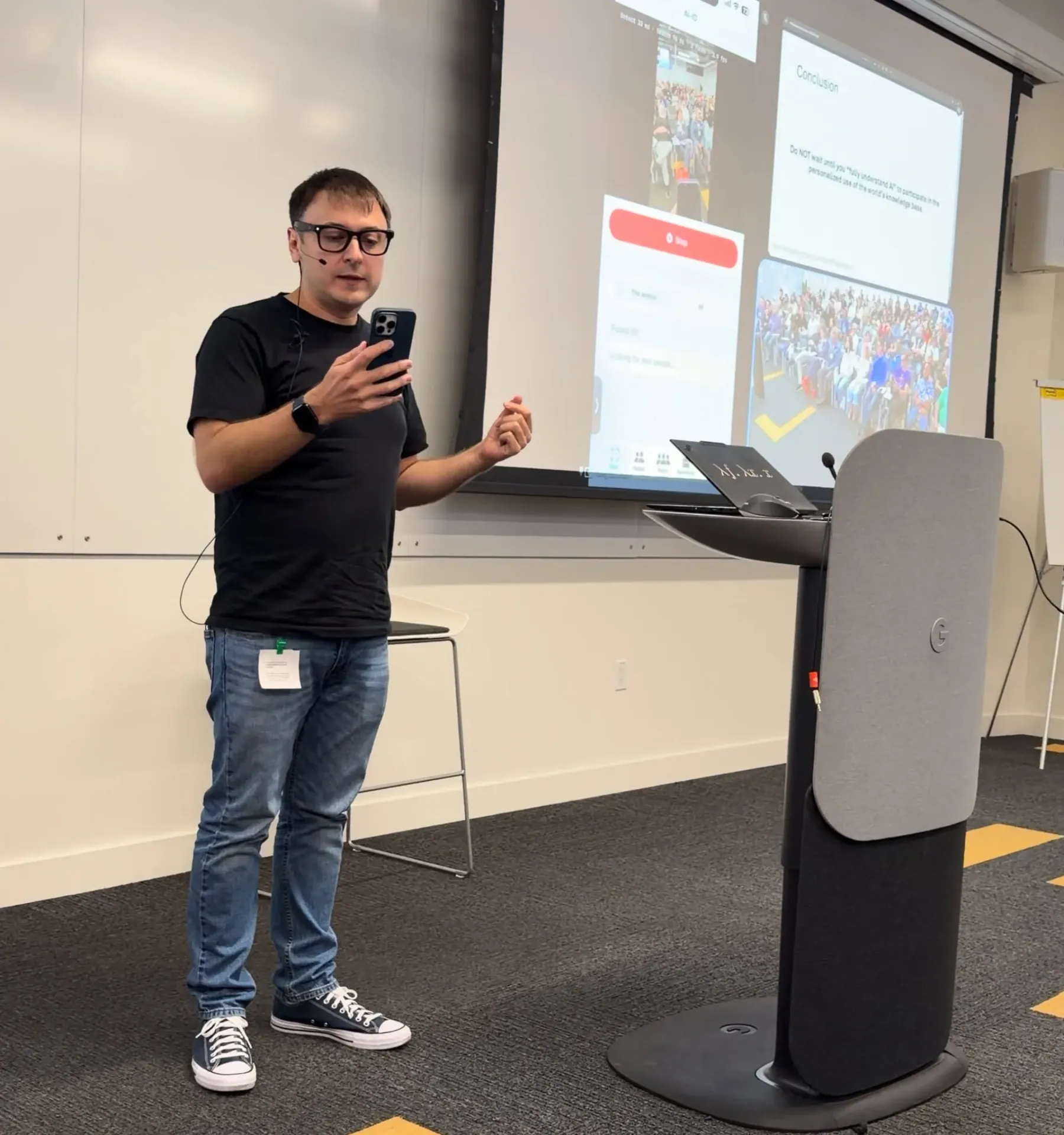
I teach staff to use AI on their own work: writing prompts, checking answers and following data rules. We choose the programme around team roles and experience. You keep the materials, recordings and training records.
What the Training Covers
AI training for employees only works on their real tasks, so every track below runs on your workflows rather than canned exercises.
Tool skills on real work
We work on your documents, your tickets, your code, not a sample dataset. Everyone leaves having finished a task they were going to have to do anyway.
Prompt craft that holds up
Prompting that survives contact with a forty-page contract and a messy spreadsheet: context, constraints, examples, and how to describe what a good answer looks like before the model guesses.
Risk literacy
Learn what data a tool may receive, how to check a confident answer and when to involve a specialist. We work through concrete examples.
Role-specific tracks
Engineering, operations, sales and support, leadership. An engineer reviewing generated code and a support lead drafting replies need different hours and different examples.
EU AI Act Article 4 alignment
Training scoped, delivered, and recorded so your compliance file has something concrete to point at: who attended, what was covered, when it gets refreshed.
Before and after measurement
A short skill assessment at both ends. You see who moved, who needs a second session, and whether the training changed anything at all.
How It Runs
Baseline and tracks
A short assessment plus a conversation with team leads: what people already use, what they avoid, what the company needs them to be able to do. That decides the role tracks and the hours each one gets.
Sessions on your own work
Live sessions built around your tools and workflows. People bring current tasks and we do them together, including the ones where the model gets it wrong and someone has to notice.
Records and a refresher path
You get the attendance and coverage record for the compliance file, the material to onboard new hires with, and a refresher cadence so the training does not quietly expire.
What a company is buying
Sessions, duration and the materials your team keeps.
- Sessions
- Four to eight live sessions per track, spread over three to six weeks. People use what they learned between them, which is where it sticks.
- Length
- Ninety minutes each. Long enough to finish real work, short enough that the room is still awake at the end.
- Group
- Up to twenty people, so everyone gets their own task looked at rather than watching somebody else get theirs.
- Where
- Online, or on site by arrangement. Recorded either way, so your next hire watches instead of waiting for the next round.
- Language
- English or Russian, chosen per group.
- You keep
- The recordings, the handbook, your AI policy, a checklist per role, and the attendance record your compliance file needs.
Training for each role
The same material underneath. Different hours, different examples, a different decision at the end of each.
Everyone in the company
Your people finish a real task in the session and leave knowing which of their own jobs the tool is good at. Prompting that survives a forty-page contract, and one clear line about what never goes into a chat box.
The engineering team
Your engineers work agents against your own repositories, review generated code to a standard they wrote themselves, and learn the cases where an agent should not have the keyboard. Skill is half of it; the process around the skill is the adoption engagement.
See AI engineering adoptionLeadership
Your leadership leaves with the decisions only they can make: which data may leave the building, who signs off on what, and what Article 4 of the EU AI Act expects you to be able to show.
What a programme costs
The price depends on the number of groups, their tasks and the length of training. We agree on it before work starts.
Price based on programme scope
Practical groups of up to 20 people; programme scope agreed separately.
The baseline assessment sets the scope before anyone commits: how many people, how many tracks, and whether the compliance file matters to you.
You can start with a single leadership session. We discuss its purpose on the first call.
Not sure which track your team needs?
Book a scoping callWhy Me
- I present at Google HQ on applied AI, and the training is built on that material
- I took AppMaster from 25 people to an AI-first team of 2, now running 11B+ tokens a month in production, so the material comes out of my own company rather than a case study
- 25+ years teaching engineers and executives, and 45+ certifications of my own, so I have a working sense of what learning something new actually costs someone
Article 4 of the EU AI Act
Training helps staff use AI in the context of their work and your company’s data rules.
What the article says
Article 4 requires AI providers and deployers to take measures that support staff AI literacy. The approach should reflect their experience and work.
Who it applies to
The obligation concerns providers and deployers covered by the AI Act. Your legal team can determine how it applies to your company.
Documenting the training
We keep the programme, materials and session records. Article 4 does not require a specific certificate or a guaranteed individual knowledge level.
European Commission guidance on Article 4
Frequently Asked Questions
What is AI literacy training?
It teaches employees to use AI tools on their own work and to recognize where those tools fail. The practical half covers prompting, checking output, and choosing the right tool for a task; the other half covers risk: what data must never leave the company, how to spot an invented fact or citation, when a confident answer deserves a second reader. It is aimed at everyone who touches the tools, not only engineers.
Is AI literacy training mandatory?
Article 4 requires covered providers and deployers to take measures that support AI literacy. It does not prescribe one mandatory course. The right approach depends on your systems, tasks and staff.
What does the training cover?
Practical tool use on your real tasks, prompt craft that holds up against long documents and messy data, and risk literacy: data handling, hallucination checking, and when not to trust output. On top of that sit role-specific tracks for engineering, operations, sales and support, and leadership. Every company gets a different mix, and the assessment at the start decides it.
How long does AI literacy training take?
It is scoped to the company. One team with one tool needs a fraction of what a hundred-person organization with four role tracks and a compliance file needs. The baseline assessment sets the hours before anyone commits, and the sessions usually spread over a few weeks rather than run as one long day, because people need time to use what they learned between them.
How is this different from an AI policy?
A policy sets the rules: which tools are approved, what data may go where, who signs off on what. Training builds the ability to follow those rules and the judgment for the cases the policy never anticipated. The two reference each other, and most companies want both. Write the policy first if nothing is written down; start with the training if the rules exist and nobody follows them.
The Pieces Around the Training
A policy says what is allowed; training is what lets people follow it. These cover the rest.
Train the Team That Already Has the Tools
A short call to scope it: how many people, which roles, what they use today, and whether the EU AI Act applies to you.
Free 30 minutes. Training is scoped per engagement.
Let’s discuss your project
A free 30-minute call with Oleg to discuss your situation and choose a practical first step. No commitment.
A couple of sentences is enough: what does your company do, and what do you want to improve?
Related reading
AI adoption, team capability, and the governance around both.


