Case study · Legacy code migration with AI
CodeHeroLegacy code moved to Go, Rust and TypeScript 5 to 10 times faster and 70% cheaper, by 5 people instead of 26
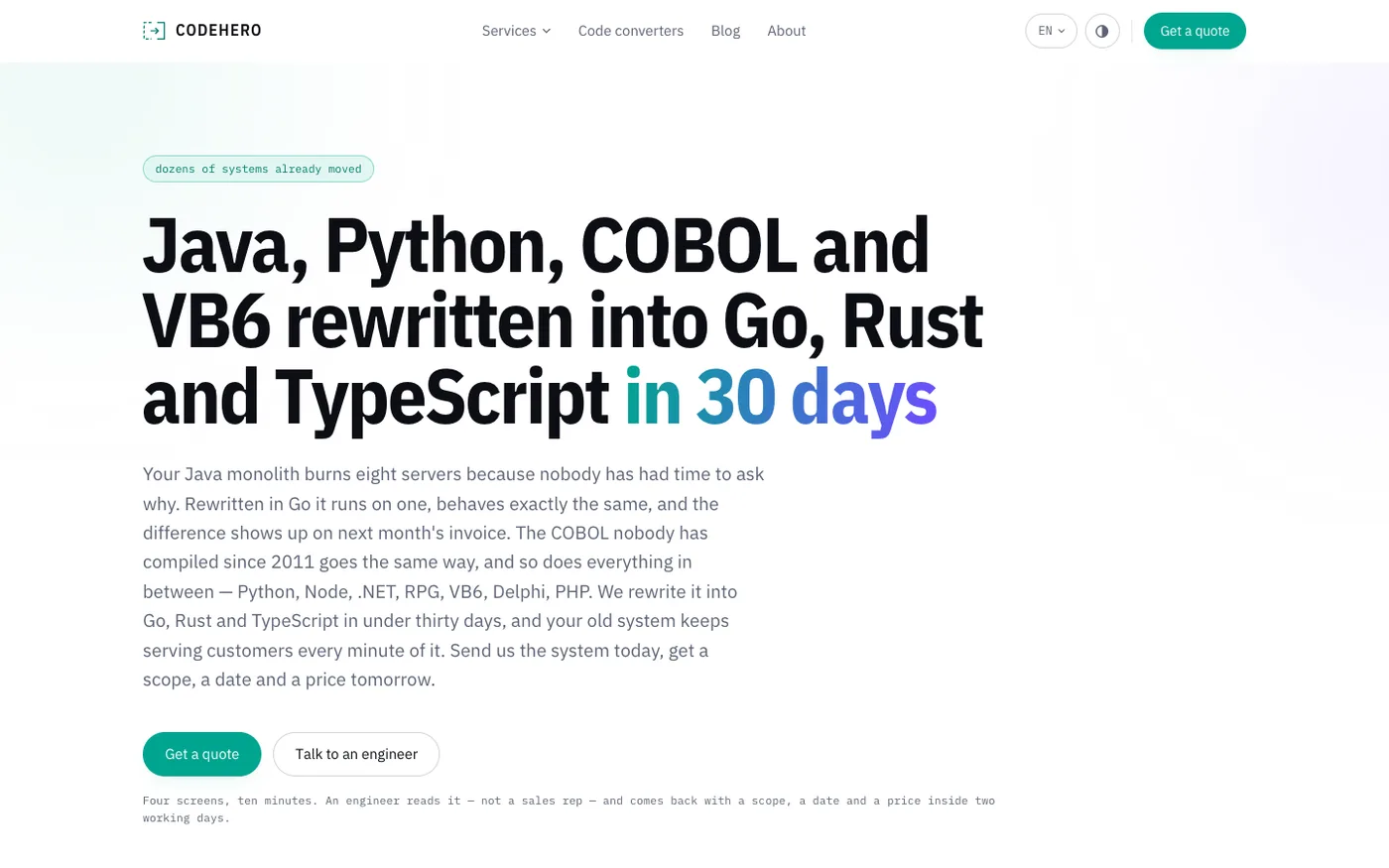
CodeHero moves million-line legacy systems (Java, Python, COBOL, VB6 and more) onto Go, Rust and TypeScript in 30 days, where a large team usually needs several quarters. That is 5 to 10 times faster than a manual rewrite and 70% cheaper than a usual migration, and more than 40 projects have already moved this way. One system that ran on 8 servers runs on 1 after its move. CodeHero runs its own AI model on its own inference and can install both on hardware inside a client's closed network, so the code never leaves the building. As fractional CTO I designed every system and platform behind it, I run the whole team, and I cut that team from 26 people to 5, who now carry the work that used to take 26.
- Client
- CodeHero
- Product
- AI migration of legacy code to modern stacks in 30 days
- Delivery
- Cloud, or our hardware and models inside the client's network
- My role
- Fractional CTO
- Team
- 26 → 5 people, doing the same work
- Projects
- 40+ migrated, 70% cheaper than a usual migration
- Estimate
- Scope, date and price in 2 days
- Website
- codehero.co
In numbers
- faster than a manual rewrite of the same legacy system
- 5–10×
- cost against a usual migration of the same system
- −70%
- people on the team: five now carry the work that took 26
- 26 → 5
- legacy projects already moved to Go, Rust and TypeScript
- 40+
- servers: a system that needed eight runs on one after the move
- 8 → 1
- per project, where rewrites like these usually take quarters
- 30 days
The product
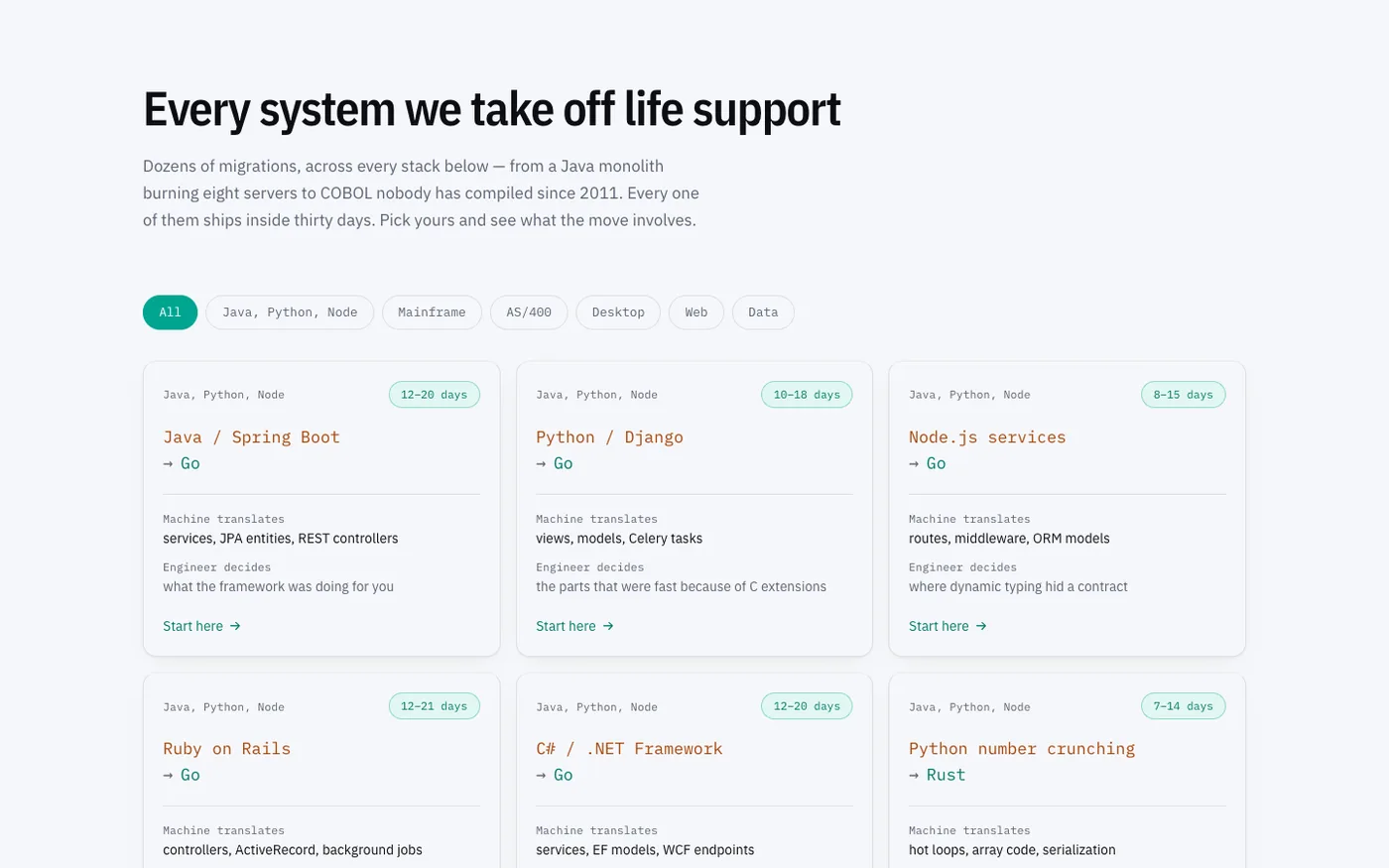
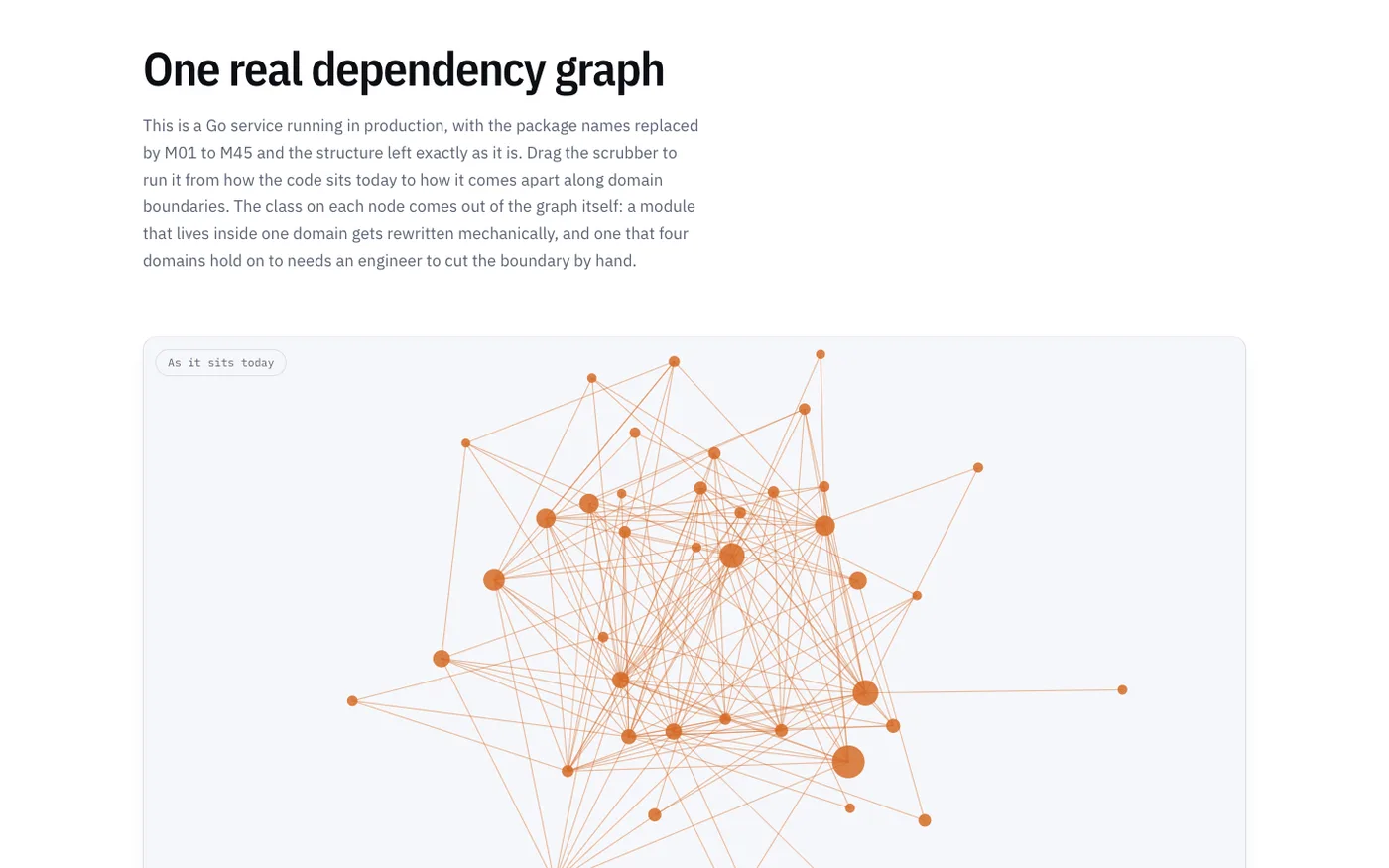
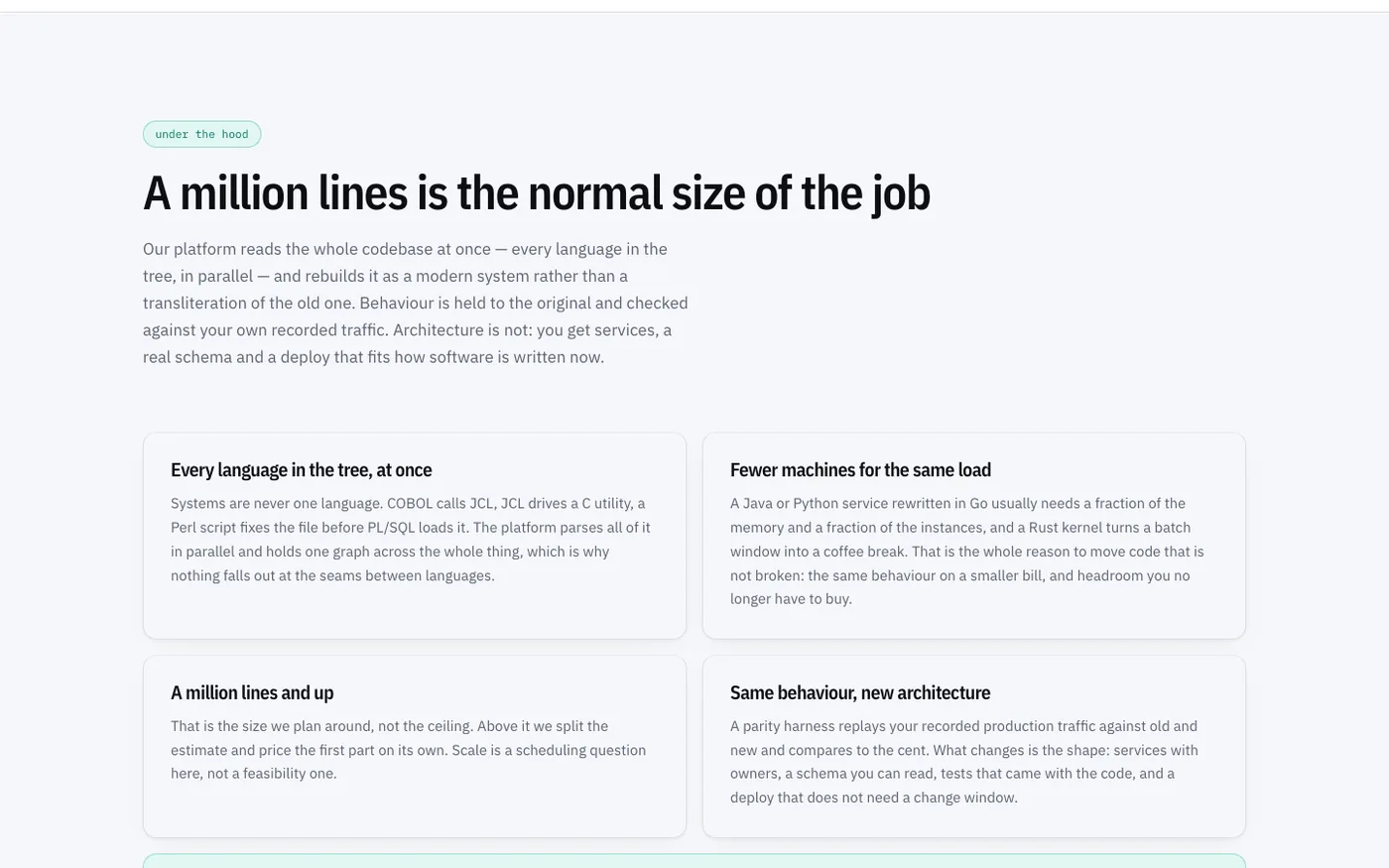
A legacy stack moved to Go, Rust or TypeScript in thirty days, twenty stacks covered, the dependency graph the platform reads, and a million lines as the usual size of a job. Pictures from codehero.co.
The starting point
Companies run critical systems on code nobody wants to touch: COBOL on mainframes, VB6 desktop apps, Java monoliths that burn through servers. Rewriting them the usual way means a large team, quarters of work and a risky cutover at the end. CodeHero rewrites them into Go, Rust and TypeScript while the old system keeps serving customers.
Many of those clients cannot send their code outside, so the migration has to come to them, into their closed network. The economics only work if a small team does it, with AI doing the heavy lifting. When I came in, the team had 26 people.
What we did
I designed the platform that makes 30 days possible
I designed every system and platform CodeHero runs on: reading a whole codebase at once, the rewrite itself, and the checks that hold the new system to the old one's behaviour. Those checks remove the biggest risk in any migration, a new system that quietly behaves differently from the old one.
Our own model and inference, with the cost under control
CodeHero runs its own AI model on its own inference. A client's migration does not wait on anyone else's API, its rate limits or its price changes, and the cost of a million-line job stays under our control.
Bring Your Inference: the code never leaves the building
For clients with closed networks we deliver the hardware and our models inside their perimeter. They move to the new stack with us, their code never leaves the building, and the data-leak risk that keeps most companies from outsourcing a migration is gone.
AI in every step, so five people are enough
I brought modern AI tools into the team's daily work, from reading the old code to reviewing the new. That is where the output per engineer comes from, well above what a traditional migration team gets, and why a migration runs 5 to 10 times faster than a manual rewrite.
I cut the team from 26 people to 5
I took the team from 26 people to 5, and I manage all of it. Payroll went down with the headcount, and projects kept shipping on time. I have worked with this team for more than two years.
40+ projects, each in thirty days
Every project ships inside 30 days, a pace most migration shops never reach, and costs the client 70% less than a usual migration. More than 40 projects have moved this way. The platform covers 20 legacy stacks, a single rebuild runs past a million lines, and a client gets a scope, a date and a price in 2 days, where quotes usually take weeks.
Eight servers down to one
Legacy code tends to burn through hardware. After the move, a system that ran on 8 servers runs on 1, so the client keeps one machine where it used to keep eight.
The result
Five people now do what took 26: they move million-line legacy systems to Go, Rust or TypeScript 5 to 10 times faster than a manual rewrite and 70% cheaper than a usual migration, more than 40 projects so far, on CodeHero's own AI and inside the client's walls when the client needs it.
Full case · PDF
CodeHero
Legacy code moved to Go, Rust and TypeScript 5 to 10 times faster and 70% cheaper, by 5 people instead of 26
- 01The architecture of the migration platform
- 02Our own model and inference: cost and control
- 03Bring Your Inference: hardware and models inside closed networks
- 04How the new system is proven to behave like the old one
- 05How I cut a team of 26 to 5 without slowing delivery
- 06A 30-day migration, week by week
The full CodeHero case
The public story stops here. The PDF has the rest: the architecture before and after, the migration plan, how the team works with AI agents, what it all costs to run and where the savings came from.
More case studies
All case studies
Want the next case study to be about your company?
In a 30-minute call we pick the first task to hand to AI and estimate what it will save you.