Tech Interview Coaching
Practise a technical or leadership interview and get detailed feedback. We work through your answers, examples from your experience and questions you find difficult.
I coach the interview. I do not promise offers, and nobody honest can.
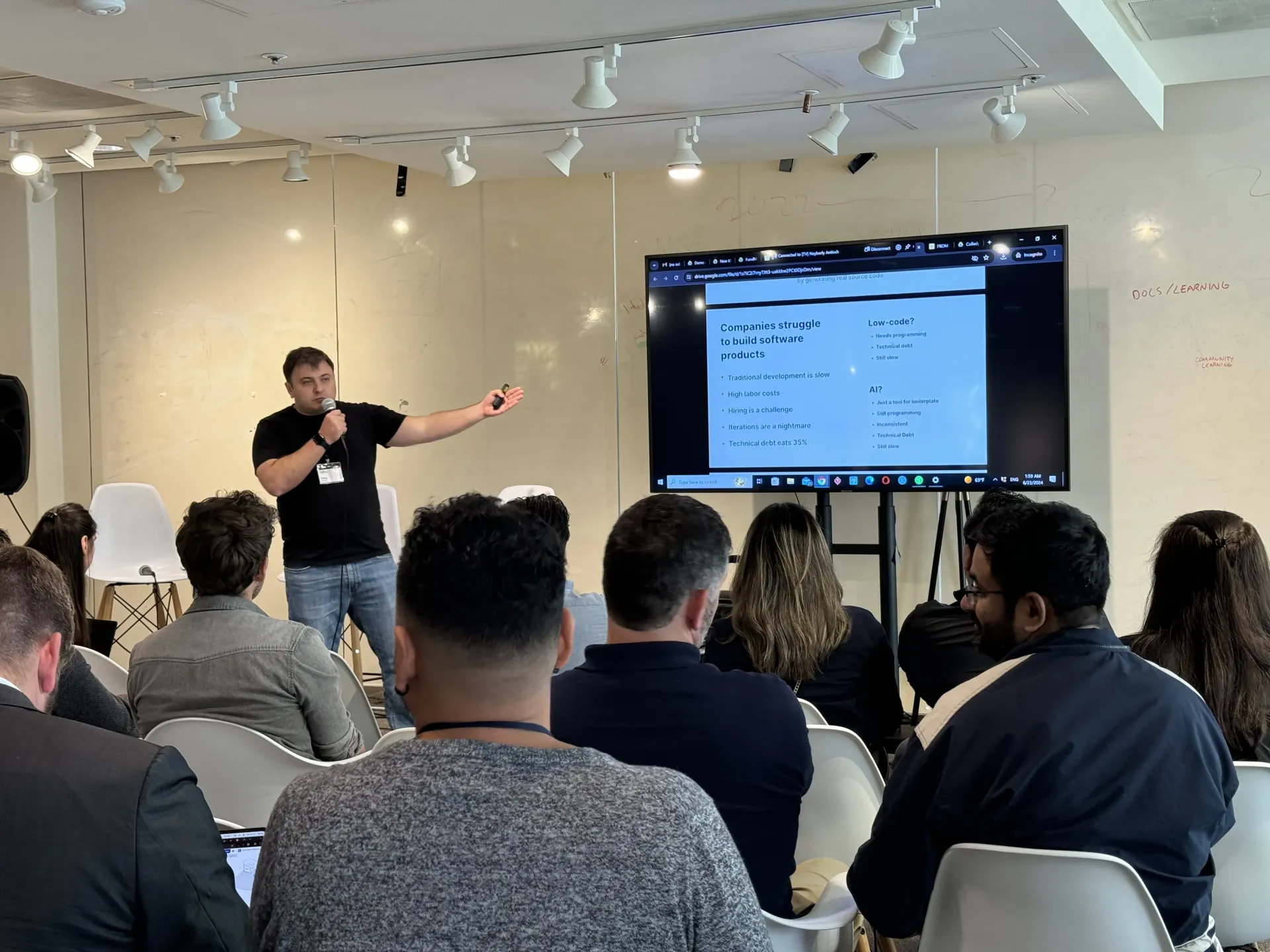
Tech interview coaching is structured practice for the interviews you are about to sit: realistic mock sessions in your target format, written feedback, and drills on the specific things costing you offers. Oleg Sotnikov runs this coaching as a hiring manager with 25+ years of interviewing and hiring engineers, across nine startups and enterprise teams. The feedback comes from the side of the table that makes the decision rather than from a prepared script.
What We Practice
Six areas where interviews are usually won or lost. We work on the ones your loop actually contains.
Behavioral interviews
Most rejections here are structure problems, not story problems. We take your real work and shape it into STAR answers — situation, task, action, result — short enough to land and specific enough to survive the follow-up questions.
System design interviews
You design a real system and then defend it. This is my daily work: a platform serving users in 190+ countries at 99.99% uptime. So the follow-ups you get are the ones a real reviewer asks — where it falls over, what it costs, what breaks at 10× the traffic.
Coding interview strategy
Honest scope: I work on strategy and communication. We cover how you choose an approach, narrate trade-offs, recover from a stuck moment, and manage the clock. I will not grind problem sets for you — that part is yours, and there are better tools for it.
Leadership interviews
EM, Director, VP and CTO loops test different things: how you handle an underperformer, how you set architecture direction without writing the code, how you talk about a team you had to shrink. I have answered those questions and asked them.
Offer and compensation conversations
The last call is still an interview. We rehearse the numbers: when to name a range, how to answer the expectations question without anchoring yourself low, and how to ask for more without putting the offer at risk.
AI-assisted practice loops
Between sessions you practice with a model instead of a mirror — prompts that make it interview like a real panel, a rubric it grades you against, and a review pass that flags vague answers. That gets you the repetitions; the judgment still has to come from someone who has sat on the panel.
How a Mock Interview Works
A realistic session
We run the real thing in the format you are facing — behavioral round, system design, or a leadership panel — at the level you are interviewing for. I stay in role the whole time, including the follow-ups people find uncomfortable.
Written feedback
You get structured written feedback afterwards: what a hiring manager would have put in the debrief, the exact moment an answer lost the room, and what a strong version of that same answer sounds like.
Focused drills
Then we work only on what is costing you offers — usually two or three specific habits — and re-run the parts you fumbled until they hold under pressure.
FAANG and Google Loops
Big-tech loops look mysterious from outside and mechanical from inside. They screen for a short list of things, repeatedly, through calibrated interviewers who compare notes afterwards.
What the loop screens for
Signal, not answers. They check that you can scope an ambiguous problem, that your reasoning holds up when pushed, and that the story you tell is genuinely your own. Panels score against a rubric and compare notes, so staying consistent across five rounds beats one brilliant hour.
Level, not just yes or no
These loops decide a level as well as an outcome, and scope is what moves it: the size of what you owned, who you influenced, what you decided alone. Most candidates undersell themselves by describing tasks they completed instead of decisions they carried.
Where I fit
I present at Google HQ on AI-assisted job search, so I follow closely how these loops and the tools around them are changing. To be precise about it: I am not a Google interviewer and have never been one. My interviewing experience is 25+ years of hiring for my own teams and companies.
Why Me
- 25+ years hiring engineers — thousands of interviews, always on the deciding side
- Built and ran engineering teams from 2 people to 25+, so I have hired at both ends of that range
- Nine startups founded, two exits — including hiring against a runway clock
Keep Going
The rest of the job-search work, roughly in the order people need it.
Frequently Asked Questions
Is interview coaching worth it?
It is worth it when the problem repeats: you get interviews but not offers, or you know the material and still lose the room. Coaching fixes structure, scope and delivery, which is where most rejections actually come from. If you are not getting interviews at all, the problem sits upstream in your resume and your search, and coaching is the wrong thing to buy first.
How do I prepare for a system design interview?
Pick three or four systems you can design end to end, then practice defending them rather than reciting them. Interviewers push on failure modes, cost, data consistency and what changes at 10× the traffic, so rehearse the trade-off conversation instead of the diagram. Memorized templates fall apart on the first real follow-up question.
What happens in a mock interview?
We run a realistic session in the format you are facing, at your target level, and I stay in role through the follow-ups. Afterwards you get written feedback on what a hiring manager would have taken away from that hour, and we drill the two or three habits that cost you the most.
Can you help me prepare for FAANG interviews?
Yes, for the parts that decide the outcome: behavioral rounds, system design, leadership panels, and how you present scope, since big-tech loops set a level as well as a yes or no. I present at Google HQ on AI-assisted job search and follow how these loops work, though I have never been a Google interviewer — my experience is 25+ years of hiring for my own teams.
Do you cover salary negotiation?
Yes. Offer and compensation conversations are part of the coaching rather than a separate add-on. We rehearse how to answer the expectations question, when to give a number and when to ask for one, and how to push for more without putting the offer at risk.
Practice With the Person Who Hires
Bring the interview you are worried about. Thirty minutes, no charge, and you leave with the first thing to fix.
Video call in English or Russian. I work US Pacific hours and async around them.
Related reading
Hiring, interviews, and how the job search keeps changing.


