AI Job Search Coaching
Use AI to find suitable roles, prepare your resume and practise interviews. We work with your experience and real job openings.
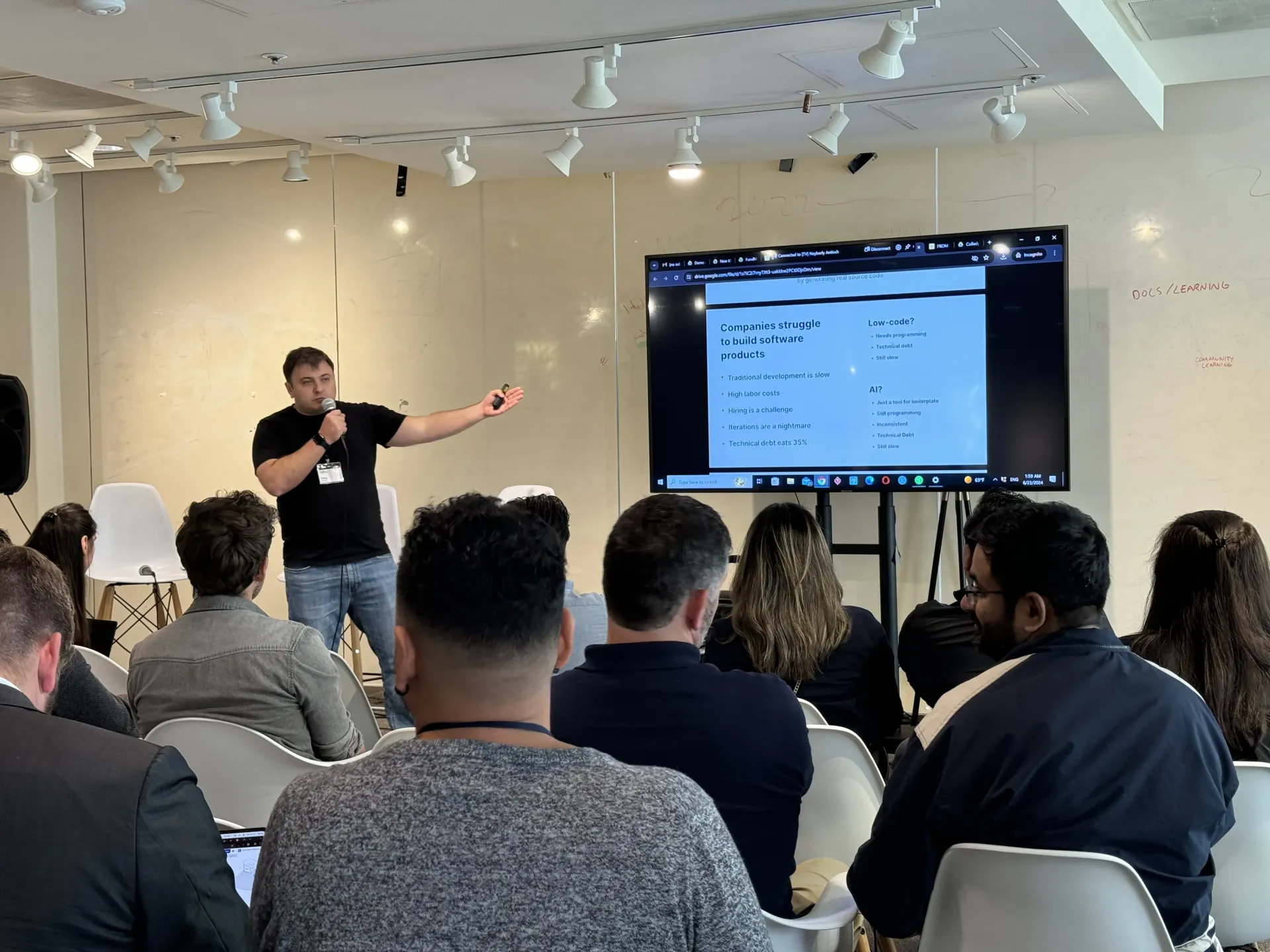
AI job search coaching is a structured way to run a job search with AI at every stage: targeting the roles worth pursuing, tailoring your resume to each posting, writing applications that read like you, and practicing interviews between sessions. Oleg Sotnikov teaches it to engineers, engineering managers, and other senior tech professionals, and presents the same system at Google HQ. The goal is fewer applications with a far better hit rate, so your effort goes into the roles you can win and into showing up prepared.
What Changed in Hiring
Three shifts that decide whether a strong candidate ever gets read.
Software reads your resume first
Applicant tracking systems parse your resume into fields and match it against the language of the posting. If the parse breaks or the vocabulary misses, a recruiter may never open the file. Formatting that looks good to a human can quietly cost you the screen.
AI screeners and one-way video
More companies run the first round with nobody in the room: a recorded video interview, an automated exercise, a summary of your answers passed to the hiring manager. Structure and clarity get judged before anyone hears your reasoning.
The volume arms race
Every candidate now has a text generator, so good postings collect hundreds of near-identical applications. Recruiters adapted by skimming faster and leaning harder on referrals. Generic output, however fluent, is the quickest way to be skipped.
The System I Teach
Targeting and company research
We start with which roles you can realistically win: level, domain, company stage, location, comp band. Models are good at company research and at reading what a posting is really asking for, so the shortlist gets shorter and sharper before you write anything.
Resume tailoring, then checking it
One strong base resume, then a deliberate pass per posting: the vocabulary that posting uses, the achievements that matter for that role. Then you run it through an ATS checker and see how parsing software actually reads it before you send it.
Applications that don't smell generated
Cover notes and outreach are where careless AI use shows most. I show you how to feed a model the material only you have, your numbers and your decisions and the things that went wrong, so what comes back sounds like you and survives a skeptical reader.
AI mock interview loops
A model is a patient interviewer. It will run the same behavioral question fifteen times and tell you where the story loses the listener. We set up the loops together, you run them on your own time, and we review the answers that still feel weak. One rule: an AI interview assistant belongs in rehearsal. Used live on a call, it reads as scripted inside the first minute.
Pipeline discipline
Searches fail from drift more often than from rejection. Every application goes in one place with a next action and a date, so follow-ups happen on time and you can see which channel is producing interviews and which is producing silence.
Offer conversations
The part most engineers skip in preparation: discussing compensation without flinching, comparing offers on more than base salary, keeping a parallel process alive without damaging the relationship.
How the Work Runs
It starts with a call. What comes after depends on how far along your search already is.
The first call is free
Thirty minutes. Where you are, what you are targeting, what the search has produced so far. If coaching isn't what you need, I say so on that call.
Scope set together
How often we meet and what we cover depends on your timeline and how far along you are. That gets agreed on the first call, once I know something about your situation.
The work happens between sessions
Sessions are for decisions, review, and practice. The applications, the tailoring, and the AI interview practice are yours to run between them, with the setup we build together.
There is no package listed on this page on purpose. Scope and cadence come out of the first call.
Why Me
- I present this AI job search system at Google HQ
- 25+ years in tech, most of it spent on the other side of the table, running the interviews and making the hiring calls
- I built hiring across nine startups I founded and led an organization of 25, so this comes from reading resumes rather than writing them
More for Your Search
The tools and guides I point people to between sessions.
Frequently Asked Questions
Do AI tools actually help a job search?
Yes, in four specific places: research, tailoring, practice, and tracking. AI will not get you an interview you were never qualified for, and it cannot rescue a search aimed at the wrong roles. What it does well is cut the hours per application, so you can apply to fewer, better-matched postings with real effort behind each one.
Can recruiters tell when a resume is written by AI?
They spot lazy output, not competent use. Interchangeable bullet points, inflated adjectives, and a cover letter that would fit any company are obvious to someone reading a hundred a week. A resume where you supplied the numbers, the decisions, and the vocabulary, then edited what came back, reads as yours because it is. The skill is what separates the two, not the tool.
Which AI tools should I use for a job search?
Three categories cover most of it: a general LLM assistant such as ChatGPT or Claude for research, tailoring, and drafting; an ATS checker to see how parsing software reads your resume; and something to run mock interviews against, which can be the same assistant in voice mode. I don't sell or endorse specific products. We work with what you already have and fix how you use it.
Is using AI in a job search cheating?
No. Recruiters screen with the same class of tooling, and employers expect engineers to work with these tools on the job. The line is misrepresentation: claiming skills you don't have, letting a model invent experience, or having it answer for you during a live interview. Preparing better with AI is preparation.
How is coaching different from a resume-writing service?
A resume-writing service hands you a document. Coaching leaves you with a system and the skills to run it: how to pick targets, how to tailor, how to prepare, how to keep a pipeline moving, for this search and the next one. If a single polished resume is genuinely all you need, a writing service is cheaper and I will tell you that on the call.
Are AI interview assistants worth using?
For rehearsal, yes. An AI mock interview will run the same question until your answer holds together, and an hour of that beats rereading a list of likely questions. Live on the call, no: an assistant feeding you lines adds a pause before every reply and vocabulary that isn't yours, and people who interview for a living hear both. Keep the AI interview assistant in the practice loops, and before a round that decides something, do at least one mock with a human interviewer, which is what my interview coaching is for.
Start With a Free Call
Thirty minutes on where your search stands and whether this is the right kind of help. If it isn't, I will say so.
Remote, in English or Russian. Bring the postings you are looking at, if you have any.
Related reading
Notes on hiring, AI tooling, and technical careers.


