Success story · Job search and AI CVs · USA and worldwide
CV RocketOne engineer and a fractional CTO took CV Rocket from zero to sales in five weeks and to 1,000+ customers
CV Rocket writes a CV for one job posting in 15 to 50 minutes and brings the US and world job market into one place: more than 1.5 million postings from 89,000+ job sites. I designed the architecture, the cloud services and the payment integration, and one engineer and I built the product in four weeks, a launch that usually takes a full team several quarters. It sold from week five and now has more than 1,000 customers.
- Client
- CV Rocket
- Product
- AI CVs and job search
- Main market
- USA, plus the rest of the world
- Customers
- 1,000+
- My role
- Fractional CTO
- Team
- 1 engineer and me
- Website
- cvrocket.ai
In numbers
- from zero to a working product, where quarters are the norm
- 4 weeks
- customers since the first sale in week 5
- 1,000+
- job sites the scanner reads, with no data team behind it
- 89,000+
- for a CV written for one posting, work a CV writer does by hand
- 15–50 min
- job postings, kept current almost in real time
- 1.5M+
- CVs generated for customers, each written for one posting
- 10,000+
The product
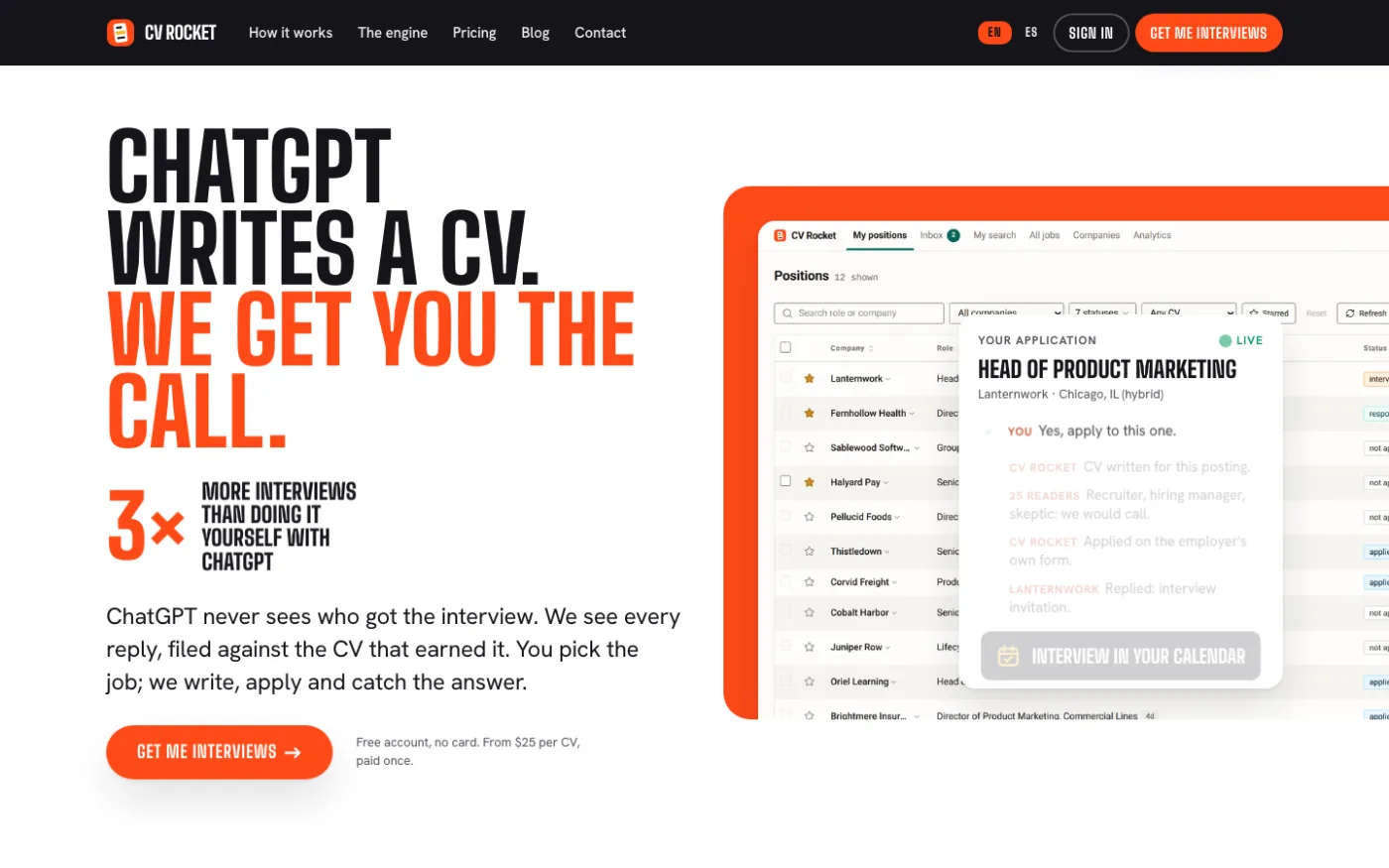
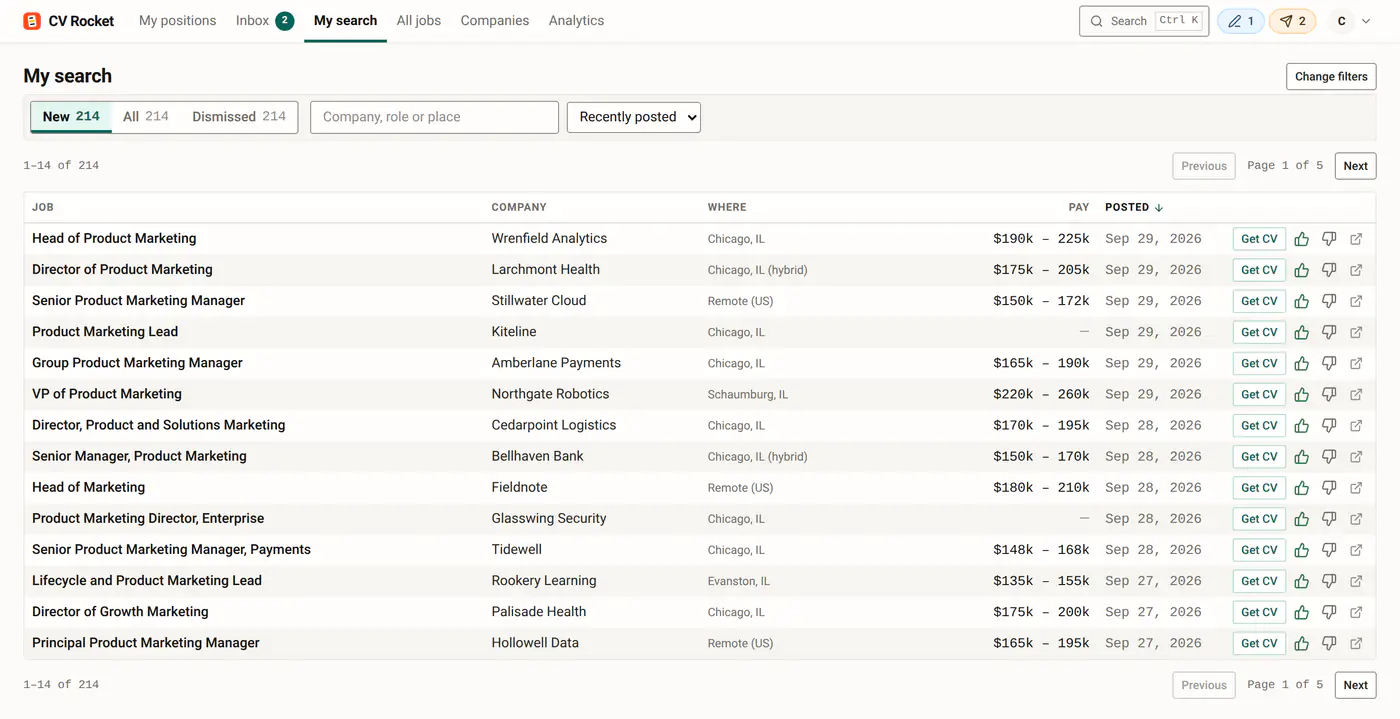
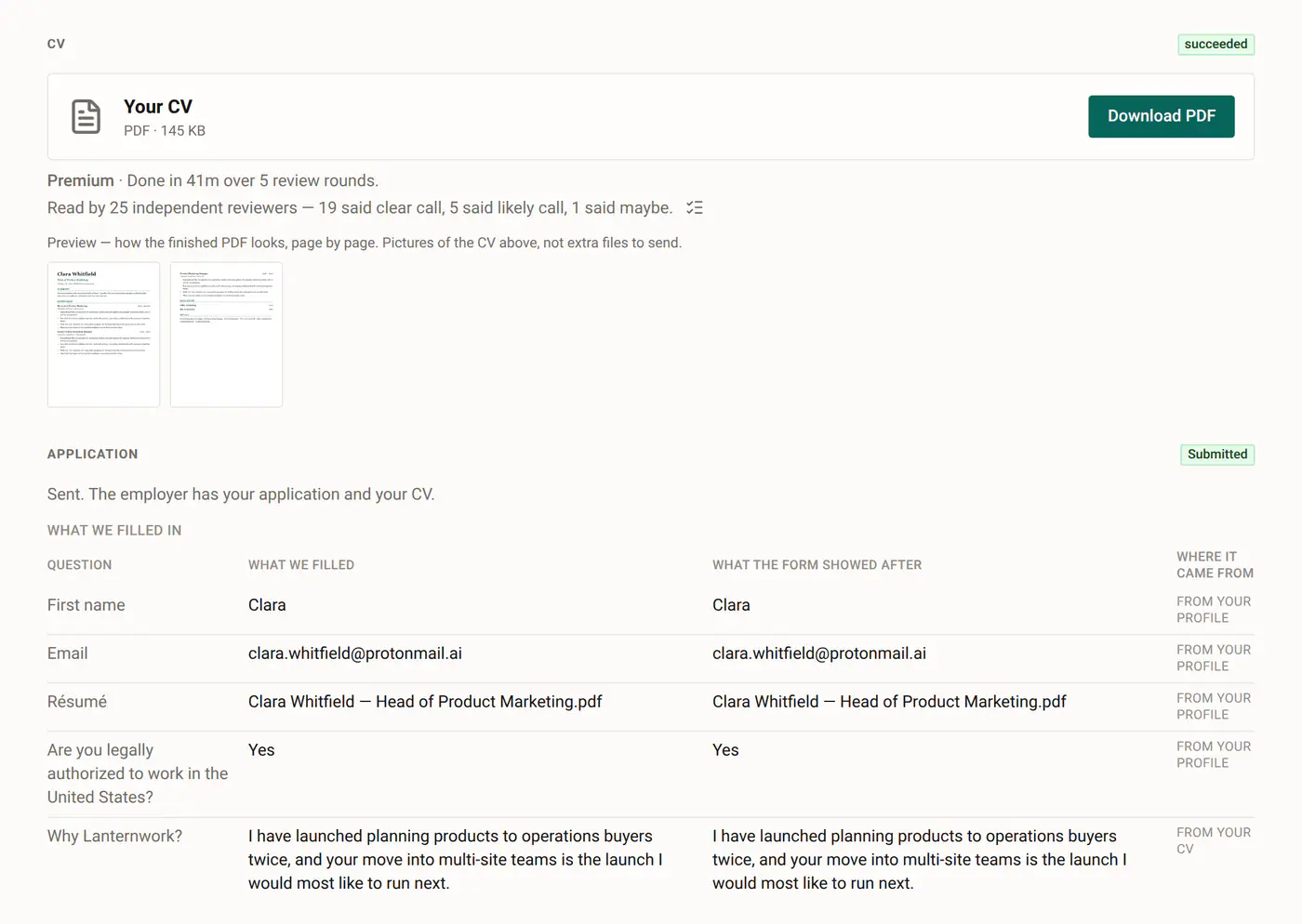
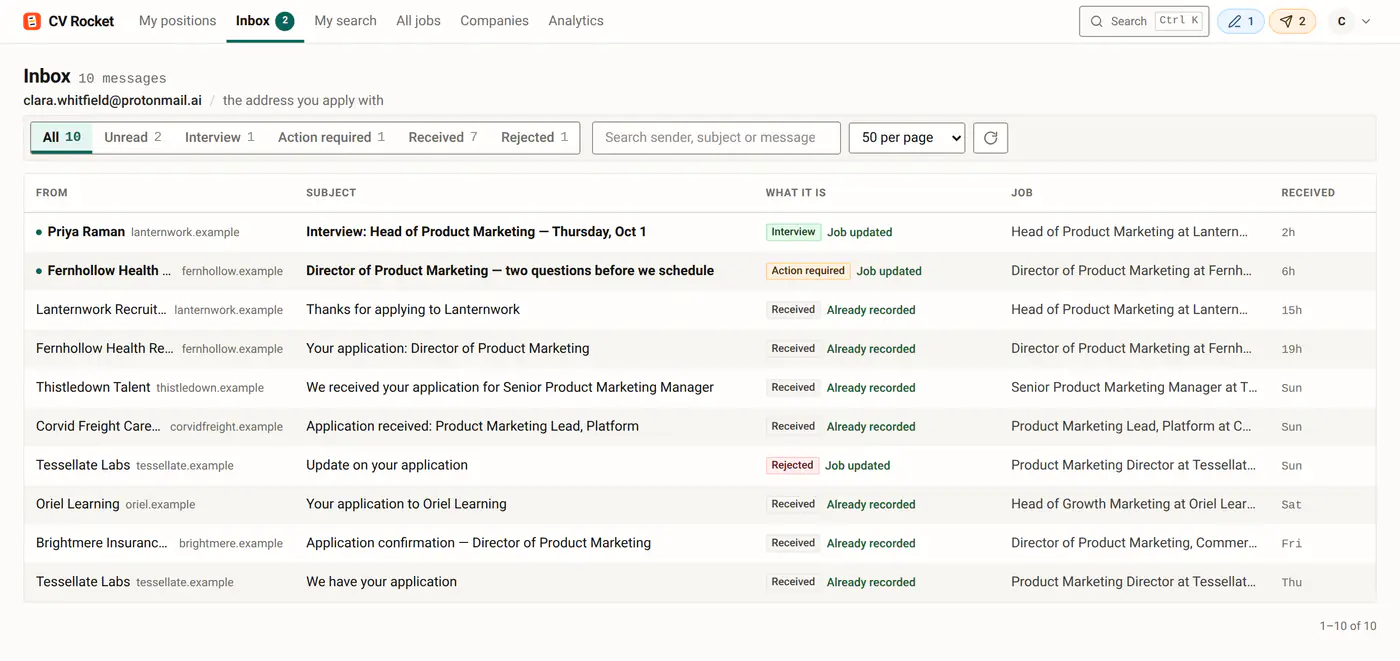
The public site, job search across the market, a CV written for a posting with the application sent with it, and employers' replies in one inbox. The product screens use sample data.
The starting point
Job seekers send the same CV everywhere, while the jobs worth applying to are spread across a huge market. CV Rocket writes a CV for each posting automatically and collects the whole US and world job market in one place, so people find work faster and can compete for it.
It had to be built from zero, by one engineer and me, with no product team, no QA department and no ops staff behind us.
What we did
The architecture, from zero, built for a team of two
I designed the architecture of the whole product: the scanner that collects the market, the CV generation and the customer app. I kept it lean enough for two people to build and run.
89,000+ job sites, the whole US and world market in one place
The scanner reads more than 89,000 job sites across the US and the world and keeps more than 1.5 million postings current almost in real time. Job sites usually keep a data team busy with this, and here it runs by itself.
A CV written for each posting in 15 to 50 minutes, at any volume
Customers get a CV written automatically for the specific job they apply to, ready in 15 to 50 minutes. A professional CV writer does this work by hand, one CV at a time. More than 10,000 have been generated for customers so far.
Cloud services that need no ops team
I designed the cloud services the product runs on, so the market scan and the CV generation run without an ops team.
Payments inside the app from the first sale
I integrated the payment services, so customers buy a CV right in the app and the product earned money as soon as it went on sale.
Four weeks to launch, sales in the fifth, 1,000+ customers since
One engineer and I built the application in four weeks, and the first sales came in the fifth. Most startups spend longer than that just planning their first version. CV Rocket now has more than 1,000 customers.
The result
Two people took CV Rocket from zero to paying customers in five weeks, and it now has more than 1,000 customers. It reads 89,000+ job sites and writes a CV for a posting in 15 to 50 minutes, helping people, mainly in the US, find work faster and compete on the job market.
Full case · PDF
CV Rocket
One engineer and a fractional CTO took CV Rocket from zero to sales in five weeks and to 1,000+ customers
- 01The architecture two people built in four weeks
- 02How the market is collected and kept up to date
- 03The CV generation pipeline
- 04Cloud services and payments
- 05The four-week plan, week by week
- 06What we would do the same way again
The full CV Rocket case
The public story stops here. The PDF has the rest: the architecture before and after, the migration plan, how the team works with AI agents, what it all costs to run and where the savings came from.
More stories
All stories
Want the next story to be about your company?
In a 30-minute call we pick the first task to hand to AI and estimate what it will save you.