AI Cost Calculator
Estimate monthly AI spending using your request volume and rates. Compare model routing, caching and batch processing scenarios.
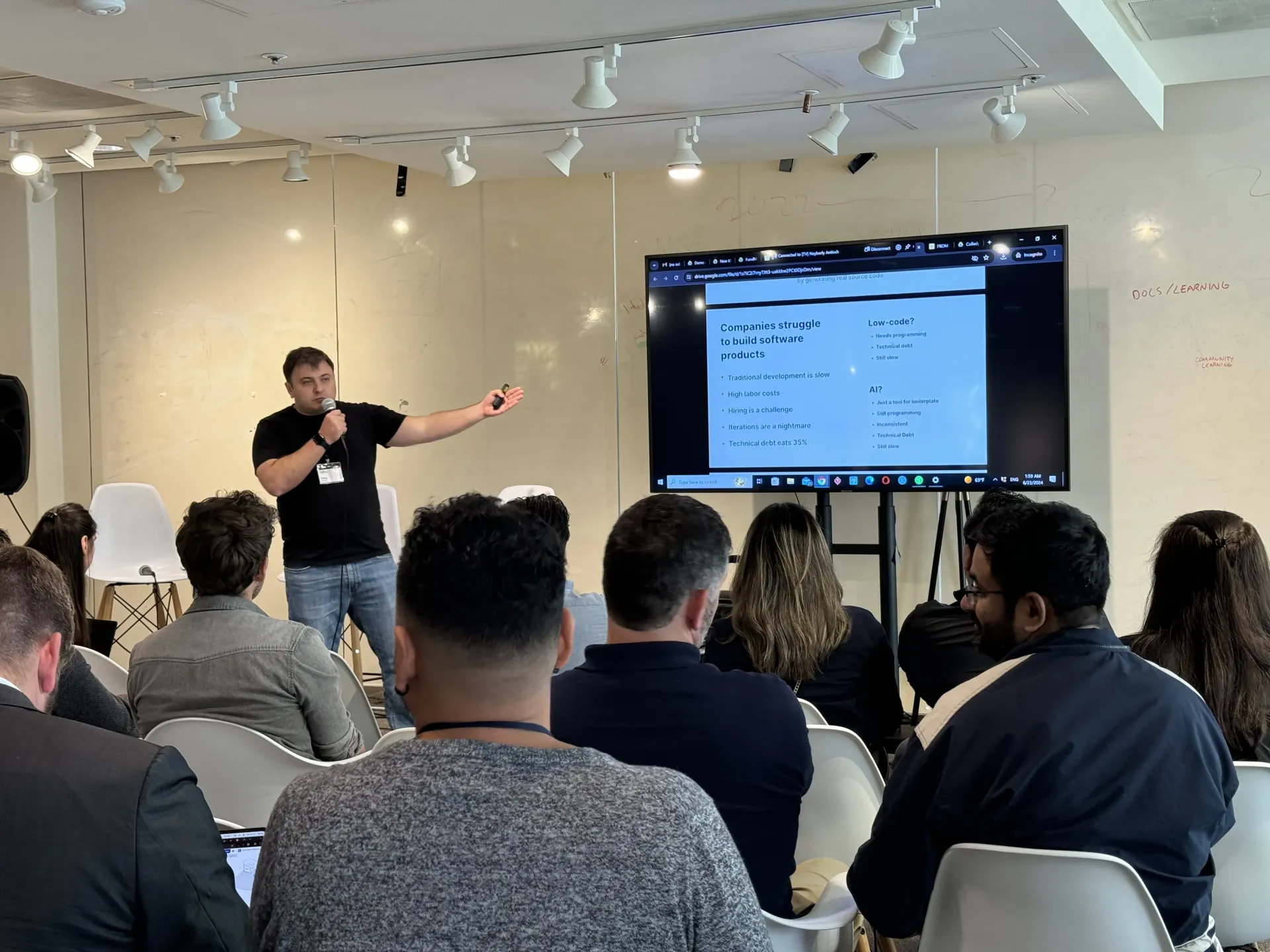
An AI cost calculator estimates what an LLM feature costs per month: request volume × tokens per request × your provider's per-million-token price, counted separately for input and output. Three levers cut that bill before anyone opens a contract negotiation: route cheap requests to a smaller model, serve the repeated part of a prompt from cache, and send asynchronous work through a batch endpoint. Oleg Sotnikov runs AppMaster, a platform that processes 11B+ tokens a month, and applies the same three levers in production. This tool runs entirely in your browser and takes your own prices, because published price lists change too often to hardcode.
Estimate Your Monthly LLM Bill
Everything here is computed in the browser. Move the numbers until they match your workload.
Step 1 · Your usage
Requests per month
600K
Input tokens per month
1.2B
Output tokens per month
300M
Step 2 · Your prices
The defaults show example frontier-class pricing so the panel has something to compute. Check your provider's price list and enter what you actually pay.
Step 3 · The levers
Each lever has two settings: the share of traffic it covers, and the discount that applies to that share. Set both to what your workload and your provider's terms allow.
Model routing
Classification, field extraction, short rewrites, and retries rarely need a frontier model. Send them to a smaller one and keep the large model where the difference shows.
20% is an example ratio. Compare the small and frontier tiers on your provider's price list.
Prompt caching
System prompts, tool definitions, and retrieved documents repeat on every call. On a cache hit, that repeated prefix is billed at a fraction of the normal input price.
90% reflects typical published cache discounts. Check your provider.
Batch processing
Anything nobody is waiting on can go through an asynchronous batch endpoint instead: data enrichment, evaluation runs, backfills, nightly summaries.
Major providers have published batch discounts around 50%. Verify current terms.
Estimated result
Current
$8,100
per month
Optimized
$3,966
per month
Saved
$4,134
−51% · per month
Saved
$49,611
per year
Values entered here are calculated in your browser and are not sent to the server.
Every figure here is an estimate. The three levers are applied multiplicatively and assumed to overlap in proportion to their shares, so a real bill will differ. Your provider's terms decide the final number: which discounts stack, which endpoints support caching.
Frequently Asked Questions
How do I reduce OpenAI API costs?
The same playbook covers OpenAI API cost and the equivalent bill from Anthropic or any other provider. Start with the three levers that need no contract change: route cheap requests to a smaller model, cache the repeated part of your prompts, and move asynchronous work to a batch endpoint. Then trim dead context. Most production prompts carry instructions and examples that no longer earn their tokens. Volume discounts and committed-use deals are worth asking about, but they come last, because otherwise you negotiate a discount on spend you could have removed.
What is prompt caching?
Prompt caching stores the unchanging prefix of a request (system prompt, tool definitions, a long document) on the provider's side, so repeat calls are billed at a reduced rate for those tokens instead of the full input price. It pays off when many requests share a long prefix and that prefix is byte-identical, so put the stable part first and the variable part last. Discount size, minimum prefix length, and cache lifetime differ by provider; check the current terms before assuming a number.
What is batch processing and when does it fit?
A batch endpoint takes a file of requests and returns the results within a stated window, commonly up to 24 hours, in exchange for a lower price per token. It fits work with no user waiting on it: data enrichment, evaluation runs, backfills, classifying a queue, nightly summaries. It does not fit interactive chat or anything in a checkout path, and batch requests usually cannot be combined with every other discount, so read the terms.
When should requests go to a smaller model?
Start with narrow tasks such as classification, data extraction and short drafts. Compare models on your own examples for quality and cost. Choose the model based on the results for each task.
Find the Rest of the Bill
The same three levers applied to your real traffic, plus the cloud and infrastructure spend sitting next to it. Five business days, every finding quantified in dollars per year.
At least $50,000/year in identified savings — payroll, cloud, and LLM bills — or the audit is free.
Related reading
LLM cost engineering, cloud economics, and infrastructure that stays cheap.


