Help departing staff find their next role
Support engineers through a layoff with job-search planning, resume work, interview practice and offer discussions. The employer pays for an agreed programme period.
The employer pays for career support over an agreed period. The programme includes group sessions and individual coaching on job search, resumes and interviews. Individual coaching conversations remain confidential.
Why It's Worth Paying For
A reduction is remembered for what happened to the people who left, not for the line it fixed in the plan.
Employer brand outlives the layoff
Reviews, referrals, and what candidates hear from friends all carry the story of how the exit was handled. The severance number stays private. The treatment does not.
The people who stay are watching
Engineers read someone else's layoff as a rehearsal for their own. When the cohort lands well, the people you kept have less reason to start answering recruiters, and you hold on to the seniors you never intended to lose.
Alumni come back as customers and hires
Your engineers move to companies that buy what you sell, end up on hiring panels where your name comes up, and sometimes return once the budget does.
Individual support
Participants have someone to discuss their search with and get feedback from. The employer sees overall progress without access to private coaching conversations.
What the Program Includes
One program per cohort, sized to the group, running remotely from the day notice goes out.
AI job-search workshops
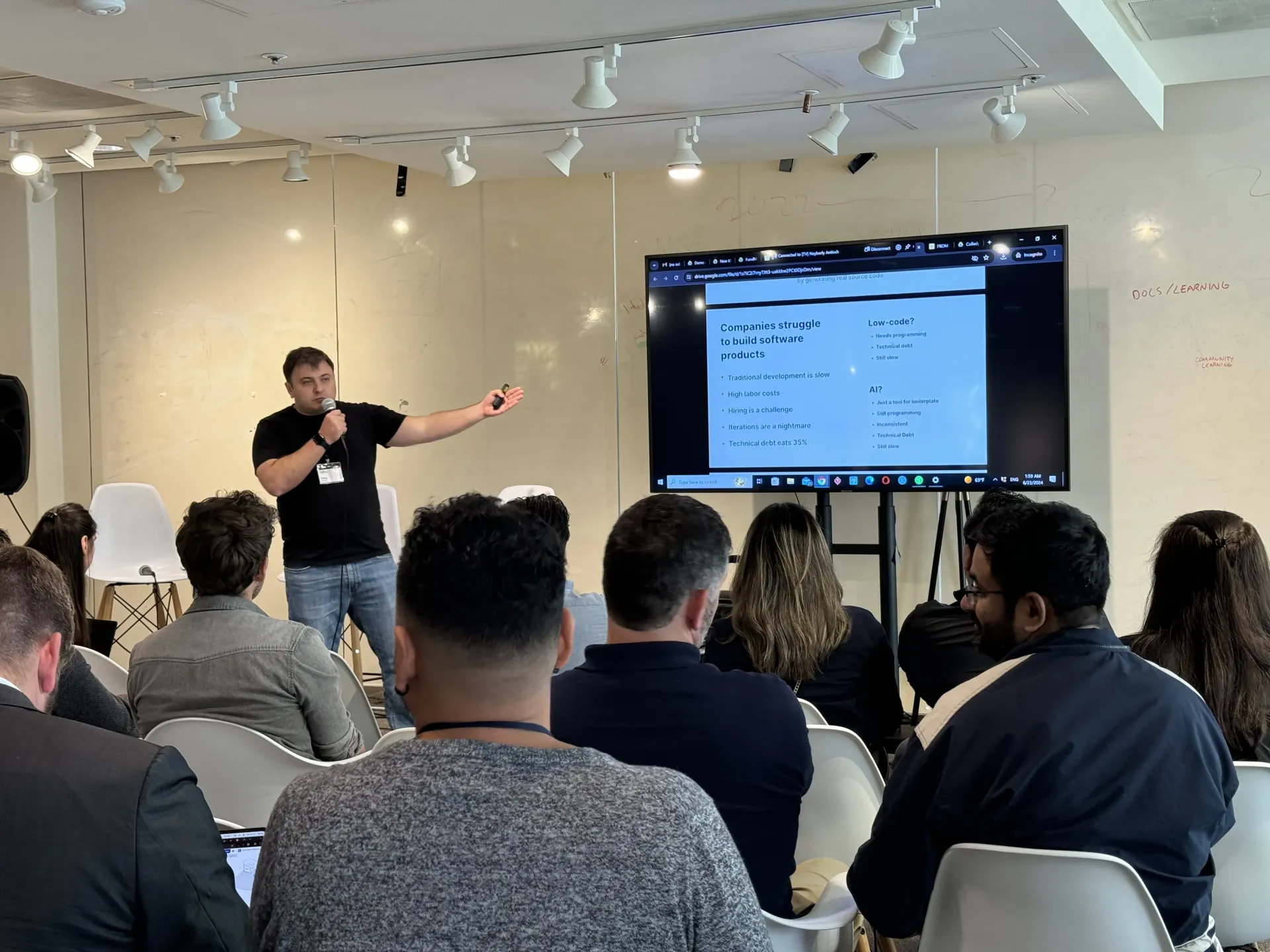
Group sessions on the system I present at Google HQ: using models to find the right roles, tailor each application, and prepare for the conversations — without the generic output recruiters recognize on the first line.
1:1 coaching for every participant
Individual sessions on positioning, target companies, salary expectations, and the uncomfortable part: explaining a layoff without apologizing for it. Nobody is left working from a group handout.
ATS-ready resumes, tooling included
Each resume is rewritten for the screening systems it will actually pass through. Participants also get the resume checker and templates published on this site, and keep using them long after the program ends.
Interview preparation with mock loops
Technical and behavioral rounds run as real interviews, with feedback from someone who has hired engineers for 25+ years: system design, live coding, and the hiring-manager screen that quietly decides most outcomes.
Support through offer and negotiation
During the programme, we help with applications, interviews and offers, including role, salary, equity and start date. The support period is agreed in advance.
Reporting back to the employer
You see how the cohort is progressing — active, interviewing, at offer stage — without the contents of anyone's sessions. Coaching only works when participants can speak freely.
Why Me
- I ran the AppMaster reduction myself — 25 people down to 2. I know what a leader owes the people who leave, and how little of it happens unless someone is assigned to it
- 25+ years of hiring engineers. I have been the manager on the other side of the table for most of my career, so participants hear what the next employer is screening for
- I present at Google HQ on AI-assisted job search — the cohort gets that system directly, not a summary of it
- Remote and async-first from the SF Bay Area, in English and Russian, so a distributed team is covered by one program
What It Costs
There is no rate card on this page. Outplacement is priced per participant and adjusted for the size of the cohort and how long support runs — a five-person team and a forty-person reduction are different pieces of work.
- Per participant, with cohort size and the length of support built into the number
- Scoped on one call: headcount, seniority, timeline, and what you want reported back
- A fixed quote before anything starts, so the cost is known while the reduction is still being planned
Traditional outplacement providers price per head as well. The difference here is who runs the sessions.
Tools the Cohort Keeps
These are public and free. The program adds the workshops, the coaching, and a person who reads every resume.
Frequently Asked Questions
What do outplacement services include?
Outplacement is career support an employer pays for on behalf of the people it is letting go: coaching, resume work, interview preparation, and help through the offer stage. A technical program adds what engineers are screened on — ATS-readable resumes, system design and live-coding practice, and an AI-assisted search that keeps applications targeted. The employer pays for it; each participant decides how much of it to use.
How much do outplacement services cost?
It is scoped per cohort rather than published as a rate. Providers in this market price per head, and the number moves with cohort size, seniority, and how long support runs. Tell me the headcount, the levels, and the timeline, and you get a fixed quote before the program starts.
Why offer outplacement at all?
Because the bill for skipping it arrives somewhere else: in reviews, in the engineers who stay and quietly start interviewing, in alumni who no longer take a call from your recruiters. A layoff can be forced on a company. How people leave is still the company's decision, and it is the part everyone remembers.
Is the program remote?
Yes. Workshops, 1:1 coaching, and mock interviews all run remotely and async-first, so a distributed team is covered without travel or a booked room. Sessions run in English and Russian.
How long does support last?
We agree on the duration and sessions before the programme begins. During that period, we support job search, interviews and offers participants receive. Extensions can be discussed separately.
Before the Notices Go Out
The program works best when it is ready on day one, so people hear about the layoff and the support in the same conversation. Bring the headcount and the timeline and we will scope it on a call.
Free 30-minute call, in English or Russian.
Related reading
Notes on hiring, team structure, and what engineers are screened for now.


