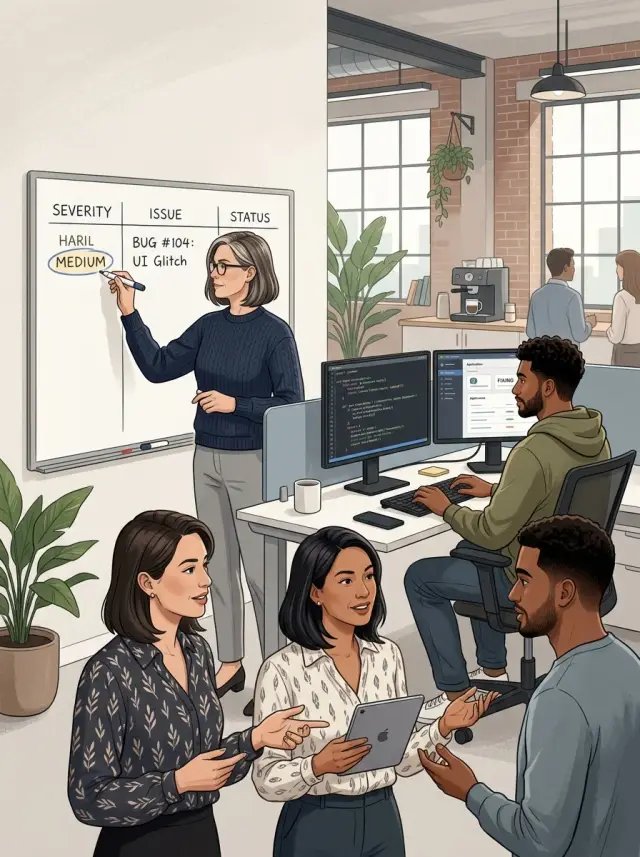
Technical support for founders: a simple accelerator matrix
Technical support for founders gets easier when accelerators sort needs by depth and time. Use a simple matrix to match the right help.

Table of Contents
Why founders get the wrong help
Founders rarely ask for the wrong help on purpose. They ask for "tech help" when the real problem is still fuzzy. For one team, that means product scope. For another, it means hiring. For a third, it means they shipped fast and now every release drags because the codebase fights them.
That vague request creates the first mismatch. When the need is unclear, the support gets chosen for convenience instead of fit.
In many accelerators, the easiest option is a speaker slot. A program manager books a strong engineer or startup leader for one session, fills the calendar, and moves on. The founder gets ideas, notes, and a burst of energy. What they do not get is someone who stays with the problem until a decision is made.
Mentors can create a second mismatch. Good mentors give broad advice from real experience, and that helps. But broad advice does not assign work, review tradeoffs in detail, or tell the founder what to do by Friday. If nobody owns the next action, the team leaves with more thoughts than movement.
The pattern is familiar. A founder says, "we need technical support for founders like us." The program hears, "bring in an expert to talk." The expert shares useful perspective. Two weeks later, nobody checks whether anything changed.
The cost builds slowly, then hits all at once. Product decisions stay open. Hiring drifts because the team cannot define the role. Engineers work around unclear priorities. Demo day gets closer, but the bottleneck stays exactly where it was.
A small example makes the problem obvious. A founder says the company needs a senior technical person. What they really need is someone to review the roadmap, cut two features, define the first engineering hire, and untangle one risky architecture choice. A speaker cannot do that in 45 minutes. A mentor may spot it, but still not own the follow-through.
This is why accelerators often confuse access with support. Insight matters, but it is not enough. Founders need the right kind of help at the right depth.
The simple matrix
Most accelerator teams mix up roles because they judge people by reputation instead of by the help founders actually need. A simple matrix fixes that. Use two axes: time and depth.
On the time axis, ask how long the person will stay involved. One session covers a single talk or office hour. A short series means a few meetings over a few weeks. Ongoing work means repeated involvement for a month or more.
On the depth axis, ask what the person really does. Inspiration gives energy and perspective. Feedback reacts to what the founder already plans. Decision support helps the founder choose between options. Hands-on help joins the work and moves it forward.
| Role | Time | Depth | Best use |
|---|---|---|---|
| Speaker | One session | Inspiration | Wake up the room, share patterns, widen thinking |
| Mentor | One session or short series | Inspiration to feedback | Give context, ask good questions, challenge assumptions |
| Advisor | Short series or ongoing work | Feedback to decision support | Help founders make calls on product, hiring, roadmap, and tech tradeoffs |
| Operating help | Ongoing work | Hands-on help | Own part of execution, unblock the team, set systems, review delivery |
A speaker sits in the top left corner: short time, light depth. Great for a kickoff talk. A poor choice if a founder needs help picking an architecture or fixing delivery.
A mentor goes a little deeper, but still stays light. Mentors help founders think more clearly. They do not run the work.
An advisor works across repeated sessions and enters the harder decisions. This is where a startup technical advisor often fits. A fractional CTO for startups can fit here too when the job is mostly guidance, review, and decision support.
Operating help is the deepest role. This person joins the real mess: deadlines, code quality, hiring gaps, incidents, and shipping delays. Someone like Oleg Sotnikov can start as an advisor and move into active technical leadership when a startup needs more than advice.
That is the point of the matrix. It turns a vague request for "tech help" into a clear match between need, time, and depth.
What each role should do
Support works better when each role has a clear job. Trouble starts when an accelerator asks one person to teach, coach, judge, and execute at the same time. Those are different kinds of help.
A speaker teaches the whole group. That person brings a pattern, a story, or a warning that many founders can use at once. A good speaker might explain why early teams build too much custom code or how weak handoffs between product and engineering slow a startup down. The value is breadth, not personal guidance.
A mentor works one step closer to the founder. Mentors listen first. They ask sharp questions, spot blind spots, and help a founder think more clearly. If a founder says, "I need a CTO right now," a good mentor slows that down and asks what actually needs fixing: missed deadlines, weak hiring, bad scope control, or fear of making the wrong technical call.
An advisor goes further. Advisors review options, challenge assumptions, and stay involved long enough to guide choices over time. They help founders compare paths, weigh tradeoffs, and avoid expensive mistakes. In practice, that can mean deciding whether to hire senior engineers, bring in a fractional CTO, rebuild a feature, or stay on the current stack for another six months.
Operating help is different because it joins the work. This role sets plans with the team, reviews systems, and helps run delivery. The person may tighten release steps, clean up infrastructure, set weekly engineering goals, or lead architecture reviews. This is close to the Fractional CTO support described on oleg.is: practical help inside the company, not general advice from the sidelines.
The easiest way to tell the roles apart is simple. If everyone needs the lesson, bring a speaker. If one founder needs clarity, use a mentor. If decisions need steady judgment, use an advisor. If the team needs movement and structure, bring operating help.
Most accelerators do not lack experts. They mix up the job.
How to match support step by step
Start with the problem, not the person. Many accelerators begin with a mentor roster and try to force a fit afterward. That is how founders end up with a great speaker when they really need a startup technical advisor, or with an operator when they only need a short decision.
Write the founder's problem in one sentence. Keep it plain and concrete. "Our checkout fails on mobile and a pilot starts in six days" says far more than "we need technical support for founders." If the sentence is vague, the match will be vague too.
Then sort the timing. Ask whether the issue needs attention today, this week, or this month. A same-day problem usually points to operating help. Something that can wait a few weeks may fit an advisor or mentor.
A simple matching process works well:
- Name the actual block in one sentence.
- Put a real deadline on it, even if that deadline is just "before next Friday."
- Decide whether the founder needs ideas, judgment, or hands-on help.
- Pick the lightest role that can solve the problem.
- Agree on one visible output for the first week.
That third step matters more than most teams think. If a founder needs ideas, a mentor may be enough. If they need judgment on tradeoffs, use an advisor. If they need someone to join calls, review architecture, and push execution forward, that is closer to a fractional CTO role. If they need tickets closed, incidents handled, or systems cleaned up, they need operating help.
Choose the lightest role on purpose. A founder who only needs a pricing page tracking fix should not get a monthly advisory engagement. A founder facing a risky rebuild should not get a casual mentor chat.
Set one output for week one and make it visible. Good examples include a hiring scorecard, a system review, a delivery plan, or a short decision memo. This is a practical way to judge support: by what changed, not by how impressive the meeting felt.
A realistic cohort example
Lena runs a small B2B SaaS product for field service companies. Her customers now want an AI assistant that can summarize tickets and suggest replies. At the same time, her cloud bill keeps climbing, and she needs to hire her first engineering lead.
This is where accelerators often make a bad match. One person will not solve all three problems in the same way.
A speaker helps at the cohort level. Lena joins a session on common AI adoption mistakes: building a flashy demo before choosing one real workflow, feeding messy internal data into a model, and paying for too much infrastructure too early. A strong talk can save every founder from obvious waste, but it still does not tell Lena what to do next week.
Then a mentor steps in. Over a few short meetings, the mentor helps Lena sort the noise. She has heard "hire fast," "use open-source models," "build an agent," and "outsource the feature." Most of that advice is too broad. The mentor helps her cut the list down to three goals for the next 90 days: test one AI feature with current customers, lower cloud spend in the product she already has, and write a clear brief for the engineering lead role.
An advisor goes deeper for a few weeks. This person reviews Lena's product plan, asks where the AI feature belongs in the user flow, and checks whether the team truly needs an engineering lead yet or first needs a strong builder who can ship. The advisor also looks at hiring order. If the roadmap is still fuzzy, hiring a manager too early can create more meetings than progress.
Operating help is different. A temporary fractional CTO joins the work, not just the calls. They audit hosting costs, remove idle services, set a simple delivery plan, and define who owns architecture, hiring, and release quality. Someone with real AI and infrastructure experience can often cut spend fast and keep the first AI feature small enough to ship in weeks, not months.
That split works better than one generic mentor assignment. By the end, Lena does not have "help" in the abstract. She has the right kind of help at each stage, and the accelerator can explain why the match makes sense.
Mistakes accelerators make
Many accelerators treat every technical issue as if it needs the same kind of person. They use one mentor pool for architecture questions, hiring gaps, delivery problems, and product tradeoffs. It feels efficient on the program side. It creates weak matches fast.
A founder building an early product may need someone who can review decisions every week, challenge scope, and help set priorities. Instead, the accelerator sends a person who gives strong talks and enjoys office hours. Those are different jobs.
Programs also confuse a strong presentation with real follow-through. A speaker can explain AI trends, scaling stories, or security risks with confidence. That does not mean they will join weekly calls, read product docs, or help a team make hard tradeoffs when the deadline gets close.
Vagueness causes another failure. Accelerators often assign an advisor without defining time, scope, or output. Expectations split immediately. The founder expects help with hiring and system choices. The advisor thinks they are there for broad encouragement and a few introductions. A month later, nobody thinks the match worked.
Timing makes things worse. Some teams wait until deadlines already slip before they bring in operating help. By then, the founder may have a backlog full of half-finished work, rising cloud costs, and a launch date nobody really believes. Hands-on support works best before the team falls behind.
Another issue gets less attention: some founders cannot act on the advice they receive. They may lack time, technical context, or authority inside the company. If the founder cannot make a decision this week, even good advice turns into a pile of notes.
One example captures the pattern. A startup needs someone to cut features, choose a sane stack, and set a delivery rhythm for six weeks. The accelerator gives them a famous mentor for one group session and calls it support. The mentor did nothing wrong. The program made the wrong match.
Good programs separate visibility from execution. A speaker helps people think. A mentor helps people reflect. An advisor helps people decide. Operating help gets work unstuck.
A quick check before you confirm the match
A 30-minute session can sound useful and still miss the mark. Most bad matches show up early, and the warning signs are easy to spot before the intro happens.
Start with the founder. If they cannot say what they want answered in one or two sentences, they are not ready for a match yet. "We need help with tech" is too broad. "We need to decide whether to hire our first engineer or use outside help for the next three months" is clear enough to route.
The helper also needs enough context to be useful. Stage matters. Product type matters. A pre-seed founder building a workflow tool has different needs than a Series A team running a live marketplace. Someone who gives strong advice for enterprise software may be the wrong fit for a mobile consumer app.
A fast pre-match check can stay simple. What exact question should this session answer? What stage is the company at right now? What kind of product are they building? Who owns follow-up after the call? What happens if the match is wrong?
That follow-up question gets missed all the time. If nobody owns follow-up, the first session becomes a dead end. Pick one person. It can be the accelerator lead, the founder, or the helper, but one name should own the next step.
You also need a small outcome, not a vague hope. Set one result, one date, and one next meeting before the intro goes out. For example, by next Thursday the founder gets a short recommendation on hiring versus outsourcing, and both sides meet again for 20 minutes to confirm the plan.
This is where support becomes practical instead of random. If the founder needs a single answer, a mentor or specialist may be enough. If they need someone to stay involved across product, hiring, delivery, and architecture, a startup technical advisor or fractional CTO is usually the better fit.
Keep one final rule: swap fast when the fit is off. Do not protect the first choice just because the intro already happened. If the founder leaves with more confusion than clarity, change the role, change the person, or narrow the question. A correction in week one saves a lot of wasted time by week four.
What to track after the match
A good match changes behavior quickly. You usually see it within a week or two, not months.
That is why accelerators should track a few plain signals instead of vague feedback like "that session was helpful." If you want better technical support for founders, measure what changed after the introduction.
Use a short review window
Start with a simple check after the first meeting, then another after 10 to 14 days. That is long enough to see movement and short enough to fix a weak match before it drags on.
Track five things: whether the founder made a decision faster, whether the team shipped something or removed a blocker, whether the helper stayed inside the agreed role, whether the founder asked for deeper support, and whether the same request appeared across other teams in the cohort.
Decision speed matters because stuck founders often need clarity more than more meetings. If a founder spent three weeks circling around a rebuild, hiring choice, or architecture call, then made the call in two days after one conversation, the match worked.
Shipping matters even more. Look for a real output: a bug fix, a landing page launch, a smaller backlog, a vendor decision, or a deployment issue removed. Advice that never reaches the product or team workflow is usually just a good chat.
Role fit is where many matches go wrong. A speaker should not drift into product strategy. A mentor should not start acting like an operator. An advisor can help shape a decision, but they should not quietly become the person doing the work unless everyone agrees to that change.
Look for cohort patterns
If several founders ask for a second round with the same kind of helper, pay attention. That often means the first match exposed a deeper need.
For example, a startup may begin by asking for occasional technical feedback, then realize it needs weekly operating help from a fractional CTO. That tells you the issue was not one hard decision. The team lacks day-to-day technical leadership.
Repeated requests across the cohort matter just as much. If five teams ask for help with hiring engineers, shipping faster, or cleaning up product scope, your accelerator probably needs fewer guest experts and more hands-on technical leadership support.
Next steps for accelerators
Most programs already have smart people around founders. The simpler problem is that nobody defines what kind of help each person can actually give.
Start by reviewing your expert list. Label every person on two axes: time and depth. A speaker may be great for one session and almost useless for a messy product decision. A mentor may help with pattern recognition but not own follow-through. An advisor may guide tradeoffs, while operating help means someone gets close to the work and helps the team move.
A simple label set is enough. Track time as one talk, occasional office hours, weekly support, or fixed-term hands-on work. Track depth as broad perspective, decision support, technical direction, or execution help. Track focus by product, engineering, AI, infrastructure, or hiring.
This small exercise usually exposes the real gaps. Many accelerators have plenty of speakers and not enough people who can spend six weeks helping a team fix delivery, architecture, or product scope.
The intake side needs the same discipline. A short form works better than a long application if it forces one clear problem statement. "We need tech help" tells you almost nothing.
Ask founders a few direct questions. What is blocked right now? What decision must the team make this month? Does the team need advice or hands-on direction? Who on the team will work with the expert each week? What result would count as a good match in 30 days?
Then test the matrix with one cohort, not the whole program at once. Match a small group, review each pairing after two or three weeks, and adjust. You will learn quickly which experts help with clarity, which ones help with action, and which ones only sound helpful in a group session.
When a startup needs hands-on technical direction, broad mentoring is rarely enough. That is the moment to bring in outside Fractional CTO support for a fixed period. If you need that kind of help, Oleg Sotnikov at oleg.is works with startups and smaller companies on product, AI, software delivery, and infrastructure. The useful part is not the title. It is having someone who can narrow scope, set priorities, and stay involved until the team starts moving again.