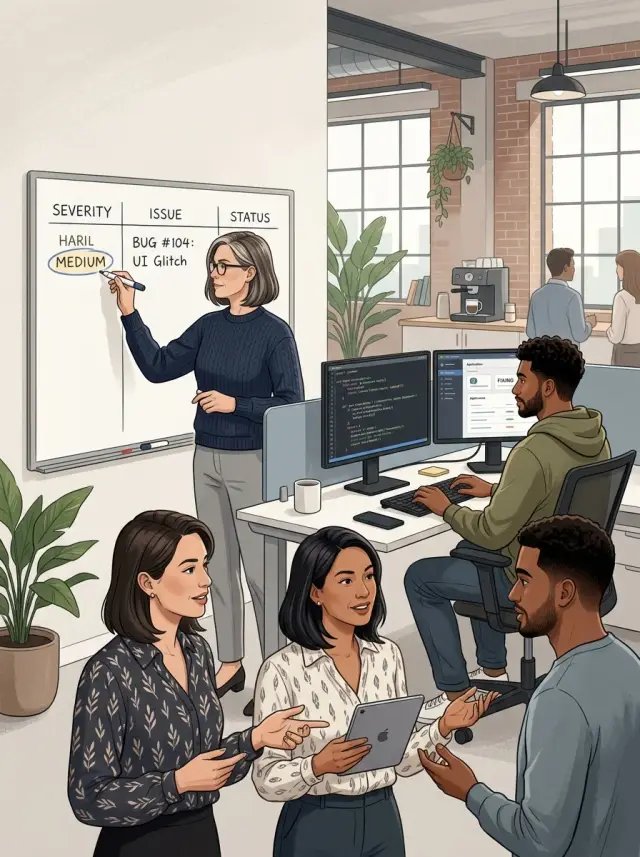
Technical leadership gap behind founder frustration
A technical leadership gap often sits behind rework, shifting scope, and fuzzy tradeoffs. Learn what founders should fix first.

Table of Contents
What founder frustration looks like in real work
A founder usually does not wake up angry at the team. The mood changes after a few rounds of hearing "almost done" and then seeing the same feature come back for another rewrite. A customer promise slips. A release moves by a week, then another. The roadmap still looks full, but the product feels stuck.
The first warning sign is repetition. The login flow gets rebuilt because the first version never handled edge cases. Pricing pages change three times because nobody settled the business rule first. An internal tool ships, then the team finds out sales needed different fields all along. Engineers stay busy, yet the company pays twice for the same work.
That is when many founders start chasing details themselves. They jump into standups, rewrite tickets at midnight, comment on button copy, and ask for updates every few hours. From the outside, it can look controlling. More often, it is panic. When nobody makes clear calls on scope, order, and tradeoffs, the founder fills the gap by managing everything badly, one tiny decision at a time.
You can usually spot the pattern in a few daily habits:
- The team closes many tasks, but customer progress stays small.
- Estimates keep changing because the work was never defined clearly.
- People say "we can fix that later" so often that "later" becomes a full sprint.
- The founder asks for more meetings because written plans do not match what ships.
This is why founder frustration often feels personal even when the real issue is not effort. The team may work long hours. They may care a lot. Still, motion is not the same as progress. A startup can look full of energy while it quietly burns time on avoidable resets.
When that keeps happening, the problem often looks less like lazy engineers and more like a technical leadership gap. Someone has to turn rough ideas into clear decisions before the team builds the wrong thing twice.
Why this is not just a people problem
Founders often read missed deadlines as a motivation problem. Sometimes that is true. More often, engineers are reacting to changing inputs, unclear priorities, and decisions that nobody owns.
A strong developer can still look slow in a messy system. If the feature changes twice a week, the API keeps moving, and nobody agrees on what "done" means, the team will redo work. That is not laziness. That is predictable waste.
The pattern usually looks like this: the founder asks for speed, product wants more edge cases covered, and engineering wants to avoid a shortcut that will break next month. All three goals can make sense. They still clash. If no one makes the final technical call, the team drifts into debate, partial fixes, and quiet frustration.
This is where a technical leadership gap shows up. The missing job is not writing more code. The missing job is making choices early enough that code can move forward.
Someone needs to say:
- what we ship now
- what we delay on purpose
- what risk we accept for speed
- what must stay stable for the next release
Without that, founders push for speed without clear limits. "Fast" starts to mean fast, cheap, flexible, polished, and easy to change later. A team cannot optimize for all of that at once. Engineers know this, even if they do not say it out loud.
When tradeoffs stay fuzzy, teams stall in subtle ways. One engineer waits because a data model may change. Another avoids cleanup because scope may grow tomorrow. A third ships a quick patch, then gets blamed when the patch turns into rework. The founder sees hesitation. The team sees moving goalposts.
A real people problem stays attached to the same person across stable projects. This startup pattern is different. Good people keep slowing down because the system around them keeps changing.
That is why many founders need clearer technical leadership, not harsher pressure. Sometimes that means a full-time CTO. Sometimes a fractional CTO for startups is enough. The title matters less than the decision-making: one person has to set limits, call the tradeoff, and let the team build.
How constant rework starts
Constant rework usually starts before anyone writes much code. It starts when a goal sounds clear in a meeting, but still means different things to different people.
A founder says, "make onboarding better," and the team hears five versions of that sentence. One person thinks it means fewer screens. Another thinks it means better copy. An engineer assumes it means fixing the slow signup flow. By the time the first version is ready, the founder finally sees something concrete and gives the first real feedback. That is late. The team already made choices, and now they need to undo them.
This is where a technical leadership gap shows up. Someone needs to turn a broad goal into a smaller target with limits, priorities, and tradeoffs. If nobody does that, build work starts too early.
The next problem is moving requests during delivery. A change that sounds small often is not small once the team is in the middle of the work. A new field in a form may change validation, database structure, analytics, admin screens, and support docs. Founders often add requests one by one because each request feels reasonable on its own. The pile becomes expensive.
A small product team might spend Monday to Wednesday building a new trial flow. On Thursday, sales asks for a custom step for one prospect. Then a founder wants a different pricing message. Then support wants another checkbox because users asked about it twice. None of these changes look huge. Together, they break the original plan and send the team back into the same code.
Rework gets worse when nobody says no to low-value changes. Teams need a person who can ask, "Does this help the goal right now, or is it just noise?" Without that filter, the loudest request wins.
When this happens every week, engineers stop trusting the plan. Work slows down, not because people are lazy, but because decisions keep changing after the work has already begun.
What shifting scope does to the team
When scope changes every few days, the team stops finishing things. Work starts, moves halfway, then gets pushed aside for the next urgent idea. After a few weeks, you do not have one delayed feature. You have five half-built ones.
That hurts more than most founders expect. A half-finished feature still needs code review, testing, design cleanup, and product decisions. It keeps taking space in people’s heads. The team looks busy all day, but very little reaches users.
Estimates also stop meaning much. A developer can estimate the login rewrite or the new billing flow. They cannot estimate a moving target. If the requirements change on Tuesday, then again on Thursday, the original number is dead. Founders often read this as poor execution when the real problem is unstable direction.
Context switching makes it worse. A developer who works on onboarding in the morning, pricing in the afternoon, and reporting two days later loses momentum every time. They need to reopen notes, reread code, and remember why an earlier choice made sense. That time is real. In a small startup, it can burn hours every week per person.
A simple pattern shows up fast. The founder sees motion: messages, commits, meetings, demos, fresh tickets. The team sees churn. Nobody feels done with anything.
Take a five-person product team. They start a customer portal. Midweek, a sales call pushes a new export feature to the top. Two days later, a competitor changes pricing, so billing becomes urgent. By the end of the sprint, three branches are open, QA is waiting, design has revised the same screen twice, and nothing is ready to ship.
This is where a technical leadership gap shows up. Someone has to protect order, call tradeoffs, and say, "not yet" to work that can wait. Without that, shifting product scope turns normal startup pressure into constant rework, and founder frustration rises even when the engineers are working hard.
Where unclear tradeoffs hurt most
Unclear tradeoffs do the most damage at release time. A founder wants the product out fast, but also wants it to feel polished. Both goals make sense. Trouble starts when nobody says which one wins this week.
Engineers then guess. One person fixes small visual issues. Another rushes a feature. A designer asks for one more pass. By Friday, the release slips and everyone feels annoyed for different reasons. That is often a technical leadership gap, not a motivation problem.
A team also needs a clear rule for bugs. Some bugs should block launch. Some should wait. If nobody makes that call, the team treats every issue like a fire. You end up delaying a useful release because of edge cases that affect three users, while a bigger product problem stays unsolved.
A simple example: a small SaaS team plans to launch a new customer portal in two weeks. They still have a slow report page, a messy mobile layout, and one rare payment error. If the lead does not rank those problems, the team spreads out across all three. Nothing gets fully done. The launch date moves, then trust drops.
Architecture choices hurt in a quieter way, but the cost is bigger. If a startup has a tight budget and needs a release next month, the team should pick the simplest setup that can run safely now. If someone starts building a complex system for future scale, they can burn two months and a large part of the budget before users even arrive.
Good technical leaders make four calls early and repeat them often:
- Are we optimizing for speed or polish in this release?
- Which bugs stop the launch, and which ones go into the backlog?
- What level of architecture fits our budget and timeline?
- What are we not building yet?
That last point saves more time than founders expect. When the team knows what will not ship now, they stop reopening settled debates. Work gets calmer. Progress gets easier to see.
How to fix the leadership gap
A technical leadership gap rarely closes with more meetings or more pressure. It closes when one person turns business goals into clear technical decisions, then holds that line long enough for the team to ship something real.
Start with a 30 day goal that people can test at the end of the month. "Improve onboarding" is too loose. "Cut signup drop off by 15%" gives the team a target and makes tradeoffs easier.
Then pick one person to make final technical calls. Founders still set direction, but the team needs a single decider on architecture, sequencing, and what waits. If that role is empty, engineers fill it in different ways, and rework starts again. In some startups, that person is a strong internal lead. In others, a fractional CTO for startups fills the gap until the company is ready for a full time hire.
A short delivery window helps more than a perfect roadmap. Two weeks is often enough. During that window, freeze scope unless something breaks revenue, legal needs, or customer trust. Small changes feel harmless, but three small changes can wipe out half a sprint.
Write tradeoffs in plain language while decisions happen. Skip long docs. A few lines are enough:
- We chose speed over polish for this release.
- We will support one payment flow now, not three.
- We accept manual support work for two weeks so the team can test demand first.
That kind of note saves a lot of arguing later. It also helps founders see what they are buying with each choice.
At the end of each cycle, review what shipped, what slipped, and why. Keep the review tight. If work moved because the team learned something real, fine. If work moved because nobody made a call, fix that first.
This approach is simple, but it changes the mood fast. Engineers stop guessing. Founders stop chasing updates all day. The team gets one shared picture of what matters now, what can wait, and who decides when the answer is not obvious.
Mistakes founders make under pressure
Pressure makes smart founders act on the last thing they heard. A rough customer call lands at 11 a.m., and by lunch the roadmap changes. That feels responsive, but it usually creates churn, not progress.
One common mistake is changing priorities after every conversation. Customers often describe symptoms, not the actual fix. If one prospect asks for a dashboard and another asks for Slack alerts, the team can spend two weeks bouncing between ideas while the real problem stays the same. Engineers call this rework. Founders feel it as slow delivery and rising tension.
Another mistake is asking for delivery dates before making product choices. A date sounds concrete, so it feels calming. But if the scope is still fuzzy, any estimate is half guesswork. Teams then commit too early, rush into code, and pay for it later when someone finally decides what the product should do.
Hiring more engineers too soon is another trap. More people do not fix unclear ownership. They often make the confusion louder. Now three people wait for decisions instead of one, and the founder spends even more time answering the same questions in different ways. A small team with one clear product owner often moves faster than a bigger team with no real decision maker.
Pushback is where many founders get this wrong. When engineers say, "We need to choose between speed and reliability," that is not bad attitude. It is usually a warning that the team sees a tradeoff nobody named yet. If the founder treats every concern as resistance, people stop speaking plainly. Work looks smoother for a week, then problems pile up.
A technical leadership gap often hides inside these moments. The founder is trying to keep sales alive, calm customers, and move fast. Someone still needs to turn noise into decisions, protect the team from random swings, and make tradeoffs clear. Without that layer, pressure goes straight into the backlog and comes out as founder frustration.
A simple example from a small product team
A five-person startup team had a common problem. The founder wanted to launch in three weeks, but every customer call added one more "must-have" request. One prospect wanted custom roles. Another wanted team invites. A third asked for a guided setup flow instead of a basic sign-up page.
The engineers were not dragging their feet. They built the onboarding once, then tore it up when the scope changed. Two weeks later, they rebuilt it again because the founder decided the first version felt "too simple" for sales demos.
By the end of the month, the team had touched the same area three times and still had no release. That is not a motivation problem. It is a technical leadership gap.
No one owned the tradeoffs. The founder kept adding requests, the engineers kept reacting, and nobody said, "This part can wait until version two." So everything stayed urgent, even the parts that only mattered for a handful of future customers.
A fractional CTO for startups usually fixes this by making one decision that sounds boring but changes everything: pick a release target and protect it. In this case, the release target became simple self-serve onboarding for one user type. Team invites, advanced roles, and the setup wizard moved to a later milestone.
The rules got clear fast:
- no new onboarding work unless it blocked launch
- edge cases got manual support for the first release
- one person approved scope changes
That gave the engineers room to finish instead of circling back. It also gave the founder a cleaner way to think. A request was no longer "good idea or bad idea." It was "now or later."
The next release shipped with fewer changes, fewer meetings, and much less rework. The product was not perfect, but it was live. For a small team, that usually matters more than squeezing every request into version one.
Quick checks for the next two weeks
Two weeks is enough to spot a technical leadership gap. You do not need a full audit. Watch normal work and note what people actually do each day.
Use a simple scorecard.
- Ask one team member to explain the current top priorities in 60 seconds. Then ask another person. If the answers drift, the team does not share the same plan.
- Look at how work moves. If people keep starting fresh tasks while older ones sit half-done, nobody is holding the line on focus.
- Pick each active feature and ask who decides the tradeoff. Someone should own calls like speed vs polish, quick patch vs deeper fix, or release now vs wait.
- Track scope for seven days. Small clarifications are normal. New requests, fresh edge cases, and surprise changes every other day are not.
- Notice who answers technical questions. If every hard decision still goes to the founder, the team has no real technical owner.
A small product team can look busy and still move backward. On Monday they work on onboarding bugs. On Wednesday the founder asks for pricing changes. On Thursday an engineer pauses both because no one decided whether stability matters more than shipping this week. By Friday, three people touched the same area and none of it feels done.
That pattern is common. It usually does not mean the engineers are lazy. It means the team lacks one person who can set direction, limit changes, and make tradeoffs early.
If two or more checks fail in the same week, treat that as a management problem. Do not push for more hours first. Extra effort inside a confused system just creates faster confusion.
The fastest fix is often simple. Give one person clear authority over technical decisions, freeze scope for a short window, and finish older work before new work starts. When the founder stops acting like the live answer desk for every technical question, the team can finally settle down and ship something clean.
What to do next
Founder frustration gets easier to fix when you stop treating it as a motivation problem and start tracing where work bends back on itself. Pull the last three examples of rework from real tickets, chats, or release notes. Write down what changed, who made the change, and how many days the team lost. Patterns show up fast when you look at actual work instead of memory.
Then make a second list with the decisions only the founder still makes. If pricing changes, feature cuts, architecture choices, release timing, or team priorities still wait for one person, the team is running with a technical leadership gap. Engineers can write code all day and still lose a week if nobody owns the tradeoffs.
Check these four areas first:
- ownership: who can make a call without asking the founder
- roadmap: who turns goals into a build order
- architecture: who decides what should stay simple and what needs more work
- change control: who says no when scope shifts mid-build
A small example makes this obvious. A founder asks for a customer portal, then changes the signup flow after design is done, then asks for enterprise permissions before launch. The engineers are not lazy if they rebuild parts twice. The team is missing one person who can hold the line, explain the cost, and sequence the work.
If the same problems keep returning every month, outside CTO advice is usually cheaper than another cycle of delay. For some teams, a fractional CTO for startups is enough to reset ownership, tighten architecture choices, and cut rework without building a heavy layer of meetings.
Oleg Sotnikov can review the current situation, look at the decision flow, and suggest a lean plan. That can be enough to show whether the problem sits in people, unclear ownership, or founder bottlenecks.