Technical isolation myths in B2B deals explained simply
Technical isolation myths often slow B2B sales. Learn which buyer requests need real architecture work and which need clearer controls.
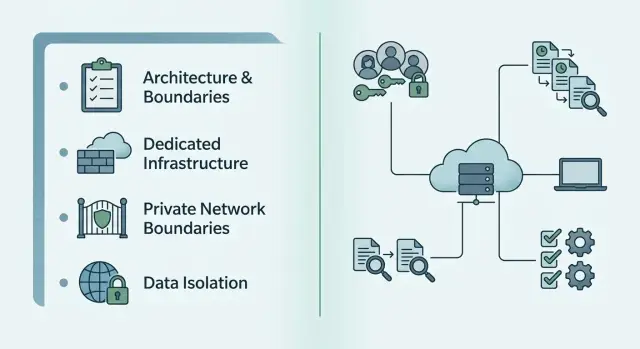
Table of Contents
Why these requests cause trouble
A lot of B2B security requests sound simple at first. Then one word, often "isolation", starts a fight inside the company because different people attach different risks to it.
On the buyer side, that word may mean any of these things:
- Customer data sits in a separate database
- Access rules stop one tenant from seeing another
- Internal staff cannot browse production data
- Encryption keys, logs, or backups stay separate
Those are not the same ask. One needs product and policy checks. Another may need real architecture changes. If nobody defines the term early, the request grows before the team even knows what problem it is solving.
Sales teams feel the deadline first. They hear, "We need this for procurement," and treat it like a deal blocker. Engineering hears something else. They picture a rebuild: new environments, separate deployment paths, extra monitoring, more support work, and costs that stay long after the contract is signed.
That gap creates expensive confusion. A vague line in enterprise buyer questionnaires can turn into weeks of design work, even when the buyer only wanted clearer access controls, audit logs, or a short written explanation of how tenants stay separated.
This is where technical isolation myths cause real damage. Teams assume custom work is the safe answer. Often it is just the fastest answer under pressure.
Clear terms stop that drift. If someone asks for "dedicated isolation," ask what risk they want to reduce: data mixing, admin access, noisy neighbors, compliance scope, or incident blast radius. Once the risk is named, the team can decide whether it needs new architecture or better controls and evidence. That short pause saves money, protects delivery dates, and keeps teams from promising a version of the product they do not want to maintain.
What buyers usually ask for
Many technical isolation myths start with a buyer using one short phrase for a bigger concern. They ask for a "separate database" or a "dedicated stack" because those words sound safe and fit neatly into a procurement form. Often, they want proof that one customer cannot see, affect, or slow down another.
A separate database is one of the first requests teams hear. Sometimes the buyer truly wants hard separation for data, backups, retention, and access. Sometimes they would accept a separate schema, strict tenant permissions, encryption, and clear deletion rules, but the questionnaire has no space for that nuance.
Dedicated compute comes up for the same reason. A buyer may ask for their own servers, their own containers, or a full copy of your app running alone. That request can mean they worry about noisy neighbors, patch timing, or who shares the runtime with them.
Private networking is another frequent ask in B2B security requests. Some buyers want traffic to stay off the public internet where possible, or they want IP allowlists so only approved offices and systems can connect. In practice, this request often mixes security needs with internal policy, especially in larger companies.
SSO, audit logs, and admin controls appear in almost every serious review. Buyers want to manage access with their identity provider, see who changed what, and limit risky actions inside the product. These controls matter because they reduce day to day risk without forcing special infrastructure for every customer.
Regional hosting and data location limits are also very common. A buyer may require data to stay in the EU, the US, or a specific country because of legal rules, contract terms, or internal compliance. Sometimes they care about where production data lives, while logs, backups, and support access matter just as much.
The pattern is simple: buyers usually ask for the clearest version of control they know how to name. Your job is to understand what problem they are actually trying to solve before you promise a major architecture change.
When you need real architecture changes
You need real changes when the buyer asks for something your current setup cannot honestly provide. If your product runs as a shared service today, some requests go beyond policy wording and into how the system is built, deployed, and operated.
A common example is a ban on shared compute or shared storage. If the customer says their data cannot sit in the same database cluster, file store, cache, or worker pool as anyone else's, that is not a paperwork issue. You need a dedicated environment, and usually dedicated backups, secrets, logging rules, and recovery plans too.
The same applies when the buyer needs its own network boundary. If their security team requires private connectivity, strict traffic separation, or controls that keep their systems off your normal public path, you are no longer talking about a checkbox in a questionnaire. You are building a separate network design and maintaining it over time.
These requests usually mean architecture work:
- The contract limits where data can live, and your current hosting model cannot pin storage and processing to that region.
- The customer needs a different release calendar, with its own maintenance window, testing flow, or approval step before updates.
- Their risk level is much higher than your normal customer base, so a shared stack creates too much blast radius.
- Their auditors expect dedicated infrastructure that you can name, document, and inspect separately.
Separate release timing gets underestimated all the time. If one buyer wants updates on the second Saturday of each month, while everyone else gets continuous releases, your team now needs version control, deployment controls, rollback plans, and support coverage for that customer alone. That is an operating model change, not a wording fix.
Data location rules can force the same kind of shift. If a contract says personal or regulated data must stay in one country or inside one legal entity's infrastructure boundary, you may need a new cloud region, a different backup design, and new vendor choices.
This is where many technical isolation myths break down. When the buyer changes compute, storage, network, deployment timing, or data residency, they are changing the shape of the system itself. At that point, a dedicated stack may cost more, but it is the honest answer.
When clearer controls solve the issue
Buyers often ask for "isolation" when they really want proof that the right people can access the right data, and that you can explain what happened if something goes wrong. That is a controls problem more often than an architecture problem. A lot of technical isolation myths start there.
If one shared product already keeps customer data separated, you may not need a new tenant model, an extra database, or a custom deployment. You may just need to describe your controls in plain language and match them to the buyer's questionnaire.
Common cases usually look like this:
- A concern about admin access often points to role-based access control. Show who can do what, who approves elevated access, and how you remove it.
- A question about traceability often points to audit logs. Buyers want to know who changed a setting, exported data, or signed in with elevated rights.
- A question about user onboarding and offboarding often points to SSO and SCIM. They want access to follow the company's identity system, not manual invites and forgotten accounts.
- A concern about stored data often points to backups, retention windows, and deletion rules. Specific timeframes work better than vague promises.
- A question about breaches or outages often points to written incident steps. Name who responds, how you contain the issue, when you notify customers, and how you record the fix.
The difference matters because controls are cheaper to add, faster to review, and easier to keep consistent. A team can write an access review process in a day. Rebuilding the product for single-customer infrastructure can take months and create fresh problems.
A simple sales example makes this clear. A buyer asks for a "separate environment" because their security team uses that phrase in a standard form. After one call, you learn they mainly need SSO, tighter admin permissions, and logs they can review during an audit. That deal does not need architecture changes. It needs clearer controls, clear evidence, and cleaner answers.
How to sort each request step by step
Many technical isolation myths come from treating every buyer request like a demand for a full rebuild. Most of the time, the fastest path is to slow down for one hour and sort the request in plain language.
Start with the buyer's risk, not their wording. If they ask for dedicated infrastructure, separate databases, or isolated admin access, ask what they are trying to prevent. They may worry about cross-customer data exposure, weak internal access rules, noisy neighbors, or a failed audit.
A simple review usually works better than an instant promise:
- Ask what could go wrong in their view. Push past labels like "single tenant" or "full isolation" and get to the actual fear.
- Trace the data flow. Note where data enters, where it is stored, who can read it, and which admin paths exist.
- Compare that map with your current controls. Role-based access, audit logs, encryption, tenant scoping, approval rules, and support access limits often cover more than the buyer first assumes.
- Put a real price on any change. Include build time, extra support work, new monitoring, on-call load, and the sales delay while you make it.
- Offer the smallest change that closes the gap. That might be a tighter support process, a separate admin role, customer-managed keys, or one isolated component instead of a full separate stack.
This is where teams often save a deal. A buyer may ask for a separate environment because their security team uses that phrase in every questionnaire. Once you show that production access needs approval, all actions land in logs, and customer data stays scoped by tenant, the request can shrink fast.
If the gap is real, say so clearly. For example, if shared background jobs can touch data across tenants, that is an architecture issue, not a wording issue. If the risk already sits under strong controls, document those controls in simple terms and move on.
Oleg Sotnikov often works with companies at exactly this stage: sorting real architecture work from questionnaire noise before a team burns weeks on the wrong fix.
A simple example from a sales cycle
A common sales call goes like this: a buyer likes the product, sends a security questionnaire, and then asks for a dedicated stack before the first contract is signed. That sounds serious, but many technical isolation myths start with a request that is broader than the real risk.
Picture a startup selling a B2B SaaS tool to a mid-sized company. After the demo, the buyer's security team says, "We need our own environment on day one." If the seller says yes too fast, they may commit to weeks of extra work, higher cloud bills, and a harder support model.
A better reply is a simple question: "What concern are you trying to solve with a dedicated stack?" In many cases, the answer is not compute isolation at all. It is access.
That is what happens here. The buyer is worried that support staff might open customer records during troubleshooting. They want proof that only approved people can see data, and that every action leaves a trace.
The seller does not need a new architecture to answer that. They keep the shared setup and describe the controls already in place:
- Role-based access control limits who can reach production data
- Audit logs record every access and admin action
- Approval rules require a named request before support can enter a sensitive account
- Temporary access expires after the task ends
- Sensitive fields can stay hidden unless the case truly needs them
Now the conversation changes. The buyer asked for isolation, but their real need was controlled human access. Once that is clear, the shared architecture becomes acceptable for this deal.
This is where many teams save themselves from a bad promise. A dedicated environment may still make sense later, especially for a higher tier with strict procurement rules, custom network boundaries, or contract terms that justify the extra cost. But it should be sold as a separate operating model, not thrown in because a questionnaire used broad language.
An experienced CTO or advisor will usually slow this moment down on purpose. One calm question can separate a real architecture change from a control-and-documentation gap. That can save a team months of work for a problem they already know how to solve.
Mistakes teams make under pressure
Many technical isolation myths survive because teams answer buyer forms too fast. A big prospect asks for a security review, sales wants momentum, and someone starts saying "yes" before anyone reads the full questionnaire. That is how small wording issues turn into expensive promises.
One common mistake is treating every checklist item like a hard legal rule. Buyer forms often mix real requirements, preferences, copied language from old templates, and questions written by people far from the actual system. If a form asks for "full tenant isolation," that does not always mean you need separate infrastructure for every customer. Sometimes the buyer only wants clearer access controls, audit logs, and a clean explanation of how data stays separated.
Teams also get trapped by fear. They assume the safest answer is to offer a custom stack for one deal, even if the contract is small. That can leave you supporting a one-off setup for years. Separate environments, special deployment rules, custom monitoring, and odd exceptions look manageable in the sales call. Six months later, they eat time every week.
Another bad habit is mixing legal promises with technical guesses. A salesperson says, "Yes, we can do that," legal turns it into contract text, and engineering sees the promise after the redlines are already done. Now a vague answer about isolation has become a delivery obligation.
A familiar chain looks like this:
- Sales hears an objection and promises a fix on the spot.
- Nobody checks whether the request is technical, legal, or just wording.
- Engineering gets pulled in after the buyer expects a firm answer.
- The team overbuilds to avoid conflict.
This gets worse when sales sets scope without engineering review. Even a 20 minute review by the CTO, lead engineer, or an outside advisor can stop a bad commitment. They can ask a plain question: does this request change the architecture, or do we already meet the goal with current controls?
If you slow the process down at that point, deals usually get cleaner. You give fewer promises, but the promises you make are real.
A quick check before you commit
Before you promise a separate stack, separate database, or custom hosting setup, pin down what must actually stay apart. Buyers often ask for "isolation" as a broad term, but the real concern may be much smaller. It might be customer records, backups, logs, file storage, or admin access.
This is where technical isolation myths waste time. Teams hear a big request and assume they need a big rebuild. In many deals, the buyer only wants tighter access, cleaner audit trails, or a clearer explanation of how tenant boundaries already work.
A fast review usually starts with five plain questions:
- Which data is in scope, down to tables, files, logs, and exports
- Which people, services, and vendors can touch it today
- Which controls already reduce exposure, such as role limits, audit logs, encryption, or masked support access
- Which part of the buyer's requirement still fails after those controls
- What the fix will cost each month in cloud spend, support time, and release complexity
That last point matters more than teams admit. A custom isolation model can look cheap during sales and become expensive every week after launch. Separate environments mean more deployments, more monitoring, more patching, and more room for drift.
You also need to ask when the buyer needs proof. Some buyers want evidence before a pilot starts. Others only need it during security review or procurement. If the deadline is close, you may not need to build anything new yet. You may only need to show access logs, policy documents, architecture notes, or a short control matrix.
A simple example: a buyer asks for "full tenant isolation." After review, you find the real issue is that support staff can open live accounts too easily. You tighten support permissions, require approval for elevated access, and keep a clear audit trail. The buyer gets the proof they need, and you avoid months of extra architecture work.
If the gap is real, say so early. If the gap is only in evidence, fix the evidence first.
What to do next
Technical isolation myths grow fast when every deal starts from zero. Build one shared request matrix that sales, engineering, and the founder use together. For each buyer request, log what they asked, what they actually mean, which control you already have, what evidence you can show, and whether the request changes tenancy, storage, or data flow.
That matrix stops the usual mess. Enterprise buyer questionnaires often repeat the same concern with different wording. When your team writes plain answers once and reuses them, reviews get faster and promises get safer.
A short working list is enough:
- Label each request as control, evidence, or architecture.
- Escalate only when the buyer asks for separate tenancy, a new data path, dedicated infrastructure, or different access boundaries.
- Keep approved answers for common questions about backups, logs, admin access, incident handling, and data deletion.
- Record who can approve an exception before sales says yes.
If a request does not change where customer data lives, how it moves, or who can reach it, you usually do not need to rebuild the product. A clearer answer, a simple diagram, or a policy excerpt often solves the issue faster than rushed engineering work.
Founders should be strict about escalation. Once a team promises custom isolation in a sales call, that promise tends to stick. It can add months of work, raise support cost, and create a special case that no one wants to own later.
When security reviews keep stalling deals, bring in outside technical judgment early. A Fractional CTO can read buyer language, spot what actually affects the system, and push back on expensive requests that only need better control wording.
Oleg Sotnikov can help with that kind of review. His background covers startup product architecture, enterprise environments, and lean production infrastructure, so he can separate real architecture changes from paperwork noise before a founder commits to custom isolation.


