Technical hiring after a fundraise: fix the ownership gap
Technical hiring after a fundraise often turns into a rush for more engineers. Learn how to map ownership first and hire for real gaps.
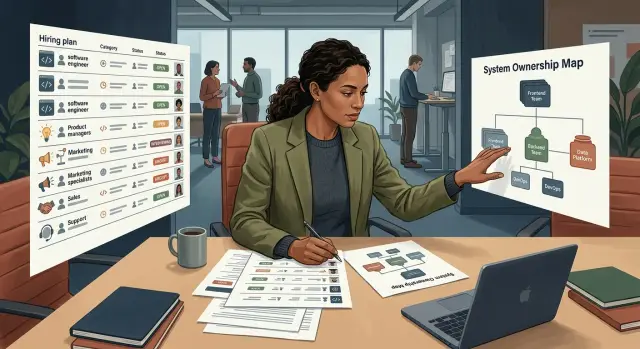
Table of Contents
Why the plan breaks after the round
A fresh round changes the mood fast. Before the money lands, founders ask, "What is the smallest team that can ship this?" After the round, the question often becomes, "How fast can we add people?"
That shift feels normal. It still breaks hiring plans all the time.
The pressure is real. Investors want growth. Founders want momentum. The team wants proof that the company is moving up a level. So the hiring plan turns into a seat count: two backend engineers, one frontend engineer, one product manager, one designer. It looks tidy in a spreadsheet. In practice, it often falls apart.
The problem is simple. Founders count people, but they do not map ownership.
A team can have eight engineers and still have nobody clearly responsible for releases, bug triage, on-call issues, support escalations, or the awkward parts of the product that everyone avoids. Those jobs do not disappear because you hired smart people. They pile up.
This is where post-fundraise hiring usually goes wrong. The company assumes the new team will figure it out as it grows. Each person takes a slice of feature work, while the messy operating work sits in the gaps. One engineer thinks product handles support feedback. Product thinks engineering will sort it out during sprint planning. Founders assume the most senior developer will keep things stable. Nobody owns the whole system, so everyone touches it and nobody protects it.
The warning signs show up early:
- releases slip because no one drives them end to end
- bugs stay open because triage belongs to no one
- customer issues bounce between support and engineering
- engineers wait on decisions that nobody has authority to make
- founders get pulled back into daily delivery work
A bigger team can hide this for a while. More hands create the feeling of progress, even while work moves slower. Then the company hits a bad month: a release breaks, support volume rises, and half the team stops building new things so it can clean up old problems.
The round did not create the problem. It exposed it. Money makes weak ownership harder to ignore because the company now has more people, more promises, and less room for loose ends.
What system ownership actually means
For every system that matters, one person should have the final call.
That person owns uptime, bug triage, and delivery for that system. If login breaks at 2 a.m. or a release slips for the third time, everyone should know who decides what happens next.
A system might be a customer-facing area like billing or signup. It might also be internal plumbing, like the deploy pipeline, data sync jobs, or alerts. Founders often reduce ownership to "who wrote most of the code." It is much wider than that.
Ownership includes code, but it also includes the tools around it, the docs people rely on, and the habits that keep work moving. An owner keeps runbooks current, makes sure alerts point to real problems, answers support questions that need product context, and fixes rough edges that slow the team down. If nobody owns those parts, bugs collect in strange places.
Shared work is normal. Two or three engineers may touch the same area every week. That is fine. Shared work still needs one clear decider. When tradeoffs appear, one person picks the path, sets the quality bar, and accepts the result. Teams get stuck when everyone contributes and nobody decides.
A simple test helps. Ask who would handle a Friday night outage, a bug customers keep reporting, a release that needs a rollback, or a missing piece of documentation. If the answer changes every time, you do not have ownership yet.
Ownership starts before anything goes wrong. A good owner watches risk early, trims fragile parts, and plans work so the team does not keep stepping on the same problem. New hires help most when they step into clear areas with clear responsibility. More people without ownership usually means more meetings, slower fixes, and more "I thought someone else had it."
Good teams share effort. Mature teams still name an owner.
Why headcount feels safer
After a round closes, founders want proof that the company is moving. New hires give them that proof. A team plan with six open roles, four signed offers, and two start dates looks clean in a board update. You can count people. You can track salaries. You can point to seats filled.
Ownership is harder to see. No spreadsheet cell shows that nobody truly owns releases, database changes, auth, or production incidents. That gap stays quiet until a launch slips, a bug lingers for days, or a small change turns into a week of back and forth.
That is why hiring plans drift toward headcount. Counting people feels like control. Defining who owns what feels messier, even though it matters more.
Founders also copy team charts from bigger companies. It is an easy mistake. A larger company has separate managers, frontend teams, backend teams, QA, platform, and data. That structure can make sense at 200 engineers. At 8 or 12 engineers, it often creates blanks instead of clarity.
A startup does not need an impressive org chart first. It needs clear owners for the systems that keep the product alive.
Take a simple case. A founder hires two backend engineers, one frontend engineer, and a QA person. On paper, the team looks balanced. In practice, nobody owns deployment rules, schema changes, logs, rollback decisions, or incident response. Work keeps moving until release week. Then every risky task lands in a shared space where no one wants to make the call alone.
More people can make this worse. Each new hire adds handoffs, meetings, and more places where responsibility gets blurry. One engineer waits for another to review a migration. QA waits for a stable build. Product waits for a release window. The team is bigger, but decisions move slower.
Experienced technical leaders spend less time asking, "How many engineers do we need?" and more time asking, "Which systems have no clear owner right now?" Once you answer the second question first, the hiring plan usually gets smaller and sharper.
A simple post-fundraise example
A seed-stage SaaS closes a round and hires four engineers in a month. On paper, it looks like real progress. The team is bigger, the roadmap has more people on it, and everyone starts building features right away.
Three weeks later, the product still ships late.
The problem is not effort. It is ownership. One engineer works on billing, another on onboarding, another on reporting, and another on the mobile app. Nobody owns the path from finished code to a safe release.
Deploy jobs fail and sit until the founder notices. Alerts go to a shared inbox, so people assume someone else saw them. Production access grew piece by piece, with no clear rules. A release needs a database change, but nobody knows who should run it, check it, or roll it back if it goes wrong.
The team keeps moving feature work forward, but release dates slip for small, avoidable reasons. A broken test blocks deployment for half a day. A missing secret stalls a hotfix. An alert fires at night, and the founder jumps in because nobody else feels sure enough to act.
That is the hidden cost when the first hires map to product areas only. You get more code, but not more control.
A typical week in this company is not dramatic. That is what makes it so easy to miss. On Monday, two features are ready, but the deploy pipeline fails on one flaky step. On Wednesday, a customer reports a production bug, and three people ask who can log in and fix it. On Thursday, the founder approves access, checks logs, and helps ship the patch. On Friday, everyone says the team needs more engineers.
They probably do not need more people yet. They need one person to own releases, access, alerts, and the basic operating rules around production. Once someone has that job clearly, the same four engineers often look much more effective.
Founders usually hire for output first. The business often needs ownership first.
Map ownership before you hire
Most hiring plans start with roles. Start with systems instead.
The mistake usually happens here. Founders write "2 backend engineers" or "1 DevOps hire" before they write down what must keep working every day. That order feels normal, but it hides the real problem.
Make a plain list of the systems that can block revenue, releases, or customer support. For most teams, that includes signup and permissions, billing and subscription logic, the main product app and its API, the deploy pipeline and hosting, and the alerts and logs people depend on during incidents.
Then put one name next to each system. One person. Not a team, not "engineering," not "we all share it." Shared ownership usually means nobody can act fast when something breaks on Friday night.
Now test the map. Ask three blunt questions for every system: who can fix it, who can release changes to it, and who watches it when it fails? If you do not have a clear answer, you found a hiring gap.
That gap should drive the next role. Do not open jobs just because other startups hired that title after a round. Open roles for the systems that slow delivery, create repeat outages, or leave support stuck waiting on one overloaded engineer.
A simple example: a company hires three product engineers because the roadmap is full. Nobody owns deploy pipelines or production alerts. Features get built, but releases slip, bugs stay live too long, and support keeps chasing engineers in Slack. The team looks bigger, yet output feels worse.
This map should stay small and boring. A spreadsheet works. A whiteboard works too. What matters is that you update it every month, because ownership changes fast after new hires, product launches, and architecture changes.
If you want outside help, this is a good place for a fractional CTO to step in for one working session. The useful result is not a fancy org chart. It is a clear list of systems, owners, and gaps you can actually hire against.
Which roles usually come first
The first hires after a round should remove the bottlenecks that slow product work every day. Most teams do better with one strong product engineer who can own a whole area than with two narrow specialists who both need constant direction.
Start with people who can take a feature from idea to production. They should be able to shape scope, write code, handle the data model, add basic tests, and work through release issues without handing the job to three other people. That kind of ownership matters more than team size.
For many startups, the pattern is simple. First, hire someone who can own one product area end to end. Next, add another owner for the next product or platform area. Bring in infrastructure help when deploys, incidents, or access changes still depend on one person. Add QA support when bugs keep delaying launches or the team spends too much time on manual checks.
Infrastructure becomes urgent when one senior engineer is the only person who can ship safely. If that person handles deployments, cloud costs, alerts, and late-night fixes, your delivery pace is fragile. One outage, one vacation, or one resignation can stall the whole team.
QA is often the next practical hire, not because testing sits outside engineering, but because weekly bug cleanup drains the team. If every release turns into a scramble of hotfixes, support messages, and rechecks, a good QA person gives time back to everyone else.
Wait on managers longer than most founders expect. A manager helps when owners already exist, work moves through a clear process, and the team needs coaching or coordination at a larger scale. If nobody owns systems yet, a manager cannot fix that gap. You get more meetings, but not faster delivery.
This is one place where experienced fractional CTO input can save a lot of money. The right early hires lower risk and make each later hire easier to place. The wrong ones leave you with more salaries and the same bottlenecks.
Mistakes in the first hiring wave
The first hiring wave often creates more confusion than speed. After money lands, founders feel pressure to look bigger, so they copy the org chart of a company ten times their size. A startup with one product, one codebase, and a small customer base rarely needs separate managers for platform, backend, frontend, data, and QA. It needs clear owners.
Another mistake is splitting one system across too many people. One person owns APIs, another handles deploys, a contractor manages the database, and a new hire takes bug fixes. Then nobody owns the full path from idea to production. Work slows because every release crosses extra handoffs, and small problems sit between teams.
Senior titles create a similar mess. Hiring a VP of Engineering, principal architect, or head of platform can feel safe after a round closes. But a title does not fix unclear scope. If that person cannot answer "what do I own this quarter?" in one short sentence, the hire is already drifting.
Teams also ignore the work that keeps a product running after launch. Releases, customer support, incident response, access problems, billing bugs, and small fixes eat real hours every week. If nobody owns that load, your strongest engineers get dragged into random fires and planned work slips.
Contractors can make this worse when founders leave them outside the ownership map. A startup may rely on a freelance infrastructure engineer, an agency, and two part-time specialists, but still act as if the in-house team owns everything. In practice, the contractors hold passwords, deploy knowledge, and old decisions nobody else can explain.
The pattern shows up quickly. Two people approve the same release, but neither feels responsible when it fails. Senior hires spend more time arguing about territory than shipping work. Contractors run systems that employees cannot explain. Support tickets and production issues land in a shared chat and stay there.
The fix is usually simple: give each system one named owner before you add another title.
A quick check before you add a role
Before you open a new role, force one clear answer: what system will this person own within 90 days? If you can only say "help the team" or "support growth," the role is still vague. Ownership needs a real boundary, like the billing flow, mobile releases, internal tools, or the support escalation path.
Then write down who handles that work today. Use one name, not "the team." Founders often spread one hard job across three people and call it coverage. It is not. It is a gap with polite language around it.
This short pause saves a lot of waste. Many teams hire because work feels messy, but they never ask what fails if they wait another month or quarter. If the answer is "nothing serious," you may not need a full-time hire yet. If revenue stalls, customers wait longer, or releases keep slipping, the need is real.
Process can fix more than founders expect. A tighter release checklist, fewer approval steps, clearer specs, or a simple support rotation can remove the bottleneck before you add salary and management load. Small teams often move faster after they give one engineer clear authority over one system, even without adding headcount.
Before you approve the role, write down five lines:
- the system or workflow this person will own
- the person covering it today
- the cost of waiting 60 to 90 days
- the process change you could try first
- the person who approves quality, releases, and support
That last line matters a lot. If nobody owns quality, release, and support, your new hire walks into confusion. They may write good code and still fail because every risky decision goes back to the founder or bounces between engineers.
A simple example makes this obvious. A startup wants to hire two backend engineers because releases feel slow. After this check, they find the real problem is that one senior engineer still reviews every production change, handles incidents, and answers support questions. The first move should probably be to give someone ownership of release and support for a defined area, or to fix the review flow before hiring more people.
An outside operator can often tell whether you need another engineer, a stronger owner, or fewer handoffs. That sounds like a small distinction. It changes the whole hiring plan.
What to do next
After a round, every problem can start to look like a hiring problem. Slow releases? Hire. More customer requests? Hire. Infra pain? Hire.
Pause before you approve the next role and draw a basic ownership map.
Keep it plain. Put each important system or process on one page, then note what it is, who owns it today, where decisions get stuck, and what result is missing. That exercise usually shows the real gap faster than another interview loop.
You may find that one engineer touches payments, support escalations, and deployment approvals, while nobody clearly owns reliability. That is not a headcount problem first. It is an ownership problem.
Do not try to fix the whole org chart in one pass. Pick one unclear area this week. Good candidates are release ownership, incident response, data pipelines, internal tools, or the work between engineering and operations. If one of those areas has no clear owner, fix that before you add another title.
When you write a role brief, center it on owned outcomes. Title prestige is a common trap after a round. "VP," "Head of," or "Principal" can feel safer than writing the real job. Skip the status language and describe the work.
A better brief sounds like this: "Own release quality for the product team. Set the deployment process, reduce rollback pain, and make sure incidents have one clear person in charge." Good candidates respond to that because they can see what they will actually own.
If you want a second view before you hire, Oleg Sotnikov at oleg.is can review the plan, spot ownership gaps, and help you decide whether you need a full-time hire, a narrower role, or Fractional CTO support instead. That kind of review is often cheaper than one rushed senior hire, and much easier to undo than a messy org chart six months later.
Frequently Asked Questions
Why do hiring plans often break after a fundraise?
Hiring plans fail when founders count seats before they name owners. More people can add more handoffs, more waiting, and more confusion if nobody owns releases, incidents, support escalations, or production rules.
What does system ownership actually mean?
System ownership means one person has the final call for a system. That person watches uptime, drives bug triage, handles release decisions, keeps docs and runbooks usable, and steps in when something breaks.
How can I tell if we have an ownership gap?
Ask four simple questions: who fixes it, who ships changes to it, who watches it in production, and who decides during an outage. If the answer changes each time, you have a gap.
Should we hire more engineers or define ownership first?
Assign ownership first. A clear owner often removes the bottleneck without adding salary, meetings, and extra review steps. Hire when the owner still cannot keep up or when one person carries too much risk alone.
Which systems need a named owner first?
Start with the systems that can stop revenue, releases, or support. For most startups, that means signup, billing, the main app and API, deployments, alerts, logs, and incident response.
Who should own releases in a small startup?
Pick one person and make the call explicit. In many startups, that owner is a strong product engineer or a senior engineer with enough context to drive a release from code to production.
When should we hire for infrastructure or DevOps?
Bring in infrastructure help when one person still handles deploys, cloud changes, alerts, access, and late-night fixes. If that person takes a day off and shipping slows down, you waited too long.
When is QA the right next hire?
QA makes sense when manual checks, bug cleanup, and hotfixes eat too much engineering time. If every release turns into a scramble, a good QA hire gives the team room to build again.
Do we need an engineering manager right after fundraising?
Usually later than founders think. Managers help once owners already exist and work moves through a clear process. If nobody owns systems yet, a manager adds coordination but does not solve the root problem.
What should we define before opening a new role?
Write the owned system, who covers it now, what breaks if you wait 60 to 90 days, and what process fix you can try first. If you cannot say what this person will own in 90 days, the role is still too vague.


