Startup CTO role red flags that make strong leaders leave
A vague startup CTO role drives away strong candidates. See how unclear authority, agency dependence, and fuzzy hiring plans create blame loops.
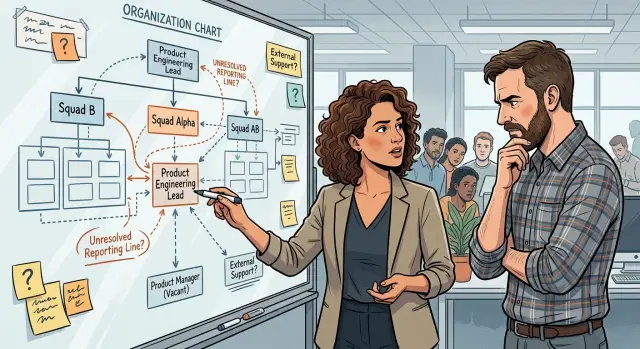
Table of Contents
Why strong candidates walk away early
A strong candidate can usually size up a startup CTO role in one or two calls. That does not mean they avoid hard work. Most senior leaders like hard work when the job is real, the mandate is clear, and the founder tells the truth about the mess.
They leave when the role looks undefined. Senior people have seen this movie before. The title sounds big, but the authority is missing, the team is somewhere else, and the hiring plan depends on hope.
The difference between hard and messy
A hard job has clear problems. The product is late, the stack needs cleanup, and the team needs direction. That can be stressful, but it is still workable because the leader can make decisions and fix things.
A messy job is different. The founder wants one person to own delivery, hiring, architecture, vendors, and deadlines, but does not hand over control. Then every missed target becomes that person's fault, even when they never had the power to change the setup.
Strong candidates spot three warning signs early:
- No clear authority. They hear, "You will own tech," but product, budget, hiring, and vendor choices still stay with someone else.
- Hidden agency dependence. The startup says it has a team, but the real output still comes from an outside agency that does not report cleanly to the incoming leader.
- Fuzzy hiring plans. The founder talks about building a team "soon," yet no budget, timeline, or recruiting process exists.
This is why experienced people ask direct questions that can feel blunt. They are not being difficult. They are checking whether the job is hard in a healthy way or messy in a way that turns into blame.
Founders should treat that pushback as a gift. If a senior candidate tells you the role feels vague, they are showing you the gap before you pay for it with a bad hire, a short tenure, and months of drift.
Undefined authority shows up fast
A strong candidate can spot this in the first few meetings. The startup CTO role may sound senior, but the actual room dynamics tell a different story.
If nobody can say who owns product roadmap, system design, hiring, and outside vendors, the role is already shaky. A CTO cannot carry delivery, quality, and uptime while three other people keep veto power.
Clear ownership usually starts with four simple questions:
- Who makes the final call on roadmap tradeoffs
- Who approves architecture choices and technical standards
- Who hires, manages, and exits engineers
- Who chooses agencies, tools, and service vendors
Trouble starts when several people answer the same question. The CEO wants speed, the product lead wants custom features for one prospect, and a founder's friend wants a rewrite because it "feels old." The technical leader now has responsibility without control.
"You will figure it out" sounds flexible in early talks, but at this level it often means the company has not made hard decisions. Senior leaders hear that and think: I will inherit every conflict, and I will get blamed for all of them.
Fuzzy reporting lines make the problem worse. A CTO might report to the CEO on paper, then get daily direction from a founder, sales pressure from a revenue lead, and surprise requests from an agency that still owns part of the stack. That setup creates small fights every week. Which work is urgent? Who can say no? Who breaks ties when priorities clash?
This is where trust starts to crack. Engineers notice fast when their manager cannot make a call stick. Hiring slows down because candidates hear mixed answers. Vendors keep pushing scope because nobody owns the boundary.
Experienced leaders do not see this as a minor startup mess. They see a blame loop forming early. Many will walk away unless the company writes down authority, reporting lines, and decision rights before the job starts.
A good fractional CTO will usually ask for that in plain language, not a fancy org chart. If a founder cannot give a direct answer, the problem is not technical.
Hidden agency dependence changes the job
A startup CTO role looks very different when an outside agency still runs delivery. On paper, the new leader owns engineering. In practice, the agency still controls the pace, the people, and many of the technical choices.
This setup is common. A founder hires an agency to build the first product, then starts looking for a technical leader after the product is live or close to launch. The problem starts when nobody says where the agency's job ends and the new leader's job begins.
That gap turns into daily friction fast. The new leader gets deadlines, bug reports, and pressure from the founders, but cannot change the team, reset priorities, or fix weak code without going through the vendor. Responsibility lands in-house. Control stays outside.
A small example shows the problem. The founder says, "You'll take over the product next month." But the agency still deploys on Fridays, keeps tasks in its own project board, and holds the only full history of past decisions in private chats. When a release slips, the CTO gets blamed first.
The risk gets worse when the vendor holds the basics:
- cloud accounts and production access
- source control admin rights
- deployment scripts and CI/CD setup
- architecture notes and incident history
- contact with the developers who built the system
Without those, a handover is not real. It is just a promise.
Founders should clear this up before they hire. They need to say who owns the code, who owns infrastructure, when access transfers, how documentation will be delivered, and whether the new leader can replace the agency if needed. If the answer to any of that is vague, the role is vague too.
This is one reason some teams bring in a fractional CTO first. The job is not to absorb blame. The job is to sort out ownership, handover, and operating rules before a full-time leader inherits a mess.
Fuzzy hiring plans become personal debt
A real hiring plan is plain and specific. It names the roles, the budget, the start dates, and who can approve each offer. A vague plan sounds very different: "we will hire after the next raise" or "you can build the team once you join."
That gap matters more than founders think. When the plan is fuzzy, the new technical leader carries the missing team on their own back.
One senior hire can end up doing three jobs at once. They manage the current team, recruit people who do not exist yet, and jump into every fire because there is nobody else to cover the work. The company may call that ownership. Most strong candidates see it for what it is: personal debt created by weak planning.
The first month usually makes the problem obvious. A roadmap depends on two engineers who are "coming soon," but no budget is approved. Interviews have not started. Nobody knows who writes the job descriptions, who screens candidates, or who says yes to compensation. Work slows down fast, and the new leader gets blamed for delays they did not create.
In a weak startup CTO role, this turns into a bad pattern. Founders expect delivery based on a future team. The team never arrives on time. The senior hire covers the gap with late nights, rushed decisions, and patchwork hiring. That is how burnout starts early.
A solid plan is less exciting, but much safer. It might say one backend engineer starts in June, one product designer starts in July, salary ranges are approved now, and the CEO gives final sign-off within 48 hours. That is a plan you can work with.
Before accepting the role, ask:
- Who approves each hire?
- What budget is already approved?
- When does each person start?
- Who owns sourcing and recruiting work?
- What work gets cut if hiring slips?
If the answers stay soft, the job is soft too. Strong technical leaders do not leave because hiring is hard. They leave because nobody made real room for them to succeed.
How blame loops start
A blame loop often starts with one missed date. The founder tells the team, or sometimes investors, that a feature will ship on Friday. Friday passes, the agency says the scope changed, the founder says engineering owned delivery, and the technical leader gets asked why "their team" missed the plan. On Monday, the founder wants a recovery plan, the agency offers excuses, and the leader has to defend work they do not fully control.
The late feature is only the trigger. The deeper problem is unclear ownership. If nobody wrote down who owns scope, budget, vendor control, and hiring, each person can retell the story in a way that protects them. The agency says it waited for decisions. The founder says leadership should have pushed harder. The leader says they never got the right to replace the vendor or hire help. All three stories can sound partly true.
That is how a vague startup CTO role turns into a blame sink. Responsibility flows downhill faster than authority. Once that pattern shows up, every delay becomes personal.
Trust often drops after the first public slip. Maybe the founder shared the date in an all-hands meeting. Maybe sales already repeated it to a customer. People remember the simple version: "engineering missed." They do not remember the missing hires, the unclear handoff with the agency, or the founder decisions that changed the scope midweek. After that, estimates get treated with doubt, and side conversations start.
A few signs usually show up early:
- Deadlines get announced before the leader agrees to them.
- Agency delays get renamed as internal engineering problems.
- Hiring plans stay verbal and never turn into active recruiting.
- The founder wants accountability but keeps budget and vendor decisions.
If you see this pattern, the next miss will likely land on one person, even when the causes sit across the whole company. Strong leaders notice that fast. Many leave because they know the story will keep changing, but their name will stay attached to the result.
How to define the role before you hire
Most founders start interviews too early. If you cannot explain what the new leader should fix in the first 90 days, strong candidates will assume the job is a cleanup role with no real authority.
Write that 90-day plan in plain language. Skip broad phrases like "own tech" or "scale engineering." Say what must happen by day 30, 60, and 90. A real plan sounds more like this: ship one delayed release, document the stack, take one product area back from an agency, hire one senior engineer, and cut cloud waste by 15 percent.
You also need a clean decision line. One person gets final say on product. One person gets final say on technology. If the CEO, product lead, agency, and investor can all override the same call, the startup CTO role is already broken.
Before any interview, put the current setup on one page:
- who is on the team and what each person owns
- which agencies, freelancers, and vendors touch the product
- what systems are live and who has admin access
- what budget is approved for hires and tools
- when planned hires can actually start
That page changes the conversation fast. Candidates can see whether they are joining a real team or inheriting a pile of side deals.
Success also needs dates, not vibes. A good 30-day goal might be to audit the stack and stop the worst risks. A good 60-day goal might be to take release control in-house. A good 90-day goal might be to close two hires and ship on a steady schedule. Clear targets protect both sides.
If you are not sure how to write this scope, bring in a fractional CTO before you open the role. An outside operator can spot missing authority, hidden agency dependence, and hiring plans that exist only in someone's head. That is cheaper than running six interviews, making an offer, and watching your best candidate walk.
A simple startup example
A small SaaS startup has one founder, one agency, and a product that already has paying users. The founder now wants the first senior technical hire and posts a broad startup CTO role: own the roadmap, fix quality issues, hire the team, and speed up delivery.
It sounds good at first. Then the details come out.
The agency wrote the whole product. The code lives in the agency's accounts. They handle releases, hosting, and most support issues. Nobody inside the startup can deploy a fix without them. The founder also says, "We'll hire engineers soon," but there is no budget, no timeline, and no agreement on who approves those hires.
A strong candidate usually stops and asks a few direct questions before saying yes:
- Who owns the code, hosting accounts, and release process today?
- Can the company ship a fix this week without the agency?
- What decisions can this hire make without founder approval?
- When does the team budget start, and for how many people?
- If the agency leaves next month, what breaks first?
Those questions change the conversation fast. The issue is not the title. It is hidden agency dependence and unclear authority.
In this case, the candidate says no to the original offer. That is the right call. If the person joins anyway, they inherit problems they did not create, but everyone will still expect quick results. That is how blame loops start.
The startup gets a better outcome when it rewrites the role. The founder moves repos, cloud access, and monitoring into company-owned accounts. The offer changes from "own all tech" to a clear 90-day job: take over delivery from the agency, document the system, set hiring priorities, and report risks each week. The founder also sets a real budget for one engineer and keeps product decisions on their own side.
Now the role is honest. A good candidate can judge the work, the limits, and the risk. If the company is still too early for a full-time CTO, a fractional CTO can help with the handoff first, then shape a cleaner hire after that.
Quick checks before you make an offer
A good startup CTO role should be clear before the offer goes out, not after the person starts. Strong leaders do a fast risk scan. They want to know whether they can actually do the job, or whether they will spend six months asking for access, arguing over budget, and getting blamed for slow progress.
A short checklist tells you a lot:
- Can this person ship without asking three people for permission every week?
- Will they have a real say on budget, hiring, and vendor choices, or just carry delivery risk?
- Can they read the codebase, product metrics, and incident history on day one?
- Do the founders know which roles they plan to hire next quarter?
- Will the founder put these promises in writing in the offer or role document?
These checks sound basic, but weak offers usually fail on two or three of them. A founder says, "You'll own engineering," then keeps vendor control, hiring approval, and production access with someone else. That is not ownership. That is borrowed accountability.
Access matters just as much as authority. If a technical leader cannot inspect the code, see uptime data, or review past outages right away, they start half blind. They cannot judge team quality, system health, or where the real risks sit. Any serious candidate will notice that fast.
The hiring plan is another stress test. If the company cannot name the next hires, the new leader may inherit a team gap with no plan to fix it. Then every missed deadline turns into personal debt.
One simple rule helps: if a promise matters, write it down. Scope, reporting line, approval rights, access, and planned hires should all be explicit. If a founder resists that, the offer is still moving under their feet.
Some teams use a fractional CTO for a short review before they hire full time. That can expose vague authority, missing access, or unrealistic staffing plans before both sides make an expensive mistake.
Common founder mistakes
Founders often damage a startup CTO role before the search even starts. The pattern is simple: they sell the upside, skip the daily reality, and then wonder why strong candidates lose interest after a few calls.
One common mistake is talking about vision while hiding the operating details. A candidate hears "you'll own technology," then learns later that the founder still approves architecture, vendor choices, hiring, and timelines. That is not ownership. It is accountability without control, and experienced leaders spot it fast.
Another mistake is stuffing four jobs into one seat. Some founders want one person to rewrite shaky code, build process, manage the team, replace the agency, and hire future engineers at the same time. That is not a real leadership plan. It is backlog debt with a job title.
A few patterns show up again and again:
- The founder promises authority, but keeps every real decision.
- The company presents the team as in-house, but most delivery still sits with an agency.
- The hiring plan sounds big, but no budget, timing, or headcount exists.
- The founder treats hard questions as a "culture fit" issue.
That last one ruins many interviews. Strong technical leaders ask direct questions because they have seen messy setups before. They want to know who owns the roadmap, who can end an agency contract, how many engineers the company can actually hire, and what success looks like in the first six months. If a founder reads that as low enthusiasm, they push away the exact person they need.
Sometimes the honest answer is smaller than the pitch. Maybe the company does not need a full-time executive yet. Maybe it needs a fractional CTO to sort out the agency, define hiring, and put decision rules in writing first. Candidates usually respect that kind of honesty. They rarely respect surprises.
What to do next
Stop the hiring process for a moment and clean up the job itself. If strong people keep backing away from your startup CTO role, the problem is often not the market. The problem is that the role asks for ownership without giving real control.
Before you reopen interviews, write down what this person will actually own on day one. Be plain. Who decides on architecture? Who manages vendors? Who can say no to rushed hires, weak contractors, or extra agency work? If those answers are fuzzy, candidates will see future blame coming.
A one-page brief is enough if it covers the parts that usually go wrong:
- decision authority over product and engineering
- current team shape and the hiring plan for the next 6 to 12 months
- every outside agency, contractor, and vendor in the stack
- the handoff plan, including dates, access, and who stays accountable during the change
- limits of the role, so there are no false promises
This does not need polished language. It needs honest language. A rough page that tells the truth beats a polished job post that hides the hard parts.
It also helps to get an outside review before you restart the search. An experienced fractional CTO or startup advisor can spot gaps fast, especially the ones founders stop noticing because they live with them every day.
For example, if an agency still controls deployment, monitoring, and vendor contacts, your new hire is not walking into a clean leadership job. They are walking into a rescue job. Say that clearly, or fix it first.
If you want outside help, Oleg Sotnikov can help founders define ownership, hiring plans, and practical AI-first operations before they make the hire. That kind of review is often cheaper than one failed search and much cheaper than hiring the wrong person into a vague role.
The next interview should start with clarity, not persuasion.