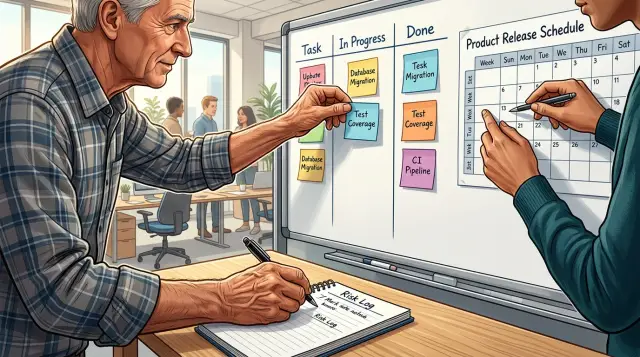
Slow hiring: remove waste before you add headcount
Slow hiring often points to broken work, not low capacity. Learn how to cut waste, steady your team, and hire into a calmer system.

Table of Contents
Why slow hiring feels bigger than it is
Teams usually ask for a new hire when pain is already obvious. Deadlines slip, work bounces between people, and everyone feels stretched. At that point, the missing person looks like the problem. Often, the real problem started earlier.
A task moves from product in the morning to engineering at lunch and support by the end of the day. Nobody owns it long enough to finish it well. The delay looks like a capacity issue, but the slowdown often comes from fuzzy decisions, weak handoffs, and too many small approvals.
That is why slow hiring can feel bigger than it is. A long hiring cycle is easy to see. Waste inside daily work is quieter. It hides in repeated questions, duplicate updates, meetings that settle nothing, and tasks that come back for a second pass.
Small product teams show this clearly. A founder assumes they need another engineer because releases keep slipping. After a week of watching the work, the pattern looks different: specs change late, bug reports are thin, and nobody knows who makes the final call on edge cases. Another engineer would join the same confusion and spend the first month learning it.
New people rarely fix a messy system on arrival. Most copy what they see. If tickets are vague, they work from vague tickets. If priorities change every day, they learn to wait instead of decide. A rushed hire can make the team look bigger without making it calmer.
Clear work matters more than fast hiring at the start. When ownership is clear, decisions move faster and people stop redoing the same tasks. Then you can tell whether the team truly needs more hands or just cleaner rules.
That is where a Fractional CTO can be useful. The job is not to block hiring forever. It is to sort out who owns what, where work stalls, and which delays come from chaos instead of headcount. Once that is clear, the hiring question gets much smaller.
Where waste shows up before a hiring request
When work feels jammed, teams often assume they need another person. Many times, the first problem is waste hidden inside the week.
Meetings are a common leak. A manager asks for status on Monday, asks again in chat on Tuesday, then asks for the same update in planning on Thursday. People spend hours repeating what they already said, and the work itself does not move.
Waiting is another leak, and it looks normal enough that teams stop noticing it. A designer waits for missing specs. An engineer waits for access. A release waits for one approval from someone stuck in meetings all day. The task itself might take 45 minutes, but the team loses two days around it.
Repeat bugs tell the same story. The team fixes an issue, closes the ticket, and moves on. Then the bug returns because nobody owns the test steps, nobody updates the checklist, and nobody confirms the edge case that caused it. Support touches it again. Engineering touches it again. Everyone stays busy, but much of that work is repeat work.
Managers can become the next bottleneck. If the same questions show up every week - where is the latest spec, who sets priority, is this ready to ship, what counts as done - the team does not need a new hire first. It needs clearer rules and one place to find them.
A messy system can make five people look like they need seven. A calmer system can give those same five people hours back every week.
Decide what really needs a person
A hiring request often hides a work design problem. Before opening a role, look at the tasks behind it and ask a blunt question: does this work need judgment, or does it just need cleanup?
Some work clearly needs a person. Customer calls with tension need context and trust. Product tradeoffs need someone to weigh cost, timing, and risk. Final approvals, hiring interviews, and decisions that affect other teams belong to people.
A lot of other work does not. Teams still spend hours copying data between tools, chasing status in chat, fixing the same setup issue, or waiting for answers that should already have a written rule.
A simple filter helps:
- Keep human work where judgment, trust, and accountability matter.
- Mark repeated manual steps that a tool or script can handle.
- Separate one-time backlog cleanup from work that repeats every week.
- Flag delays caused by unclear ownership, missing rules, or too many handoffs.
That distinction between cleanup and ongoing work matters more than most teams expect. Old tickets, naming fixes, document gaps, and migration leftovers can look like permanent load when they are really temporary debt. Throwing headcount at that pile can be expensive and oddly unsatisfying, because the pile may disappear after two focused weeks.
Then check where delays actually start. If work stalls because tasks bounce across three people, another hire may only add a fourth stop. If work stalls because nobody knows the approval path, the problem is not capacity. If tools do not connect, the delay sits in the process, not in team size.
Slow hiring can help here. It forces you to look at the system first. A stable system makes the next hire useful on day one. A messy system turns a good hire into another person waiting for answers.
Write the role after the work settles down. A solid job description describes steady, ongoing work, not a pile of temporary friction. It should name the decisions the person owns, the weekly tasks they repeat, and the results they should improve in the first 90 days.
How to remove waste before you open a role
If a team feels overloaded, the first instinct is often to hire. Sometimes that is right. First, though, trace where the week actually goes.
Take one real week of work and follow it from request to release. Do not sketch the ideal process. Use actual tickets, messages, approvals, and releases. Note every handoff, every pause, every time someone had to redo work, and every question that came up again because nobody wrote the answer down.
A quick review usually shows the same leaks. Work sits between people longer than it takes to do the work. Meetings exist only to repeat status. People ask for approval out of habit, not because a decision is hard. Two tools store the same task. The team fixes the same confusion more than once.
Start with small cuts. Remove one meeting, especially if people can read the update in two minutes. Remove one approval step if ownership is already clear. Remove one duplicate tool so people stop copying the same information twice. These sound minor. They often save hours each week.
Then turn tribal knowledge into short notes. Keep them close to the work and short enough to scan quickly. A release checklist, a bug report template, and a page of common answers can cut rework fast. They also make new hire onboarding much easier, because the next person joins a calmer system instead of learning through chaos.
Measure the change before you post the job. Track how long work takes to ship, how many handoffs it crosses, how long it waits for approval, and how often people ask the same question again. If those numbers improve, the hiring request may have been covering process debt. If they do not, the role is probably real.
The fix is rarely dramatic. Most teams do better with a cleaner path for the same work, so the next hire adds output instead of absorbing confusion.
Set up a calmer start for the next hire
A new hire does not fix chaos on day one. More often, chaos makes the new person look slow even when they are good.
Start with ownership. Give one person clear ownership for each common task, whether that is bug triage, code review routing, release approval, or customer issue handoff. Other people can help, but the new hire should never have to guess who makes the call.
Keep documentation short and close to the work. A five-page handbook that nobody opens will not help much. A setup note in the repo, a checklist in the ticket template, and release notes in the place the team already uses will help every day.
Keep the first month stable
Try not to change everything at once. If you switch chat tools, move tickets, change CI rules, and rewrite coding standards during the first month, the new hire learns churn instead of learning the product.
Simple checklists work better than long explanations. One setup checklist, one review checklist, and one release checklist are usually enough. Each one should be short enough to read in under a minute.
Give the new person an early win. Do not start with a vague project that has six moving parts. Give them something they can finish, ship, and verify. A small bug fix, one cleaned-up alert, or one safe release does more for confidence than a large assignment with fuzzy edges.
When the system is steady, slow hiring feels less risky. You are not asking the new person to survive confusion. You are asking them to join a team that already knows how work moves from start to finish.
A simple example from a small product team
One small product team had five engineers and a founder who still made most product calls. After missing two release dates, the founder decided they needed two more engineers right away. Slow hiring looked like the problem. A short review showed something else.
The team was losing time in three places. Pull requests sat for a day or two because nobody owned code review. Tickets were vague, so engineers had to stop and ask what "done" meant. Releases were manual, which pulled one senior developer out of feature work every week.
That drag is easy to miss when everyone feels busy. The team was working hard. They were also waiting, redoing work, and handing things off too often.
A short cleanup fixed most of it. The team set a simple review rotation so nothing sat without an owner. They rewrote the ticket format to include scope, acceptance criteria, and open questions before work started. They also wrote a release checklist, so shipping no longer lived in one person's head.
Within two weeks, the flow changed. Reviews moved faster. Engineers asked fewer follow-up questions. Releases became predictable enough that the team could plan around them instead of treating them like a weekly fire drill.
Then the founder looked at headcount again. The team still had one real gap, but it was only one gap. They needed one more engineer, not two.
That changed the hire itself. The new person joined a team with clearer daily work, fewer blockers, and a release process they could learn on day one. Onboarding got easier because the messy parts were already under control.
That is what workflow cleanup often does. It does not remove every hiring need. It removes fake urgency.
Mistakes that keep teams stuck
Slow hiring often gets framed as a staffing problem when it is really a work design problem. Teams ask for help because work feels heavy, but a new person usually lands in the same mess that slowed everyone else down.
One common mistake is hiring before anyone fixes ownership. If three people touch the same task and nobody owns the result, the team creates delay by passing work around. The new hire does not solve that. They become the fourth person waiting for answers.
Another mistake is writing a role that tries to cover support, project management, product thinking, QA, and ops at once. That kind of job description attracts confusion. Even if someone takes it, they spend the first month guessing what matters most.
Tool sprawl causes the same drag. Teams add one more tracker, one more chat room, one more handoff sheet, but they keep every old step. Work starts in one place, moves to two others, then gets discussed in meetings because nobody trusts the tools.
Onboarding breaks more than teams admit. "Ask Sarah" is not a system. New hires lose time hunting for context, repeating questions, and learning habits that exist only because nobody wrote down a better way.
A few warning signs show up fast:
- Nobody can name one owner for a recurring task.
- The role description reads like two or three jobs.
- The team tracks the same work in multiple places.
- New hires depend on one overloaded teammate for answers.
- Managers praise long hours more than finished work.
Measuring output by hours keeps the rest of these problems alive. Hours are easy to count, so managers fall back on them when workflow is unclear. Finished work tells you much more. If a team closes fewer tasks after adding people, the system is the problem.
Quick checks before you post the job
Post the job only after you can answer a few plain questions without hand-waving. If the answers are fuzzy, the role is fuzzy too.
Start with the reason for the role. You should be able to explain it in one sentence that a new person would understand on day one. "We need someone to own customer support tickets that block releases" is clear. "We need help because everything feels busy" is not.
Then check the basics. Name the owner for every recurring task tied to the role. Pick one thing the new person should ship in the first two weeks. Cut obvious rework before hiring. Finally, look at what still piles up after the cleanup.
That second step matters a lot. If weekly tasks do not have owners, work drifts. People assume someone else will handle bug triage, release notes, customer follow-up, or test fixes. A new hire lands in the middle and spends half their time guessing.
The first two weeks are another good test. If you cannot picture a small win in that time, your setup is probably still too messy. A new person does not need to change the whole team. They need a clear path to finish something real.
Rework is the part to remove before adding headcount. Look for duplicate status updates, manual copy-paste between tools, unclear handoffs, and reviews that happen twice because nobody agreed on the first standard. Teams often save hours a week just by fixing those points.
After that cleanup, check what still stacks up. Maybe support requests still wait too long. Maybe release testing still slips every Friday. That remaining pile tells you whether you need a hire, a contractor, or tighter process.
What to do next
Pause the job post for a moment and give the team a short cleanup sprint. Even five to ten working days can reveal a lot. You want to see which tasks stall, who waits on whom, and which problems keep coming back no matter how hard people work.
Write the findings down as they happen. Keep a simple note with three columns: delays, handoffs, and repeated questions. After a week, patterns usually show up fast. A developer waits half a day for access. A designer asks for the same product decision three times. Support tickets interrupt planned work every afternoon. That is the waste to remove before approving headcount.
A small team can start with four practical checks:
- Track where work sits idle for more than a few hours.
- Count how often one task needs multiple approvals.
- List questions people ask more than once a week.
- Mark tools or steps that break focus during normal work.
If the same problems stay in place after the cleanup sprint, bring in an outside review. Fresh eyes help because insiders often adapt to messy systems and stop noticing them. A good review should cover process, infrastructure, and hiring order, not just job titles. Sometimes the right move is better onboarding notes, cleaner deployment steps, or a simpler support rotation. Sometimes you really do need another person. The point is to know why.
That kind of review is the work Oleg Sotnikov does through oleg.is. As a Fractional CTO and startup advisor, he helps small and medium businesses sort delivery flow, infrastructure, and hiring order before they add more management layers.
If slow hiring keeps turning into rushed hiring, get a second opinion before you open the role. The best hire usually comes after the team has already made the work easier to understand.
Frequently Asked Questions
How do I know if we need a hire or a process fix?
Look at where work slows down. If tasks wait on approvals, bounce between people, or come back for a second pass, fix that first. If work still piles up after you clean those issues, you likely need another person.
What waste should I look for first?
Start with repeated status updates, waiting for access or approvals, vague tickets, and bugs that return. Those problems eat hours every week and make the team feel smaller than it is.
Should we pause the job post while we clean things up?
Usually, yes. Give the team five to ten working days to tighten ownership, remove obvious rework, and write down common answers. That short pause can save you from hiring into confusion.
How long should a cleanup sprint be?
One real week often shows enough. Follow actual work from request to release and write down every pause, handoff, and repeated question. You do not need a long audit to spot the biggest leaks.
What should we measure before hiring?
Track how long work takes to ship, how long it waits between steps, how many handoffs it crosses, and how often people ask the same question again. Those numbers show whether the team lacks capacity or just clearer rules.
Can one more engineer fix missed releases?
Not by itself. Another engineer will join the same late specs, fuzzy ownership, and manual release steps. Clean that up first, then see whether the remaining gap still needs headcount.
What should a job description include after cleanup?
Write it around steady work, not temporary mess. Name the decisions the person owns, the weekly tasks they repeat, and one result you expect in the first 90 days.
How do we make onboarding easier for the next hire?
Keep the setup simple and close to the work. A short repo setup note, a bug template, and a release checklist do more than a long handbook. Then give the new person a small task they can finish and ship early.
When should we bring in a Fractional CTO?
Bring one in when the team feels busy but you cannot tell why. A good Fractional CTO can trace where work stalls, sort ownership, and tell you whether you need a hire, a contractor, or a cleaner process.
What is a good first task for a new hire?
Pick something real but contained, like a small bug fix, one alert cleanup, or one safe release. The goal is to let them learn the system, finish useful work, and build confidence without getting stuck in a vague project.