How senior engineers increase team output without coding more
See how senior engineers increase team output with clear standards, calmer reviews, and simple assistant workflows that cut rework.
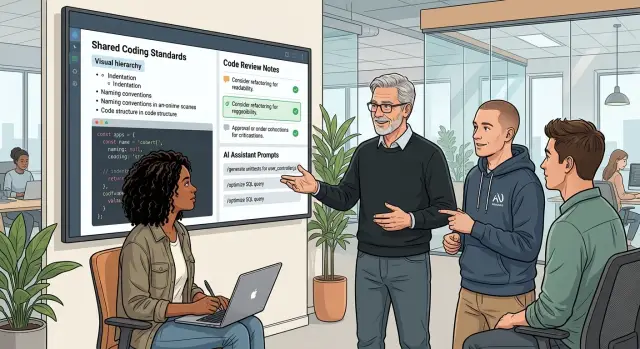
Table of Contents
Why output stalls even when everyone works hard
Teams rarely slow down because people are lazy. More often, they slow down because small choices take too much time. When the rules for naming, testing, logging, or API design live only in one senior engineer's head, even simple work needs a check.
A developer can finish most of a task and still get stuck on details. Should this logic go in the handler or the service? Does this change need a migration? What counts as enough test coverage? Each pause looks minor, but across a team it adds up to hours every week.
Reviews often add more drag than they remove. Instead of checking whether the code is safe, clear, and easy to maintain, the discussion turns into a style argument. One person likes shorter files, another wants different names, and a third asks for a pattern nobody wrote down. The code changes three times, but the product barely moves.
Senior people pay a different price. They become the team's memory. The same questions come back every few days: how to handle retries, where to put shared logic, when to add metrics, which errors need alerts. Answering fast feels helpful, but repeated answers eat the time they should spend on design, risk, and the hard problems nobody else can solve.
Fast coding can also create slow cleanup later. A team ships quickly, skips a few tests, adds one temporary workaround, and postpones monitoring. The feature goes live on Tuesday. By Friday, two engineers are fixing edge cases, one is cleaning noisy alerts, and the reviewer is trying to understand rushed code with no clear pattern.
That is why a busy team can still ship less than expected. People work hard, but they keep re-deciding the same basics, waiting on the same people, and repairing avoidable mess. Senior engineers raise output when they remove that friction, not when they personally write twice as much code.
Where a senior engineer has the biggest effect
A senior engineer helps most when they change the team's defaults. Writing one excellent feature helps once. Setting a clear way to write code, test changes, and document decisions helps on every ticket that follows.
Patterns usually matter more than personal output. If the same review comment appears five times in a week, it should stop being a comment and become a rule. Put it in a pull request template, a short team guide, or the starter code people copy from.
Good defaults are usually simple. Agree on one style for naming, errors, and file layout. Set a clear minimum for tests before merge. Write short docs for setup steps, risky changes, and team decisions. Use a small review checklist so people catch the same issues early.
This work does not look dramatic, but it saves real time. A team that stops arguing about folder structure or test depth gets more done with the same people.
The next place where senior people have outsized impact is blockers. Slow builds, flaky tests, unclear ownership, and painful local setup spread fast. One person loses 20 minutes, then four people lose the same 20 minutes every day. Fixing that often matters more than taking another feature ticket.
Good senior engineers also invest in repeatable methods, not only urgent tasks. If the team uses AI assistants, they should define the guardrails: what the assistant can draft, what must be reviewed by a human, and what checks must pass before merge. That turns the assistant into a steady helper instead of a source of messy rework.
Standards people can follow on a busy week
Most teams do not need a thick handbook. They need a short set of rules that fits on one screen and settles the same arguments every week. If a rule takes five minutes to explain, it is already too long.
The best rules are easy to copy. Put one real example next to each one so people do not have to guess. That is one of the simplest ways a senior engineer can help without becoming the person who approves every tiny choice.
A few examples go a long way:
- Name things by what they do.
invoice_total_centsis clear.value2ornewAmountmakes the next person stop and dig through old code. - Test the risky part, not everything in sight. If you change discount logic, add a test for rounding and one for expired coupons.
- Write logs a human can use. "Payment retry failed for order 1842: gateway timeout" is useful. "Service error" is not.
- Add one rollback note for any change that can hurt users. "Revert commit 8f3a and clear the new cache key" is short, but it saves time when a release goes wrong.
Keep these rules close to the work. A short file in the repo, a pull request template, or a pinned team note works better than a forgotten wiki page. People follow standards they see during normal work.
One more rule matters just as much: change the rule when the team trips over it twice. If two people read it and do different things, the rule is vague. If people skip it every Friday, the rule is too heavy for real life.
Review habits that cut rework
Rework often starts in code review, not in coding. A pull request sits for two days, three people leave mixed comments, and the author rewrites the same part twice. Senior engineers cut that waste by making reviews smaller, clearer, and easier to act on.
The first fix is simple: ask for smaller pull requests. When one PR changes a data model, rewrites a service, and tweaks UI copy, reviewers miss things or argue about the wrong part. A smaller PR usually gets a faster answer and a cleaner merge. It also makes rollback less painful when something slips through.
A good rule is one clear purpose per PR. If a developer adds a new checkout rule, that change should not also rename half the billing package. Teams move faster when reviewers can understand the intent in a few minutes.
Mixed feedback creates a second kind of waste. Senior engineers separate correctness, style, and product questions so the author knows what actually blocks the merge. A comment about a bug or risky behavior is different from a comment about naming. Treat them differently.
It also helps to set a short review format. The author should explain what changed, what could break, and how they tested it. Reviewers should focus on risk first. That keeps the conversation on the code that matters instead of drifting into taste.
Set up assistant workflows in five steps
Most teams get weak results from AI because they ask it to do too much too early. A good workflow starts small, uses clear rules, and keeps the engineer in charge.
Pick one repeatable task first. Tests are a good start. Small refactors, API docs, migration notes, and bug reproduction steps also work well. If you begin with architecture or security decisions, the assistant will miss too much context and create extra review work.
- Start with a task the team already does often. Choose something boring, frequent, and easy to check. For example, when a pull request changes a service method, the assistant can draft unit tests for the changed paths.
- Give the assistant your real rules. Feed it naming patterns, folder structure, test style, error handling rules, and two or three strong examples from your codebase. Generic prompts give generic code.
- Use the assistant for drafts when the work has any risk. Let it propose a refactor, write a first pass on tests, or summarize a large diff. The engineer still decides what ships.
- Check the result against evidence, not gut feel. Run tests. Read logs. Try edge cases. Compare the draft with the existing style of the code.
- Save the prompts that work. Put them in a shared doc, repo folder, or internal tool so the whole team can reuse them.
One small example: a product team asks the assistant to write tests for every bug fix, using the existing test layout and mock patterns. The first few drafts need cleanup. After a week, the prompts improve, the tests look familiar, and reviews get faster because the team sees the same structure each time.
This is where senior engineers often make the biggest difference. They set the rules, tighten the loop, and turn a personal trick into a team habit.
A simple example from a growing product team
A product team of six was shipping often, but each release left a mess behind. Small bugs kept showing up in production, support tickets grew, and developers spent the next few days fixing things they thought were already done.
One senior engineer noticed a pattern. The same review comments appeared every week: missing edge cases, thin test coverage, unclear API names, and no note about how a change should be released or rolled back. Nobody was lazy. The team was making the same decisions from scratch on every pull request.
Instead of taking over the hard work, the senior engineer wrote a short standard the team could actually use on a busy week. It fit on one page and covered what every pull request must include, which test cases to add before review, how to name things consistently, what to write for release notes and handoff notes, and when a change needs a rollback note.
Then the team added shared assistant workflows around that standard. They did not ask the assistant to "write the feature." They used it for repeatable support work. A developer could paste in a change and ask for missing test cases, a first draft of docs, or a quick release note in the team format. That removed a lot of small, forgettable steps.
Two sprints later, reviews got shorter. Reviewers spent less time repeating the same notes and more time checking logic and product fit. Handoffs felt smoother because QA, support, and the next developer could see what changed without chasing context in chat.
The gain was not magic. Each pull request only got a bit better. Across six people, that added up fast. If reviews save even 15 minutes per change and post-release fixes drop a little, the team gets back hours every week.
Mistakes that cancel the gains
Teams get the opposite result when they add ceremony instead of clarity.
A long rulebook is the usual first mistake. If standards need fifteen pages, people stop reading them by Wednesday. Keep the rules short enough to scan in two minutes. A handful of rules for naming, tests, logging, and rollback habits beats a polished document nobody opens.
Reviews fail for a different reason. Some engineers use them to prove how much they know. That slows delivery and makes people defensive. Good reviews catch risk, point out the one or two changes that matter, and let the rest go. If every pull request turns into a lecture, rework goes up and speed drops.
Assistants can make this worse. Letting an AI tool change production code without checks is just handing risk to a faster typist. A simple guardrail works better: require tests, ask for a short summary of what changed, and have a human confirm anything that touches payments, auth, data deletion, or infrastructure.
Teams also lose momentum when standards keep changing. If the preferred test style, folder layout, or review checklist shifts every few days, people stop trusting the rules. Pick a small default, keep it stable for a few weeks, and change it only when the current version causes real pain.
One more mistake is easy to miss: hiding decisions in chat threads. A choice about error handling or API shape should live where the team will actually find it later. Put it in the repo, the ticket, or a short decision note. Otherwise the same debate returns every month, and nobody remembers why the last choice made sense.
A quick check for the next two weeks
For the next 10 working days, track only the friction that repeats. A team does not need another big audit. It needs a short list of things that waste time every week.
Keep a simple note during code reviews. Count the comments that show up again and again. Maybe people keep missing tests, naming things in odd ways, or skipping small docs updates. When the same comment appears four or five times, the team is missing a clear default.
Do the same with new joiners. Write down every question they ask more than once. You will usually see a pattern fast: how to run the app, where examples live, what needs a test, when to ask for review, or who updates docs. If a question repeats, answer it once in a place everyone can find during work.
Pick one kind of task where an assistant already helps a little, then test it on purpose. Keep it narrow. A good example is drafting test cases for a bug fix, writing a first pass of release notes, or turning a rough ticket into a cleaner task description. Measure time on three real tasks. If the draft saves 15 to 20 minutes and the edits stay light, keep that workflow. If not, drop it.
Cut one rule that nobody follows. Old rules create noise, and noise makes the good rules easier to ignore. If a checklist item has turned into ritual with no clear result, remove it.
Then write down two defaults in plain language. One default for tests, such as "every bug fix gets one regression test." One default for docs, such as "every endpoint change gets a short docs note before review." Short rules work because people can remember them on a busy week.
What to do next with your team
Most teams do not need a new process. They need one calm hour to spot where time leaks out. Put one senior engineer, one manager, and one person from daily delivery in the same room. Look at only three things: standards people skip, review habits that create repeat comments, and where assistants save time or create extra cleanup.
Start small and pick the noisiest problem first. If pull requests wait too long, set a same-day review window and a short review checklist. If people argue about structure, tests, or naming every week, write one page of rules with a few real examples. If assistant use feels random, approve one or two workflows first, such as drafting tests or summarizing a large diff before review.
A short plan works better than a big reset. Teams usually lose momentum when they try to change standards, reviews, prompts, and tooling all at once. One rule that people follow every day beats ten rules nobody remembers.
Give one senior engineer time to own the shared rules. That person should update examples, remove stale guidance, and settle the same debate before it burns another week. Ownership matters more than polish. Even two hours a week can be enough if the team respects the role.
A simple two-week plan is often enough:
- Run a 30-minute audit of standards, reviews, and assistant use.
- Choose one issue that wastes the most team time.
- Assign one senior engineer to keep the rule set current.
- Check again after two weeks: review time, rework, and assistant output quality.
If your team is growing fast or nobody agrees on what to fix first, an outside technical lead can help. This is the kind of Fractional CTO work Oleg Sotnikov focuses on at oleg.is: tightening engineering standards, review habits, and AI-first delivery without piling on process.
After two weeks, you should see something concrete: fewer repeat comments, faster reviews, or cleaner assistant output. Keep the change that worked, cut the rest, and move to the next source of drag.
Frequently Asked Questions
What should a senior engineer fix first to raise team output?
Start with the repeat problems. If the same review comment shows up every week, turn it into a written default in the repo or PR template so the team stops arguing about it.
How detailed should team standards be?
Keep them short enough to read in a minute or two. One screen with a few real examples works better than a long guide people ignore.
What should every pull request include?
Ask for the purpose of the change, what could break, and how the author tested it. That gives reviewers enough context to check risk without digging through guesswork.
How small should pull requests be?
Aim for one clear purpose per PR. Smaller changes get faster reviews, cleaner feedback, and easier rollback when something goes wrong.
How can a team use AI assistants without creating more rework?
Use it for repeatable work first, like drafting tests, release notes, or a diff summary. Keep a human in charge of anything that touches payments, auth, data deletion, or infrastructure.
Which assistant tasks usually work best first?
Start with boring tasks the team already knows how to check. Test drafts, small refactors, migration notes, and bug reproduction steps usually work better than architecture decisions.
How do I know if a team rule is too vague?
If two people read the same rule and do different things, the rule is too vague. Rewrite it in plain language and add one real example from your codebase.
What should we measure over the next two weeks?
Track repeat review comments, review wait time, and small post-release fixes. If those numbers drop after a new rule or workflow, keep it; if not, cut it.
How do we stop reviews from becoming a bottleneck?
Set a short same-day review window and make expectations obvious before review starts. Clear standards and smaller PRs cut the need to wait on one senior person for every tiny choice.
When does it make sense to bring in a Fractional CTO?
Bring one in when the team cannot agree on standards, reviews stay noisy, or assistant use feels random. An outside technical lead can spot the repeated friction fast and set simple defaults without adding heavy process.


