Product squad model needs platform ownership to work
A product squad model can speed delivery, but without CTO stewardship of the shared platform, teams repeat work, split standards, and slow down.
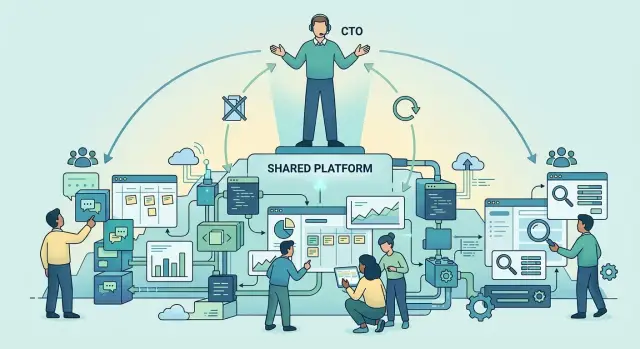
Table of Contents
Why squads start repeating the same work
A product squad model feels fast at first. Each team can ship without waiting on a central group, so the first few months often look efficient.
The trouble starts when every squad builds its own basics. One team picks one auth flow, another picks a different one. Logging changes from service to service. Deployments use separate scripts, checks, and rollback habits. Nobody plans to create a mess. Each squad just solves the problem in front of it.
That creates duplicate work in a quiet, expensive way. Three teams might spend a week each setting up almost the same monitoring, CI pipeline, or permission model. The code is different, but the job is the same. The company pays for the same thinking several times.
The bigger cost shows up later. When production breaks, engineers first need to remember which service uses which logger, which dashboard, and which deploy process. A bug might take 20 minutes to fix and two hours to trace because the shared parts are not actually shared.
This also slows product work. Teams think they are moving independently, but maintenance keeps pulling them back. Every custom setup needs updates, fixes, security checks, and support. The more variation you allow, the more time squads spend keeping old choices alive instead of shipping work customers notice.
A small company can hide this for a while. Four squads can each choose their own auth, background jobs, and deployment flow and still look productive. Then hiring gets harder, engineers struggle to help outside their squad, and support takes longer because routine work has four versions.
That is why duplicate work is rarely a discipline problem. It is usually an ownership problem. If nobody owns the layer under the squads, the squads rebuild it piece by piece.
What platform ownership means
Platform ownership means one group, usually led by the CTO or a senior engineer, owns the shared layer every product team depends on. That layer includes the build pipeline, cloud setup, observability, security rules, access control, common libraries, and the usual path to production.
That does not mean teams lose freedom. It means the shared parts stay consistent while squads keep room to make product decisions. The platform owner decides how code gets built, tested, deployed, rolled back, and observed in production. Squads decide product logic, release timing, user flows, and feature details.
That boundary matters. When the shared parts are consistent, teams stop rebuilding plumbing. Incidents get easier to handle because releases follow the same checks and the same rollback process. Access gets simpler too. One standard for secrets, permissions, and audit trails cuts a lot of small confusion.
Platform ownership also means fixing rough edges before teams work around them. If the internal deploy path is slow, squads will script their own shortcut. If observability is awkward, they will buy another tool or ignore the problem. Those workarounds feel harmless at first. Then they pile up into cost and support pain.
For startups and smaller companies, this usually needs one clear owner more than a formal platform department. The point is simple: shared systems need someone who keeps defaults clean and decides when an exception is worth the long term cost.
How CTO stewardship keeps autonomy useful
A product squad model works when squads own product choices, not the plumbing under every service. If each team has to decide how to log errors, manage secrets, ship code, and structure shared APIs, autonomy turns into repeated setup work.
CTO stewardship removes a small set of decisions that do not need to be made five times. The goal is not to control every tool a team touches. The goal is to give teams a default path for the common work that should feel boring.
When those defaults exist, squads move faster. They do not spend two days comparing test runners or writing a custom deployment script that another team already wrote last quarter. They spend that time on customer problems.
In practice, a good CTO keeps standards short, puts one standard path in place for common tasks like CI, monitoring, auth, and releases, reviews exceptions early, and funds platform work even when no product squad asks for it. That last part matters more than many teams expect. Product squads get measured on features, deadlines, and customer requests. Left alone, they will rarely choose shared platform work, even when everyone needs it.
Early exception reviews protect freedom too. If a squad has a real reason to do something differently, the CTO can approve it quickly. If the reason is weak, the team avoids creating another private stack that nobody else can support six months later.
Lean teams feel the benefit first. A small company does not have time for five versions of the same pipeline. One shared approach to builds, alerts, and service setup can save dozens of hours a month.
What to standardize first
Start with the parts every squad touches before they ship anything. Do not begin with style debates or a perfect shared UI kit. Start with the rules that affect access, uptime, and shared data.
Identity should be near the top of the list. Use one way to handle sign in, roles, service accounts, and audit trails. When a customer asks who changed a permission, or when an employee leaves, every squad should answer that question the same way.
Next, make releases boring. Teams can own their code, but they should move it through the same environments and follow the same rollback steps. A common path for development, staging, and production cuts surprise outages and saves hours when work moves between teams.
Logs and alerts should follow one pattern too. Put logs in one place, agree on what counts as an alert, and name who responds when something breaks. If alerts go to nobody, or to everyone, incidents drag on while people ask who is on point.
Data rules belong in the first round as well. Decide how teams name schemas, review migrations, store backups, and test restores. A squad can move fast on its own feature, but one careless migration can slow every other team by a week.
A good test is simple: standardize the things that can wake someone up at 2 a.m. and the things that can break another team's work. Login, deployments, incident ownership, and data changes usually sit at the top for a reason.
How to put ownership in place
Start with a map. Write down every shared system that more than one squad uses or depends on. Most teams miss half of them at first. Think beyond cloud accounts and CI. Include deploy rules, auth, databases, logging, alerts, internal packages, incident response, and the dashboards people open when something breaks.
Once the map exists, give each shared system one owner. In a small company, that might be the CTO or a fractional CTO for a while. The owner is not there to block teams. The owner keeps the default path clear, decides when change is worth the cost, and makes sure every squad does not solve the same problem in five different ways.
A simple rollout works better than a big platform program. Pick the five to ten systems every squad touches today. Publish the owners where teams can find them. Write short defaults for shipping code, changing data, and watching production. Review new tools once a month and remove the ones that overlap. Put cleanup work on the same roadmap as feature work.
Those defaults do not need a long handbook. A short checklist is enough if people can use it on a busy day. For deployment, say how a service gets built, tested, approved, and rolled back. For data, say how teams change schemas, backfill safely, and name ownership for tables and events. For observability, say which logs, metrics, traces, and alerts every service needs before release.
The monthly tool review matters more than it sounds. Duplicate work hides in small choices. One squad adds a second job runner. Another buys a new feature flag tool. A third writes its own retry library. None of these decisions looks expensive alone, but together they create support work nobody planned for.
Keep cleanup visible. If a team introduces a new pattern, it should also schedule the work to document it, merge it into shared tooling, or retire the old version. If that never gets onto the roadmap, the company ends up with a pile of local fixes.
A simple example from a growing company
A SaaS company starts with one product team. They move fast because everyone uses the same queue, the same cache pattern, and the same alerts. When something breaks, the team knows where the logs are and who should fix it.
Then the company grows to four squads: billing, onboarding, reporting, and integrations. Each squad gets more freedom, which sounds reasonable. Six months later, each team has picked its own job runner, its own cache setup, and its own alert rules.
The billing team uses one retry pattern. Reporting uses another. Integrations sends alerts to a different place. Onboarding stores logs in a format nobody else reads. Small choices pile up.
The trouble shows up during incidents. A background job stalls, but the engineer on call does not know which dashboard to open first. One squad names services by feature. Another uses internal code names. The bug still takes 20 minutes to fix. Finding the right place to look takes two hours.
That is when the squad model starts wasting time. The squads still own their features, but they also keep rebuilding the same plumbing in slightly different ways.
A CTO steps in and does not take product ownership away. Instead, the shared parts get grouped into one platform plan. The company keeps one logging format, one alert model, one job runner, and a short set of rules for cache use.
Daily work changes fast after that. Squads still ship their own roadmap items, but new services start from the same base setup. Engineers can help across teams without relearning everything. Incidents move faster because logs and alerts look the same.
That is platform ownership in practice. It does not reduce autonomy. It gives teams a common base, so independence does not turn into waste.
Mistakes that create friction and waste
Most waste does not start with bad intent. It starts when shared work has no clear owner, so every squad makes small local choices that feel fast today and expensive a month later.
One common mistake is calling almost every shared request "platform work." Then the platform backlog becomes a parking lot for routine engineering tasks, and delivery slows down. A team should not wait weeks for a small config change or a basic deployment fix if it can handle it inside agreed rules.
The opposite mistake costs just as much. Some squads bypass standards because a deadline feels tight, and nobody follows up. Soon you have three logging formats, two ways to manage secrets, and helper scripts that only one developer can explain.
Shared systems also get ignored until they break. Teams postpone cleanup on build pipelines, permissions, internal templates, and monitoring because feature work looks more visible. Then an outage forces everyone to stop, and the repair bill is much higher than steady maintenance would have been.
Metrics can make this worse. If leaders measure squads only by feature count, teams learn that maintenance does not matter unless something fails in public. That pushes people to copy whatever works locally instead of fixing the common layer once.
Another pattern is leaving platform chores to whoever has spare time. Spare time does not last. The work gets scattered across people with no roadmap, no budget, and no authority to push back when a shortcut will hurt everyone later.
You can usually spot the drift early. Squads keep their own CI templates or auth helpers. Standards exist in docs, but reviews do not enforce them. Teams clean up shared systems only after incidents. Feature output looks fine while support load keeps rising. The same utility appears in several repos.
Quick checks for your current setup
You can spot platform drift in one meeting if you ask plain questions and listen for fuzzy answers. When each squad tells a different story about releases, logs, or shared tools, autonomy has turned into separate little worlds.
A healthy squad model still has one clear owner for the parts everyone depends on. That owner might be a platform lead, an engineering manager, or the CTO, but every squad should give the same answer when you ask who sets standards, fixes shared pain, and says no to duplicate tooling.
A few checks make the problem obvious:
- Ask each squad who owns the shared platform. If the answers vary, ownership is missing.
- Compare release and rollback steps across teams. If one team can ship safely and another improvises, the process is too loose.
- Ask support or operations where they check logs and alerts first. If they need three dashboards and several messages to figure it out, the setup is scattered.
- Review the last year of tooling and internal builds. If two squads bought or built the same thing, nobody watched the whole system.
- Check the roadmap and budget. If platform work only happens after an outage, it does not really have an owner.
One example makes this obvious. A growing company may have one squad build its own feature flags while another pays for a separate vendor. Both teams think they moved fast. Six months later, support cannot trace issues in one place, finance sees two bills, and engineers maintain two systems that solve the same problem.
The fix is rarely dramatic. One owner sets a release path, a rollback method, a place for logs and alerts, and a review for shared tools before teams buy or build them. Squads still choose how to deliver product work, but they stop wasting time on work another team already did.
What to do next
Start with a plain inventory, not a reorg. If two squads use different job queues, logging stacks, CI pipelines, auth flows, or feature flag tools for the same kind of work, write them down in one sheet. Most duplicate work hides in small choices that nobody revisits.
Over the next 30 days, list every tool and service that more than one squad touches. Mark who approves changes, who pays for it, and who supports it when it breaks. Circle the overlaps that waste time every week, not the ones that only look messy. Then choose one platform owner and give that person direct backing from the CTO.
After that, remove one repeated system this quarter. Pick something boring but expensive in hours, such as two monitoring tools, two deployment paths, or two internal service templates. Merge it, document the default, and stop supporting the extra version. One clean win builds trust faster than a big platform program.
A growing company can lose dozens of hours a month on this without noticing. One team debugs alerts in one tool, another in a different one, and nobody can compare incidents cleanly. Fixing that split often saves more time than adding another engineer.
If you want an outside view, Oleg Sotnikov's Fractional CTO advisory often helps startups and smaller companies sort out this exact layer: shared defaults, clear ownership, and less duplicate work without hiring a full time executive.
Keep the rule simple. Squads choose product decisions. One owner chooses platform defaults. That is how the product squad model keeps its speed without paying for the same work twice.


