Vector search in Postgres vs dedicated engine for RAG
Vector search in Postgres vs dedicated engine can change cost, speed, and launch risk. Compare writes, ranking, and day-to-day upkeep.
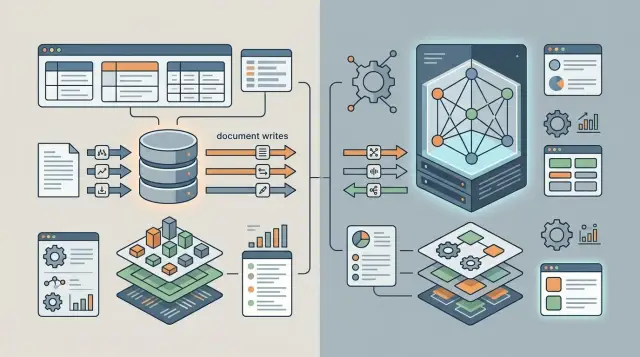
Table of Contents
Why this choice gets expensive fast
The first RAG stack you ship usually stays in place longer than planned. Teams build scripts, indexing jobs, and content workflows around it, then product decisions start to depend on those habits. A choice that feels temporary in week one can shape the next six months.
The hidden cost often shows up in the write path. If new documents, edits, or deletes reach search late, retrieval goes stale fast. A user asks about a policy, a product spec, or a support note, and the system answers from last week's version. That looks like a model problem, but the real issue is often the path from content change to searchable vectors.
That is why
Frequently Asked Questions
Should I start RAG with Postgres or a dedicated vector engine?
Start with Postgres if your app already runs on it, your document set is still moderate, and your search rules stay simple. You will ship faster and keep fewer moving parts.
Pick a dedicated engine when you expect frequent updates, large indexes, stricter latency targets, or more complex ranking. That choice usually pays off when retrieval quality and freshness matter more than setup speed.
Why does the write path matter so much in RAG?
Because users notice stale answers before they notice anything else. If your indexing flow lags behind edits or deletes, the model retrieves old chunks and answers from outdated content.
That often looks like a model issue, but it starts in your data pipeline. A fast, reliable write path keeps search in sync with the source of truth.
When is Postgres a good enough choice?
Postgres fits well when you already store your app data there and want one place for documents, metadata, and vectors. It also works when your team values simple operations over peak search features.
For an early product, that trade often makes sense. You get fewer systems to manage, and debugging stays easier.
When should I choose a dedicated engine instead?
A dedicated engine makes sense when new content arrives all day, deletes must show up fast, or ranking logic goes beyond basic vector similarity. It also helps when you need strong filtering, hybrid search, or predictable query speed at larger scale.
If search drives the product, use the tool built for search. It usually gives you more control over recall and ranking.
How do updates and deletes usually break a RAG system?
Deletes often fail first. Teams remove a document in the main app but forget to remove old chunks from the index, so retrieval still surfaces them.
Updates cause the same mess when partial reindexing misses some chunks or runs too slowly. If you do not track versioning and delete rules clearly, stale data stays searchable.
Is ranking quality different between Postgres and a dedicated engine?
Yes, sometimes by a lot. Postgres can do solid nearest-neighbor lookup, but dedicated engines often give you better tools for tuning recall, mixing signals, and controlling how results compete.
If you only need decent semantic matching, Postgres may feel fine. If you care about fine ranking across many similar documents, a search-first engine often wins.
What if I need keyword search, filters, and vectors together?
Hybrid search usually feels easier in a dedicated engine because it often handles text ranking, vector similarity, and filters in one search flow. That makes tuning less painful.
You can still build hybrid search in Postgres, but you will often write more SQL and more custom logic. That works, yet it takes more care to keep relevance stable.
Which option usually costs less to run?
Postgres often looks cheaper at first because you reuse a database you already pay for. That lowers setup time and avoids one more system.
The full cost depends on maintenance, reindex jobs, query tuning, and how much duplication you build around the stack. A dedicated engine costs more in infrastructure, but it may save time once search gets busy.
Will it be painful to switch later?
Yes, switching later usually hurts more than teams expect. Your chunking rules, IDs, metadata shape, and content workflows start to depend on the first storage choice.
You can reduce the pain if you separate ingestion, embedding, and indexing behind clear interfaces from day one. That keeps the search backend easier to replace.
What should I check before the first RAG launch?
Check how fast updates must reach search, how often content changes, how deletes work, and whether you need keyword ranking with vectors. Also check who will operate the stack and fix indexing failures.
If you answer those questions before launch, the choice gets simpler. You stop guessing and pick the trade that fits your product and team.


