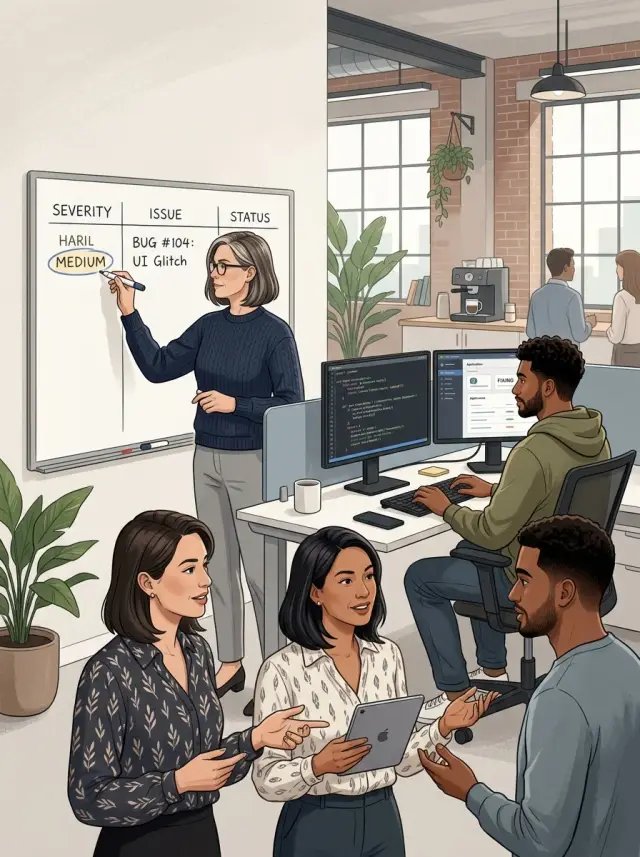
Portfolio risk map for accelerators from mentor feedback
Learn how to build a portfolio risk map for accelerators from repeated mentor feedback, then plan workshops, office hours, and expert support.

Table of Contents
Why mentor notes go unused
Mentors often spot the same problem and describe it in different words. One writes "unclear customer," another says "weak ICP," and a third says "the founders are selling to everyone." The wording changes, but the issue is usually the same.
Most accelerators already collect plenty of feedback. They have office hour notes, scorecards, Slack messages, and follow-up comments after demos. Then the batch gets busy, and those notes stay scattered across documents that nobody compares side by side.
A simple example shows the gap. Three mentors might flag three different startups with comments like "shipping too slowly," "founder approves every release," and "tech debt blocks basic changes." If nobody groups those comments, the program team can miss a broader product and engineering pattern across the batch.
That changes how support gets planned. Teams react to the startup with the loudest problem because it feels urgent. Meanwhile, repeated issues across five or six companies never turn into a workshop, a template, or outside help from someone like a fractional CTO.
Founders pay for that early. One team can spend a month stuck on pricing, hiring, or delivery problems that mentors already spotted elsewhere. Another may need help before it burns cash on the wrong product build, but the signal never reaches the people shaping the program.
A useful risk map starts with something simple: making mentor notes usable. Until the team turns scattered comments into shared signals, good advice stays trapped in documents.
What the map should show
A good portfolio risk map shows repeated problems, not every note a mentor wrote down. The point is to cut noise and make patterns easy to act on. If a batch has 12 startups and mentors raise 60 separate concerns, the map should compress that into a short list of shared risks.
Keep the list small. Most programs do better with five to eight cohort-level risks than with a giant tracker full of edge cases. When everything goes on the map, nothing stands out.
Each risk should include a count. You need to know how many startups face the same issue, not just how strongly one mentor felt about it. If 7 of 12 teams have weak pricing, the program needs help there. If only 1 team has a founder dispute, that still matters, but it belongs in a private support plan.
A clear map usually tracks four things:
- the risk in plain words
- how many startups face it
- how serious it is now
- whether it needs group support or 1:1 help
That split matters more than many teams expect. Repeated issues like a messy sales process, a vague customer segment, or weak demo storytelling often fit a workshop. Problems like security gaps, hard architecture choices, or a broken hiring plan usually need direct help with one startup at a time.
Say a batch shows three common patterns: 8 startups cannot explain their ICP, 6 have no weekly funnel numbers, and 2 have product reliability issues. The first two belong in workshops and office hours. The last one calls for a technical review, maybe with a fractional CTO or another specialist.
Update the map every month, or even every two weeks during a busy batch. If it takes forever to clean notes and argue over categories, the system is too complicated. A good map is plain, fast to edit, and stable enough that your team can compare one month to the next.
Decide what counts as a risk signal
The map only works if mentors judge the same things in roughly the same way. If one mentor flags "weak product" and another writes three paragraphs about the same issue under "sales," your team gets noise instead of a pattern.
Start with a short set of review areas that mentors can use every week. Plain buckets work best: market, product, team, sales, and delivery. Most feedback fits somewhere inside those five. If it does not, it is often too vague to help.
A good signal is specific, repeatable, and tied to a business outcome. "The founders changed pricing again and still cannot explain who buys first" is a signal. "I did not love the pitch" is not. One bad meeting is not enough on its own. You want repeated signs, or one serious issue backed by clear evidence.
That also means you should define what does not count. Personal chemistry, mentor style, and broad opinions create false alarms. If a mentor prefers enterprise sales and the startup is testing self-serve, that is not a risk signal by itself. The same goes for comments that sound smart but point to no behavior, no metric, and no decision.
Keep the buckets plain
Each bucket should answer one simple question. Market asks whether the team understands the customer and the problem. Product asks whether the product solves that problem clearly enough. Team asks whether the founders can make decisions and execute. Sales asks whether demand is turning into calls, trials, pilots, or revenue. Delivery asks whether the team can actually ship what they promise.
Technical startups often hide risk inside the delivery bucket. A mentor may hear "we are rebuilding the backend" and move on. A stronger signal is more concrete: two missed release dates, no test process, and core work blocked by one founder. That pattern usually needs direct technical support, not another generic workshop.
Set simple risk levels
Use short definitions that mentors can remember:
- Low risk: a minor issue, a clear owner, and the team is already fixing it.
- Medium risk: a repeated issue or weak progress over two or three check-ins.
- High risk: a problem that threatens fundraising, customer traction, or the ability to ship.
Keep those definitions visible in every review form. When mentors use the same thresholds, the map stops being a pile of opinions and starts showing where the batch actually needs help.
Turn raw feedback into tags your team can use
Mentor notes usually arrive in messy human language. One person writes, "the founder keeps changing priorities." Another says, "the roadmap moves every week." Your team should not treat those as separate problems if they point to the same issue. Give them one short tag, such as "scope control."
Short tags make patterns easier to spot later. They also stop the team from arguing over wording. Plain labels work better than clever ones.
A good tag set stays small and boring. Keep each tag to two to four words. Use one label for one problem. Merge close duplicates early. Save the original quote with the tag. Stick to words the whole team understands.
That quote matters more than people expect. If a mentor says, "they promise enterprise features to every prospect," that line gives context that the tag alone cannot carry. Six weeks later, your team can still see what the mentor meant instead of relying on memory.
Separate symptoms from causes
Teams often mix visible problems with the thing causing them. "Missed deadlines" is a symptom. "No technical lead" or "founders change scope mid-sprint" may be causes. Keep both if they help, but do not throw them into one bucket.
That split makes later decisions cleaner. If you only tag symptoms, you plan workshops around surface noise. If you only tag causes, you can miss how serious the problem feels inside the startup.
A simple example helps. Three mentors write these notes across different startups: "demo keeps breaking," "shipping slips every month," and "no test process." The first two are symptoms. The third points to a cause. You might tag them as "release reliability" and "testing gap" instead of forcing everything under one broad label.
Trim the list after a few sessions
Review the tag list after the first few mentor meetings. You will almost always find duplicates such as "weak pitch," "unclear story," and "messy deck." Pick one label, maybe "pitch clarity," and merge the rest.
If a tag appears once and tells you nothing, cut it. If a tag becomes too broad, split it. A short cleanup round now saves hours later and leaves your team with a tag list it will actually keep using.
Score patterns across the portfolio
A note becomes a portfolio pattern when several startups show the same problem. Count startups per tag, not total comments. If eight mentors all say one company has weak pricing, that is still one startup with a pricing issue. If six companies hear the same pricing concern, you have a batch-level signal.
Keep the scoring model simple. Most accelerator teams do well with four fields: the number of startups affected, severity from 1 to 3, repeat count across separate mentor meetings, and the area hit, such as fundraising, sales, or shipping.
Severity does not need a long rubric. A 1 is a drag but not urgent. A 2 slows real progress and will likely hurt the next month. A 3 blocks something the company needs now, such as closing pilots, raising, or shipping a release.
Repeat signals matter because one mentor can be wrong, vague, or stuck on a pet issue. When the same tag shows up in several meetings, especially from different mentors, confidence goes up fast. Track that separately. A company that gets "unclear ICP" in three sessions has a stronger risk signal than one that gets it once in passing.
You can turn this into a basic score:
portfolio score = startups affected x severity
Then add a repeat flag when the issue appears in two or more mentor meetings for the same startup. That extra flag often changes priorities more than fancy math does.
A small example makes the trade-off clear. If "weak technical roadmap" appears in 5 of 12 startups with severity 2, it scores 10. If "founder conflict" appears in 2 startups with severity 3, it scores 6, but you may still treat it as urgent case work because it can stop fundraising or execution overnight.
Use a fixed review rhythm, such as every two weeks during the batch and once more before demo day. That keeps recency bias under control and makes the map useful for decisions, not just interesting spreadsheet cleanup.
Match the map to support plans
A risk map only matters if it changes what founders get each week. When the same issue shows up across a large share of the batch, treat it as a program need, not a one-off founder problem.
If eight teams struggle with pricing, customer interviews, or enterprise sales, run one short workshop for all of them. If six teams keep hearing the same warnings about cloud spend, weak release process, or poor product architecture, bring in a technical operator for a practical session. Group support works best when the problem repeats and the fix is teachable.
Some signals need discussion, not a lecture. Mixed cases belong in office hours. A startup with messy founder roles, unclear market focus, or a half-built product usually needs back-and-forth, not slides. Short office-hour blocks let mentors test assumptions, ask follow-up questions, and figure out what is really wrong.
Deep blockers need specialists. Legal structure, security gaps, data handling, or a fragile backend can stall a company for months. In those cases, a specialist saves time because they can get specific fast. For technical blockers, that may mean a fractional CTO who can review architecture, team setup, delivery process, and tooling in one pass.
If you need outside technical judgment, keep it practical. Someone like Oleg Sotnikov at oleg.is can help a program separate normal early-stage messiness from deeper product, infrastructure, or AI workflow problems that need direct intervention.
A simple support mix usually works:
- Workshops for repeated issues that affect many teams
- Office hours for messy cases with no clear diagnosis yet
- Specialists for deep technical, legal, or expensive blockers
- Short prep notes so founders arrive with numbers, screenshots, or specific questions
Those prep notes matter more than most accelerators think. A one-page brief can turn a vague 30-minute session into real progress. Ask founders to bring the current problem, the last metric they saw, and the decision they need to make next.
Cut sessions that no longer match the map. If only one team still needs a topic that used to affect half the cohort, stop teaching it to everyone. The best program calendar changes with the batch, not with habit.
A simple example from one batch
Picture a batch of 12 startups. After mentor meetings, demo days, and office hours, the program team sorts every comment into a few plain tags. That small step turns scattered notes into something the team can use.
Six teams hear the same message in different words: their customer story feels vague. Mentors cannot tell who the buyer is, what pain matters most, or why this product should win now. When the same issue shows up across half the batch, it stops being one founder's pitch problem. It becomes a portfolio pattern.
Four teams have a different problem. They miss deadlines because their weekly plan keeps changing. They are not short on effort. They keep resetting priorities, so work spills over and nobody trusts the timeline.
Three teams also struggle with pricing and package design. They can explain features, but they cannot turn those features into offers that make sense to customers. Two more teams hit a technical wall. Their product architecture needs review before they can ship without more rework.
The next moves are clear:
- Run one workshop on customer story, buyer clarity, and sharper positioning for the six teams with vague messaging.
- Hold one clinic on execution, planning rhythm, and product architecture for the teams that keep changing direction or cannot ship cleanly.
- Hold one clinic on pricing and package design for the founders who still sell features instead of offers.
This is when mentor feedback starts to pay off. The team does not need a custom fix for every startup. It needs a small number of support moves that match repeated risks.
In a batch like this, one workshop and two clinics can remove the biggest blockers before demo day. That saves mentor time, gives founders help they can use right away, and makes the next round of feedback easier to compare.
Mistakes that skew the picture
A risk map gets messy fast when the team mistakes noise for a pattern. One sharp comment from a confident mentor can pull attention away from quieter problems that show up across five or six startups. If one mentor says, "the founder cannot sell," that may be useful. It is not a portfolio trend until other notes point the same way.
Tag sprawl causes a different problem. Teams often start with a clean system, then add new labels every week: weak founder pitch, unclear sales story, poor customer language, pricing confusion, no go-to-market focus. Those may describe the same issue. When you split one problem into five tags, counts stay low and the pattern disappears.
The fix is not glamorous, but it works. Keep tags broad enough to compare across companies, then add a short note for detail. A small set such as product clarity, sales execution, technical delivery, hiring, and fundraising is usually enough to spot trouble early.
Another common mistake is mixing founder stress with business risk. A tired founder may sound scattered in a mentor session after a bad week. That does not always mean the startup has a weak product or a broken sales process. Stress matters, and accelerators should support it, but it belongs in a separate track from portfolio risk. If you mix the two, the map can overstate danger in teams that are simply under pressure.
Stage differences matter just as much. A pre-seed team with no pricing model yet should not get flagged the same way as a later team that still cannot explain who pays and why. The same note can mean "normal for this stage" in one company and "serious gap" in another. Good review always compares teams against their stage, not against the strongest company in the batch.
Timing can ruin the picture too. If you wait until demo week to review patterns, you lose the chance to help while the batch is still moving. Review notes every one or two weeks instead. That gives the program team time to adjust workshops, bring in a sales operator, or ask a technical advisor to check whether repeated product delays come from team habits or real technical debt.
A good map stays simple, updates often, and separates signal from emotion. Once the team does that, support plans get much easier to trust.
Quick checks before you change the program
The map should be easy to explain under pressure. If a program lead cannot sum up the main risks in about a minute, the map is still too messy to guide real decisions.
That short summary should answer three things: what keeps showing up, how many startups it affects, and what kind of support can reduce it. If any part feels vague, pause before adding workshops, office hours, or outside experts.
Use this as a quick test:
- Can your team name the biggest risks in plain language without reading from a spreadsheet?
- Does each risk point to one clear action, such as a workshop, a founder clinic, or outside help?
- Did you use notes from all mentors, not only the loudest partners or most active operators?
- Can founders see why the program changed, based on repeated patterns rather than gut feel?
- Do you have a simple way to check whether the extra support reduced the same issue later in the batch?
Action matters more than people admit. If the map does not change the calendar, the office hours plan, or who gets specialist help, it is just neat categorization.
What to do next
Give the map one owner. That person should collect mentor notes, clean them up once a week, and update the map on a fixed schedule. If ownership stays fuzzy, the map goes stale fast.
Start with one cohort before you change the whole program. A four- to six-week test usually gives you enough feedback to spot repeated issues, clean up messy tags, and see which notes are too vague to use.
Set a few simple rules early:
- where mentors record feedback
- which tags the team accepts
- when the map gets updated
- who reviews the top repeated risks
Then share the main patterns back with mentors. Use the same short labels every time, and give each label a plain definition. If one mentor writes "weak customer discovery" and another writes "building before demand is clear," your team should tag both the same way.
That small step makes workshop planning much easier. You stop guessing what founders need, and you stop building sessions around the loudest single comment from demo day or office hours.
If the same product, engineering, infrastructure, or AI workflow problems keep showing up, bring in outside technical judgment. Oleg Sotnikov's work at oleg.is is one example of the kind of practical support accelerators can use when they need help with product architecture, software delivery, infrastructure, or AI-first development across several companies.
Keep the first version simple and a little boring. One owner, one cohort, shared mentor language, and targeted expert support are enough to make the next batch easier to support.