Part time technical leader for an accelerator batch
See how a part time technical leader supports an accelerator batch with weekly audits, hiring screens, architecture reviews, and crisis calls.
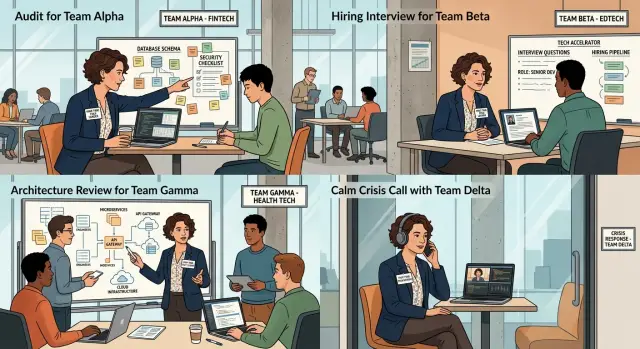
Table of Contents
Why batch startups get stuck
Startups in a batch rarely stall because people stop trying. They stall because everyone is moving at once, and small gaps pile up before anyone names them. A team can ship a demo, win a pilot, and still carry quiet problems in hiring, scope, architecture, and delivery.
That is normal in an accelerator. Founders spend their week talking to users, fixing the pitch, chasing introductions, and trying to keep the product alive. Those are the right priorities. Trouble starts when nobody has enough senior technical judgment to spot risks early.
Many young teams have smart engineers. What they often do not have is someone who has seen the same failure five times before. So they miss the boring warning signs: a rushed data model, a fragile deploy process, a feature promise that will take six weeks instead of six days, or a hire who interviews well but cannot ship.
Mentors usually help with the story, pricing, and go to market plan. They are less likely to sit with the team and ask practical delivery questions. Who owns technical decisions this week? What breaks if the first big customer signs tomorrow? Which feature should wait because it will create rework next month?
That gap gets expensive fast. One founder becomes the product manager, recruiter, and emergency tech lead at the same time. Another team lets its strongest engineer make every call, even if that person has never run production systems or hired a senior developer.
A shared part time technical leader gives the batch a steady rhythm instead of random advice. The same person can review plans, spot patterns across several startups, and push teams to fix the few issues that are actually slowing them down. This does not replace founders or mentors. It gives them a calm operator who notices trouble early, before it turns into a launch delay, a bad hire, or a late night outage.
A simple example makes the point. A startup with two founders and three engineers can look fine on demo day. One week later, the team is stuck on infrastructure, arguing about priorities, and interviewing the wrong candidate. A senior technical lead usually sees that drift before the team does.
What this role actually covers
A part time technical leader helps founders make better decisions under pressure. They do not take over the company, and they should not act like a full time executive who drops in for a few hours and rewrites everyone else's plan.
The work starts with priorities. Founders already juggle product, hiring, customer issues, and runway. A good technical lead helps sort what matters this week and what can wait. The founder still makes the call.
Each week, that person should review risk in three places: the product, the team, and delivery. A feature can look simple but hide a bad technical choice. A team can look busy while the real bottleneck sits with one engineer. A deadline can look fine on paper and still fall apart once the work starts. Catching those problems early saves a sprint, a hire, or a release.
They should join only the meetings where their presence changes a decision. That usually means founder check-ins, architecture discussions before a team builds the wrong thing, final hiring screens, and urgent calls when a launch or outage needs a clear technical voice. Daily standups and routine status meetings rarely need them.
A useful weekly rhythm is simple: one founder sync to reset priorities, one short risk review, a few focused meetings where senior judgment matters, and brief follow-up notes so the team knows what changed.
Restraint matters just as much as judgment. If the team can solve a problem on its own, the technical lead should stay out of the code. If the team hits a wall, they can step in for a hard debugging session, a startup architecture review, or a production issue. The job is to remove blockers, not become one.
That balance is why this setup works well in a batch. Founders get senior help without another full time salary. Teams get guidance without someone hovering over every ticket.
A weekly rhythm that fits a batch
A batch needs a fixed cadence. A part time technical leader cannot live in every chat thread, so the week has to protect focus and still leave room for surprises.
Monday works well for short founder check-ins. Keep them to 15 or 20 minutes. Ask what changed since last week, what is blocked, which deadline is real, and whether any hiring or production issue needs quick attention. Those calls do two jobs at once. Founders get a reality check, and the technical lead gets a map of where the week actually needs attention.
The deeper work belongs in the middle of the week. That is the time for audits, hiring screens, and architecture reviews. Those sessions usually need 60 to 90 minutes because rushed advice tends to create more work later. One team may need a product and code audit on Tuesday, another may need hiring screens on Wednesday, and a third may need an architecture review on Thursday before it locks in a costly decision.
It also helps to leave one open block on the calendar every week. Protect it. Do not fill it with nice to have calls. A founder may need help with a release issue, an investor demo may expose a weak system, or a vendor choice may suddenly matter. That open block keeps the whole schedule from collapsing when one startup has a bad day.
Friday should end with decisions, owners, and next actions. Do not finish the week with vague advice like "clean this up" or "look into options." Write down who owns the database fix, who will run the next interview, and which architecture choice the team will test first.
For three startups, that is usually enough. Each team gets regular attention, but the part time technical leader does not turn into a full time firefighter.
How the first audit works
A good first audit is fast, concrete, and a little blunt. The goal is not to judge the team. The goal is to find out what they can ship in the next few weeks without breaking the product or burning out the founders.
Start with the roadmap against real team capacity. If two engineers need to ship onboarding, billing, analytics, and a mobile update in one month, the plan is already off. A good technical lead trims the roadmap to what the team can actually finish, then marks what should wait.
What gets checked first
The first pass usually looks at the repo, deployment notes, and recent error logs. You can learn a lot from that alone. Is ownership clear? Are deploys repeatable? Is the product already throwing warnings nobody has time to read?
Logs often reveal what the roadmap hides. A startup may say its next problem is growth, while the logs show login failures, payment retries, or background jobs that quietly die every night. Fixing that early can save a month of wasted work.
The audit should also check how the team builds and ships. If CI is slow, secrets live in random places, or nobody trusts production deploys, that risk matters more than another feature request. Teams often discover that their biggest problem is not code quality. It is the fact that shipping feels unpredictable.
Most early audits uncover one or two risks that can derail the next month. Common ones are fragile deploys, one engineer holding all the system knowledge, or a roadmap that depends on a third party service nobody tested properly.
What founders should get back
Founders do not need a 20 page report. They need a short action list they can use the same day. Cut two roadmap items that will slip anyway. Fix the failing deploy step before the next release. Assign one owner to clean up error alerts. Move a risky integration behind a simple fallback.
Picture a batch company with three people building a B2B SaaS product. They want to launch a new dashboard in two weeks. The audit shows their auth flow fails under load and nobody can roll back a bad release. The right move is obvious: delay the dashboard, fix auth, and make rollback boring. That is what a useful first audit does.
Hiring screens that save founder time
Founders in a batch lose a lot of time on candidates who interview well but do not think clearly. A part time technical leader can do the first screen, cut the list quickly, and hand founders a short note: strong yes, maybe, or no, with plain reasons.
The best screens test judgment, not memory. Early startup work is messy. Specs change, bugs hide in odd places, and nobody has time for long handoffs. Ask candidates to walk through a real bug they fixed, how they sized a task, and when they pulled in help instead of guessing.
Good answers have a few common signs. The candidate explains the order of steps they took. They state assumptions before giving an estimate. They say what they would check first when something breaks. They admit what they do not know and who they would ask.
Weak answers sound polite but empty. A candidate says "it depends" three times, talks in general terms, or jumps to tools before explaining the problem. That is usually enough. End the process early. A founder does not need to spend an hour chasing clarity that never comes.
This matters even more in an accelerator batch, where three startups may hire for very different roles in the same week. One team needs a backend engineer, another needs a product minded mobile developer, and another needs someone senior enough to calm production issues. The screen can change by role, but the bar should stay simple: can this person reason through problems, explain tradeoffs, and work without constant rescue?
That kind of screen saves founders for the final conversation, where they should focus on fit, pace, and whether they would trust this person in a rough week.
Architecture reviews before rework starts
Most rework starts early, when a team picks a structure that seems fine in week two and becomes painful by month three. A startup architecture review should happen before the product grows around bad assumptions.
Focus on the parts that get expensive to change later: auth, billing, the data model, background jobs, outside services, and deployment. If those pieces are messy, every new feature takes longer than it should.
A good technical lead usually pushes teams in a boring direction: fewer tools, fewer moving parts, fewer handoffs. That is often the right call. Many startups add queues, microservices, and extra AI layers before they have one clear path from user action to stored data.
The most useful questions are plain. Where does each piece of data start, move, and end up? Who owns each system when it breaks late at night? What fails first if traffic jumps or one vendor goes down? Which tool can the team remove today without hurting the product?
Those answers expose weak spots fast. Maybe events pass through three services for no real reason. Maybe customer data lives in two places and nobody knows which copy is correct. Maybe one founder is still the only person who can deploy.
The output should be small and practical. Keep one source of truth for customer data. Add a new service only when the current app clearly cannot handle the load. Make background jobs retry safely. Write down who owns deploys, backups, and alerts.
That kind of review saves real time. It can stop a team from spending six weeks fixing a problem that started as a two hour shortcut. In a batch, plain systems usually win because they are easier to change under pressure.
How crisis calls should run
A crisis call needs structure fast. In a startup batch, stress spreads quicker than facts, and the first job of the technical lead is to slow things down.
Use the first ten minutes for facts only. Skip blame, theories, and long backstory. What broke, and when did it start? Are customers blocked, or is this only internal? What changed right before the issue? Can the team reproduce it now? Who already checked logs, alerts, or support messages?
If nobody knows the answer yet, split the work. One person checks customer impact, one checks recent changes, and one confirms whether the problem is still active. That alone cuts a lot of wasted talk.
Then name the immediate risk in one sentence. Maybe users cannot pay. Maybe bad data is still being written to the database. Maybe a security hole is open. Once the risk is clear, choose the next safe step: roll back the release, turn off the broken feature, pause the job writing bad records, or put a manual process in place for a few hours. Teams often rush to fix the bug before they stop the damage. That is the wrong order.
Keep the call small. Bring in the engineer who touched the area, the founder who can make tradeoffs, and the person who handles customer updates if users are affected. Do not invite five people who only want status updates. A crowded call slows every decision.
Close with one owner and one follow-up time. Not three owners. Not an open ended "we'll keep everyone posted." Say, "Nina owns the rollback. We meet again in 20 minutes." Calm beats clever when production is on fire.
A realistic week with three startups
Monday starts with a release problem. One team pushed an update late on Sunday, and the app now breaks on the one workflow a pilot customer plans to test in the morning. A good technical lead does not turn that into a long postmortem. They spend 20 minutes with the founder and lead engineer, find the failing change, pick the fastest safe rollback, and set one owner for customer updates.
After that, they leave behind two follow-ups: a short release checklist and a rule that nobody ships after a certain hour without a rollback plan. The team gets through the pilot first. Process fixes come second.
Tuesday brings a different problem. Another company has reached the final round with a senior engineer, and the founders want a fast opinion before making an offer. This call should stay tight. The technical lead reads the resume, joins a 30 minute interview, asks a few direct questions about debugging, ownership, and tradeoffs, then gives a clear answer: hire, pass, or keep looking.
By Wednesday or Thursday, the third startup has a quieter fear. Nothing is on fire, but the team thinks its stack may fall over if the product gets traction after demo day. This is where a short architecture review helps. The advisor looks at the database shape, background jobs, deployment flow, and slowest request paths, then separates real limits from imagined ones.
Sometimes the answer is simple. Keep the stack, fix two bad queries, add caching in one place, and stop rebuilding the whole app on every deploy. Teams often expect a rewrite when they really need three boring fixes.
Across the week, every call needs a clear end point: one decision to make, one owner for each task, one deadline before the next check-in, and one written note the founders can reuse later. That rhythm matters more than fancy advice. Three startups can get real help in one week if nobody turns a 25 minute problem into a two hour meeting.
Mistakes that waste time
The first mistake is treating a part time technical leader like a full time manager. That breaks the model quickly. If the team expects daily task tracking, constant chat replies, and approval on every small choice, they burn hours on the wrong work.
This role works when founders keep ownership. The technical lead should step in for hard calls, risk checks, hiring screens, and course correction. If a startup needs someone to run standups, chase tickets, and manage every engineer, it needs a different hire.
Another common waste is asking vague questions. Teams say, "What do you think about our product?" or "Can you review our architecture?" That is too broad for one call.
Clear questions lead to clear decisions. Should we rebuild this service now or patch it for the next eight weeks? Is this senior candidate strong enough to own backend work alone? Will this database choice break when we add 10,000 more users? What is the fastest fix for this deployment failure today?
The third mistake is boring, but it causes real damage. Nobody writes down owners after review calls. People leave with different ideas of what was agreed, then the same problem comes back next week.
Every call needs a short record: what changed, who owns it, and when it should be done. Five lines are enough. Without that, advice turns into loose conversation.
The last mistake is waiting for a fire. Some teams stay quiet for weeks, then ask for help only when production is down, an investor demo is tomorrow, or a senior engineer quits. By then, choices are smaller and fixes cost more.
Early contact saves time. A founder who shares a shaky hiring plan or rough system design on Monday often avoids a painful rewrite on Friday. The same is true for crisis work. Fast help matters, but early help matters more.
Quick checks and next steps
A batch does not need a heavy process. It needs a few habits that stick every week. If those habits slip, founders lose time on repeated debates, uneven hiring, and avoidable fire drills.
Start with four checks. Each startup should keep a live risk list that is short, updated weekly, and owned by named people. Hiring screens should use a consistent bar across the batch, even when the roles differ. Architecture decisions should be written down in half a page or less: the choice, why the team made it, what it costs, and when to review it. Founders should also know exactly when to escalate a problem and who makes the call.
There is a simple test for whether the batch rhythm is real or just talk. Ask any founder to show their current risks, last hiring scorecard, and last architecture note. If they cannot find them in two minutes, the process is still too loose.
This is where many programs drift into noise. One startup gets a tough hiring screen, another gets an easy one. One team documents decisions, another keeps everything in chat. Two months later, the batch has different standards, and the support team cannot spot patterns early.
A shared template fixes more than most people expect. It does not need to be fancy. A risk table, a scorecard, and a short decision log already give the batch lead a much clearer view of where help is needed.
Advisors like Oleg Sotnikov at oleg.is work in exactly this mode: short audits, hiring calibration, architecture reviews, and occasional crisis support. For a batch, that can be enough senior coverage to steady several startups without adding a full time executive to each one.
The next move should stay small. Pick one weekly check, make it standard across the batch, and keep it running for four weeks. You will see quickly which teams need deeper help and which ones just needed a steadier cadence.