Lean operations vs a larger team: what to fix first
Lean operations vs a larger team often starts with fixing broken handoffs, repeat work, and messy systems before you hire. Use simple checks and examples.

Table of Contents
Why more people can make the mess bigger
Hiring into a messy system usually makes the system slower before it makes it faster. Each new person adds questions, status checks, reviews, and handoffs. A team of five can sort out a lot with one quick chat. A team of ten needs clear ownership, tighter timing, and a shared understanding of who decides what.
If the process already has delays, extra headcount spreads those delays across more work. A slow review queue stays slow after two new hires join. The same blocked release, vague spec, or missing test still holds everything up. Now it affects more tasks because more people feed the same bottleneck.
New hires also copy what they see. If the team pastes data between tools, asks for approvals in chat, or avoids parts of the code because nobody trusts them, new people will learn those habits fast. They do not fix the mess by joining it. They inherit it.
Cost rises first. Output usually does not. Salaries start on day one, but real contribution often takes weeks or months. During that ramp-up, senior people answer repeat questions, review more work, and fix mistakes caused by unclear systems. Delivery often dips before it improves.
This is not a simple choice between lean operations and a larger team. Most teams do need more people at some point. The problem is timing. If you hire before you fix handoffs, automation, and architecture cleanup, you pay more to get the same confusion at a larger scale.
Startups feel this quickly. A founder hires two engineers to move faster, but nobody defines release steps, bug ownership, or code review limits. A month later, the team has more meetings, more half-finished work, and the same slow releases. The issue was never effort. The work itself was poorly set up.
That is why process fixes before hiring often win first. Clean up the path the work takes, and each new hire becomes useful sooner.
What lean operations looks like
Lean operations is not a tiny team doing more work through stress. It is a team with less drag. People know how an idea moves from request to shipped change, and they do not have to guess who approves it, where it sits, or why it stalled.
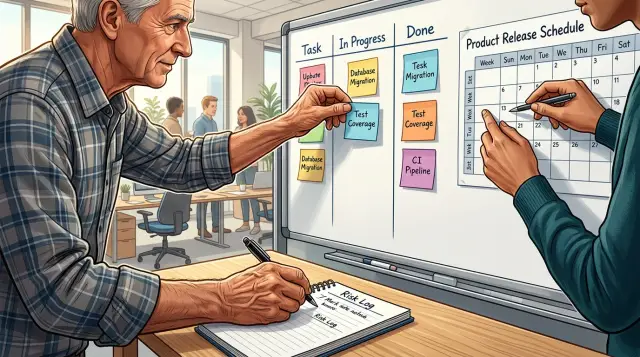
Start by writing down the path from idea to release in plain language. A short map is enough: request, decision, build, review, test, release. When teams skip this step, they argue about effort when the real problem is confusion. In many cases, nobody disagrees on the goal. They disagree on the path.
Approval steps deserve a hard look. Some reviews catch real problems. Others exist because they have always existed. If three people approve the same small change, nobody is truly accountable. Cut steps that add delay without adding judgment. One good review beats four slow ones.
Repeated work needs one owner. That does not mean one person does everything forever. It means one person keeps the process clean, notices where it breaks, and updates it when the team changes. Without an owner, the work is shared in theory and ignored in practice.
A lean setup usually has a few obvious habits. Everyone can see where work is waiting. Repeated tasks have clear owners. Reviews happen at the right step instead of everywhere. Small releases go out often instead of piling up.
Teams also track wait time, not just hours worked. Hours tell you how busy people are. Wait time tells you where the work gets stuck. If a task takes two hours to do but sits for six days waiting for approval, another hire will not change much.
That is one reason outside technical leadership can help. Oleg Sotnikov has spent years working across engineering, founder, and CTO roles, and his own work on AI-augmented operations shows how much a small team can do when the flow is clean. The point is simple: if the system is the bottleneck, fix the system first.
Signs the problem is not headcount
A team rarely needs more people when work spends most of its life waiting. If a ticket takes 25 minutes to finish but sits in a queue for three days, the delay is probably tied to approval steps, unclear ownership, or too many status checks.
Release delays tell the same story. Many teams code on time, then lose days when design, QA, product, and engineering pass the work back and forth. The calendar fills up, but the release does not move.
Recurring bugs are another clear signal. If the same login bug, billing bug, or sync issue returns after every sprint, the team does not need extra hands first. It needs better test coverage, cleaner code in risky areas, and a rule that somebody fixes the root cause instead of patching the symptom again.
You can see it in senior people's calendars too. When leads or founders answer the same setup questions, explain the same release steps, or approve the same small decisions every day, the team has a knowledge problem. New hires often add more questions to that pile.
Picture a startup with seven people shipping a web app. They open 80 tickets in two weeks, but half of them wait on review, and only two developers know the deployment process. Every Friday, those two people rush fixes, answer Slack messages, and push the release late. Hiring two more engineers sounds helpful, but the first fixes are much simpler: write the release steps down, cut the review queue, add tests around the bug-prone areas, and remove old code that keeps breaking.
This is where a good engineering lead or Fractional CTO often helps quickly. Fresh eyes tend to find the same pattern: the team is busy, but the system around the team is slow. Fix the work first. Then you can judge whether you still need to hire.
How to fix the work before you hire
Pick one workflow that hurts the team every week. Do not map the whole company. Choose one path with a clear start and end, such as a bug report moving from support to production or a new feature moving from idea to release.
Write every step in order on one page. Note who touches the work, how long they spend on it, and how long it sits untouched. Most teams discover the same awkward truth: the work itself may take two hours, but the waiting takes three days.
Then mark the places that create drag. Maybe work waits for one person to approve it. Maybe someone copies the same details into three tools. Maybe the task comes back because the handoff was unclear. Maybe testing happens late, so small bugs turn into rework. Maybe people keep asking for status because nobody can see progress.
Fix the biggest delay first. If reviews pile up behind one senior engineer, set up a simple review rotation. If people copy notes from chat into tickets, use one intake form. If deploys feel risky, add basic test checks and a cleaner release routine. For small teams, useful automation usually starts with these boring fixes, not a big tool rollout.
Give the change one week and measure a few things: cycle time, reopened tasks, and how often people ask, "Where is this now?" A small drop in waiting can save more time than a new hire in a messy system.
This is why process fixes before hiring often beat a larger team. A Fractional CTO will usually start with a workflow map because it shows whether the team lacks people or just carries too much avoidable friction.
Hire only if the cleaner system still hits a limit. If the queue stays full after the fix, the handoffs are clear, and the team still cannot keep up, then adding a person makes sense. If not, you are paying someone to stand in the same traffic jam.
Automation that saves time fast
Fast automation works best when it removes repeat work people do every day. Before you add headcount, look for tasks that involve copying data, posting routine updates, running the same checks, or chasing the same answers.
A small team often gets more from a handful of boring automations than from one extra hire. Good places to start include creating fresh test data for demos and QA, sending weekly status updates from live data, running lint and tests on every code change, using templates for tickets and handoffs, and sending alerts only when somebody needs to act.
That last point matters. If every warning pings the whole team, people stop reading alerts. A better setup groups noise, filters repeats, and sends a message only when someone must fix, approve, or roll back something.
Templates save time in less obvious ways. A clear bug ticket template can cut ten minutes of back-and-forth from each issue. The same goes for handoff notes, release notes, and meeting summaries. People write less, but the team gets better information.
For engineering work, automatic checks are often the fastest win. When lint, tests, and basic deployment checks run on every change, reviewers spend less time catching easy mistakes. Developers get feedback in minutes instead of after a broken build or failed release.
Picture a startup with six developers. Each person loses 20 minutes a day creating test accounts, updating tickets, and rerunning checks by hand. Automating those tasks gives back about 10 hours a week. That is often enough to clear a delivery bottleneck without hiring anyone new.
Cleanup in the product and stack
A messy stack creates extra work every day. Add more people to that setup, and you usually get more handoffs, more confusion, and more room for mistakes.
Start with duplicate tools. If product notes live in one place, bugs in another, and release decisions in chat, the team wastes time just finding the latest answer. Pick one home for each type of work and close the rest. One tracker, one docs space, and one place for release status is usually enough.
Release work should also fit in one person's head. If shipping needs six manual steps, two approvals, and a late-night Slack thread, the process is the problem. A safer setup is boring on purpose: a short checklist, automatic tests, a clear rollback step, and one standard path to production.
Noisy errors are another common drag. When the team sees hundreds of alerts, they stop trusting alerts at all. Fix the loud, low-signal problems first. Tools like Sentry or Grafana help only when alerts point to real trouble instead of constant background noise.
Data needs rules too. Teams get stuck when customer status lives in the CRM, the billing tool, a spreadsheet, and a support note at the same time. Pick one source of truth for each fact. Then make every other tool read from it instead of competing with it.
A quick cleanup usually means removing apps that do the same job, cutting release steps nobody can explain, muting or fixing repeated false alarms, and naming one source of truth for each business record.
This work looks small, but it changes the pace of the whole team. Cleaner tools and clearer rules often save more time than one extra hire.
A simple example from a growing startup
A SaaS startup had five engineers, a designer, and one product manager. Customer demand picked up, so the founders hired three more engineers. On paper, that should have fixed late releases. It did not.
The team wrote more code each week, but releases still slipped. One feature could sit "done" for four days because nobody knew who should approve it. Another change waited for manual testing because the same two people checked everything by hand. The engineers were not the problem. The work kept stopping between steps.
By the second month, the founders thought they needed even more people. A good technical leader would pause that discussion and map the waiting time first. In this case, the delays were easy to see.
A normal release looked like this: an engineer finished a task on Tuesday, QA checked it on Thursday, the product manager reviewed it on Friday, and deployment moved to the next week because nobody wanted to push changes late in the day. The actual coding took less time than the waiting.
They changed four things. First, they wrote one release checklist that everyone used. Then they set one clear approver for each type of change. They added basic smoke tests in CI and created a fixed release window twice a week.
None of this was fancy. The smoke tests covered login, payments, and the main user flow. The checklist forced simple answers before release: what changed, who approved it, what should be tested, and how to roll it back if something broke.
Within a few weeks, the team shipped smaller updates with less stress. Engineers stopped chasing approvals in chat. Manual testing dropped to the parts that actually needed human eyes. Release meetings got shorter because the checklist answered most questions before anyone joined a call.
Then hiring started to make sense again. The startup added another engineer later, but this time the new person joined a system that worked. Output went up because the workflow stopped fighting the team every day.
Mistakes that make new hires less useful
New hires struggle when a team gives them noise instead of a clear job. A company may feel short on people, but the real drag often hides in handoffs, repeated questions, slow approvals, and messy architecture. Add more people to that setup, and you usually add more waiting.
One common mistake is hiring before anyone tracks where time goes. If a team says it needs two more engineers but cannot show where the current week disappears, those hires will get swallowed by the same mess. Ten hours lost to unclear tickets does not turn into progress just because more people join.
A few patterns waste time fast. Teams add another tool for planning, chat, or alerts, then everyone spends more time checking tabs than finishing work. Old rules stay in place long after the product changes because nobody owns cleanup. Senior engineers become human routers who answer every question, assign every task, and approve every small change. New people inherit hidden workarounds and half-documented systems, so they ask for help all day.
This gets expensive in a quiet way. Salary cost is obvious, but the bigger cost is attention. When senior people spend half their day routing work, they stop improving the system, fixing weak spots, and writing the sort of documentation that helps the next person move on their own.
A growing startup can hit this wall with only six or seven engineers. One team might think it needs three more people, but a quick review shows the real problems: duplicate alerts, release steps nobody trusts, and one senior engineer who must approve nearly everything. Clean that up first, add a bit of automation for small teams, and the next hire becomes useful much faster.
That is why process fixes before hiring tend to pay off. Sometimes an outside review can spot these issues in a short audit: where decisions stall, where work bounces between people, and where architecture cleanup will save more time than another job post.
A quick check before you open a role
A new hire can help, but only if the work is clear. If your team cannot explain, in plain steps, how an idea moves from request to code, review, test, and release, you do not have a staffing problem yet. You have a workflow problem.
Look at waiting time first. A task that needs two hours of real work but sits for four days in review, approval, or deployment will stay slow after you add one more person. The extra salary goes into the same queue.
Repeat problems tell the same story. If the team fixes the same broken import, the same flaky test, or the same release checklist every month, hiring does not remove the cause. It just spreads the annoyance across more people.
Before opening the role, do a short check. Ask one person to map the path from idea to release without guessing. Pick five recent tasks and compare work time against wait time. Look at the last month for repeated fixes, repeated questions, and repeated handoffs. Then estimate whether one script, one test, or one approval change could save more hours than a new hire adds.
That last question is often more useful than people expect. If a simple automation saves 8 to 10 hours each week, it can beat hiring right now. A release script, auto-generated test data, or a better handoff template can remove friction fast.
Picture a small product team with two developers. They want a third engineer because releases feel slow. After one review, they find that coding takes one day, but review, QA coordination, and manual deployment take three. Fixing the release steps gives them more room than another person would.
If the work is still clean, visible, and consistently overloaded after this check, then open the role. If not, fix the system first.
Next steps if the team still feels stuck
When the team feels busy all day and still misses dates, pause hiring for a month. Pick one workflow that causes pain every week and clean up that path first. Bug triage, releases, customer onboarding, and sales handoff are common starting points.
A small, clear fix usually tells you more than adding two more people to the same mess. If one ticket waits three days for review, or every release needs manual checks, the problem is not headcount yet.
Keep the scope tight. Map the workflow from request to done, remove one approval or handoff, automate one repeated step, give one person clear ownership, and write a simple definition of done.
Then track a few numbers that show waiting and rework. Keep it boring and obvious. Measure days from request to shipped work, how often tasks bounce back for changes, how long reviews sit untouched, and how many bugs reopen after release. Three or four metrics are enough.
If those numbers improve, the team is still getting returns from process fixes before hiring. Delay new roles until the easy fixes stop helping. A new engineer cannot repair a release process that breaks every Friday. A new project manager cannot remove confusion if nobody agrees on priorities. Hiring too early often adds meetings, extra coordination, and uneven output.
If the team still feels stuck after one focused cleanup, get an outside review. That review should look at process, architecture, and automation together, because those problems usually feed each other. Oleg Sotnikov at oleg.is does this kind of work as a Fractional CTO for startups and small businesses, and that kind of outside view can make the next step much clearer.
Start with one workflow this month. If that cleanup changes nothing, a new role may be the next move. If it helps, keep fixing the work before you grow the team.
Frequently Asked Questions
Should I hire more people or fix the process first?
Fix the process first in most cases. If work spends days waiting on review, approval, testing, or release, new hires usually add more questions and more traffic to the same bottleneck.
How can I tell that headcount is not the real issue?
Look at wait time, not just effort. If tasks take a couple of hours to do but sit for days in queues, your team has a workflow problem more than a staffing problem.
What should I check before I open a new role?
Start with one page that shows how work moves from request to release. Then check five recent tasks and compare work time with wait time, repeated bugs, repeated questions, and repeated approvals.
Which workflow should I fix first?
Pick the workflow that hurts every week and has a clear start and end. Releases, bug fixes, customer onboarding, and support handoffs usually show the most drag first.
What automation saves time the fastest?
Begin with repeat tasks people do every day. Test data setup, ticket templates, automatic checks in CI, and status updates from live data often save hours fast without a big tool rollout.
Can a small team really move faster than a bigger one?
Yes, if the smaller team has less drag. A clean release path, simple approvals, and basic test coverage often beat a bigger team that waits on the same slow handoffs.
How much wait time is too much?
If coding takes one day and review, QA, or deployment adds three more, the delay is already too high. That gap tells you where to fix the system before you spend money on another salary.
What product or stack cleanup usually pays off first?
Clean up duplicate tools and noisy alerts first. Put each type of work in one place, keep one source of truth for each business record, and make releases boring and repeatable.
When does hiring actually make sense?
Hire after the flow looks clean and the team still cannot keep up. If work moves through clear steps, queues stay full, and demand keeps rising, another person will help more than another process tweak.
When should I bring in a Fractional CTO?
Bring one in when your team feels busy all day but nobody can explain where time goes. A good Fractional CTO can map the workflow, find the bottleneck, and tell you whether to fix the system or add people.