Founder code review: why it slows senior hires down
Founder code review often looks helpful, but it slows senior hires, muddies ownership, and hides planning and process problems.
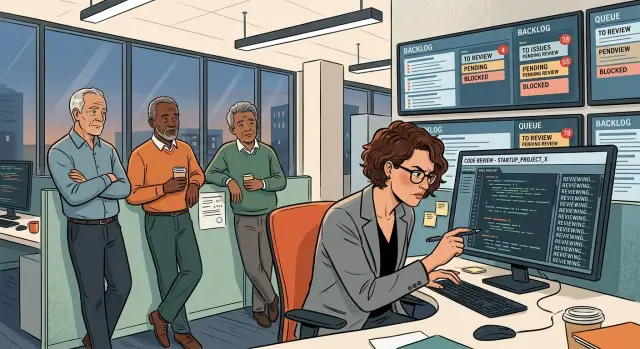
Table of Contents
What goes wrong when the founder reviews every change
A founder who comments on almost every code change usually wants consistency. The effect is different. Review stops being a normal engineering step and becomes a queue around one person's time.
Speed drops first. Founders do not stay in the code all day. They move between sales, hiring, customer issues, fundraising, and internal decisions. A change that needs 15 minutes of review can sit until tomorrow because the founder had five other priorities.
Small decisions start moving upward too. If the founder weighs in on naming, file layout, minor edge cases, and style, engineers learn the pattern quickly. They stop settling routine questions with each other. They wait for the founder to make the final call.
That creates dependence. Senior engineers still write the code, but they stop owning the review standard. Instead of using their judgment, they try to predict the founder's taste. After a while, experienced hires become careful approvers who would rather avoid being overruled than make a clean decision.
You can usually see it early. Merges wait for the founder's reply. Review threads stall when the founder gets busy. Engineers escalate small calls instead of resolving them. Work piles up during sales or fundraising weeks.
The founder means well. They want quality. But the standard starts changing with their schedule. On a quiet afternoon, they leave detailed comments. Between meetings, they skim and approve. The team gets visibility from the founder, but it also learns to wait.
Why senior hires slow down
Senior engineers move fast when they can make normal calls on their own. If every change waits for founder review, that speed disappears.
An experienced hire does not need approval for every naming choice, refactor, or test setup. Once they learn that the founder rewrites small details to match a personal style, they stop asking, "What solves the product problem with the least risk?" They start asking, "What will pass review with the fewest edits?" Those are very different goals.
The cost is bigger than a few extra comments. Senior engineers often spot deeper issues early: a messy service boundary, slow tests, or a deployment step that fails at the worst time. Fixing those takes room to decide. If review already turns into long arguments over small points, they avoid larger changes because approval takes too much effort.
That is how weak structure survives. A backend engineer sees that a rushed patch should become a small redesign, but chooses the safer option: ship the patch, leave the fragile shape in place, and move on. It saves time today and creates more work next month.
Good engineers notice the trust problem quickly. If the founder hires them for experience but overrides routine decisions, the message is simple: you are here to type, not to think. Some push back. Some go quiet. Some start taking recruiter calls.
When smart senior hires still feel slow, the issue often is not skill. The team has trained its best people to wait, second guess, and optimize for approval instead of delivery.
How accountability gets blurry
Once founder review becomes the final gate, ownership moves upward and sideways at the same time. Engineers wait for approval from one person, but that person is too far from daily work to own every detail. The team ships more slowly and spends more time arguing about who should have caught what.
Code quality suffers first. Nobody really owns it day to day because the founder can change the standard at the end. Engineers stop asking, "What does good look like on this team?" They ask, "What will the founder accept today?"
Team leads feel this faster than anyone. A lead cannot coach well if their guidance gets reversed in the last review. Engineers notice immediately. If the lead says one thing and the founder says another, the lead loses authority, even if the lead was right.
The blame pattern gets messy too. A weak handoff, a vague ticket, or a missing test often shows up as a review delay. Then everyone says the queue is the problem. Sometimes it is. Often the delay started earlier, when nobody wrote down acceptance rules, split the work well, or checked edge cases before opening the pull request.
Missed deadlines make the gap obvious. If a release slips by five days, someone should own the next step. Maybe the lead tightens review standards. Maybe product cuts scope earlier. Maybe an engineer fixes test coverage before the next sprint. If every miss ends with "we need faster reviews," the real fault stays hidden.
Healthy teams make ownership boring. Engineers own code quality in their area. Leads own coaching and review standards. The founder sets direction and stays out of the routine approval chain.
What this pattern hides
When every change waits for the founder, the problem usually starts long before the pull request.
Sometimes planning is weak. Open design questions stay unresolved, then the team tries to settle them during review. Review turns into product review, architecture review, and risk control all at once. That is expensive. A team should make the bigger calls before coding starts, so review can focus on correctness, safety, and clear code.
Sometimes the issue is missing standards. Teams without clear rules repeat the same debate every week: where logic should live, how much abstraction is enough, when to split services, and what counts as done. The founder steps in, settles it again, and feels useful. The team still has no repeatable way to decide the next time.
Thin testing creates another problem. If engineers do not trust automated checks, they start trusting a person instead. The founder reads every diff because nobody feels safe merging without manual approval. That habit can hide weak test coverage, shaky release steps, and a team that cannot prove a change is safe on its own.
Direct founder review can also cover a gap in technical leadership. Someone should own engineering standards, review quality, and delivery discipline every day. If no lead, staff engineer, or Fractional CTO fills that role, the founder becomes the safety net by default. That can work for a few weeks. It usually breaks once the team grows or the product gets more complex.
Hiring problems hide there too. A weak senior hire rarely fails in one dramatic moment. More often, they leave a trail of messy diffs, fuzzy reasoning, repeated rework, and comments that never end. If the founder keeps fixing the output personally, the real problem stays unspoken.
A simple example from a small software team
A SaaS founder hires two senior backend engineers because releases keep slipping. On paper, the team looks stronger right away. Both hires have solid judgment and enough experience to work without close supervision. One rule stays in place: the founder must approve every backend change before it goes live.
That rule changes the team on day one.
Maya finishes a billing feature in three days. The logic works, the tests pass, and the feature matches the ticket. The founder reviews it late that night and asks for a new service layout, different names, and a pattern he prefers from an older project. Maya makes the changes. The next review brings another round of comments, again mostly about taste. By the time the feature ships, she has done much of the work twice.
Dan runs into a different problem. A bug breaks report exports for a small group of paying customers. He finds the cause fast and pushes a patch before lunch. Then the patch sits for two days because the founder is buried in calls and other decisions. Support cannot promise a fix date. Dan cannot close the issue. Customers keep waiting even though the technical fix already exists.
By the end of the week, the release moves again. The team says the review queue caused the delay. That sounds reasonable, but it hides the real issue. The queue is not the process. The founder is the process.
So a few things happen at once. Senior engineers stop owning decisions fully because final judgment sits elsewhere. Urgent customer fixes wait behind comments on style and personal preference. Delivery dates slip, but nobody can point to one clear owner. The team looks busy, yet output feels thin because authority and accountability no longer sit in the same place.
How to step back without losing control
Control does not come from reading every pull request. It comes from clear rules, one owner, and fast feedback.
A practical reset usually has four parts:
- Name one engineering owner. This person sets review rules, makes the final call on routine changes, and resolves normal disagreements. The founder can still stay involved, but through that owner instead of through every pull request.
- Write a short review standard. Keep it plain enough to read in two minutes. Define what "done" means for tests, what needs a second review, what counts as a risky change, when to ask for an architecture decision, and how quickly reviewers should respond.
- Limit founder review to work with real business risk. That usually means billing logic, security sensitive changes, data migrations, major architecture choices, or releases that could seriously affect customers. Routine fixes, small refactors, and normal feature work should move without founder approval.
- Track the new process for one month. Measure review wait time, rework after review, and release slips caused by approval delays. Those numbers show whether the bottleneck is gone. They also reveal deeper issues such as weak specs, shifting priorities, or a founder who changes direction midweek.
If nobody on the team can own this yet, outside help can shorten the reset. A good Fractional CTO can set the operating rules, coach the engineering lead, and give the founder visibility without pulling daily delivery back into the founder's inbox.
Mistakes that keep the bottleneck in place
The first mistake is easy to miss. The founder says only major changes need approval, then quietly treats almost every change as major. A payment fix feels major. A copy tweak on the signup page feels major because conversion matters. A refactor feels major because it touches shared code. Soon the rule means nothing, and the queue fills up again.
Another mistake is subtler. The team starts copying the founder's review style instead of agreeing on engineering standards. People wait to see what the founder prefers about naming, structure, or edge cases. One person's habits become policy, which is a weak substitute for actual standards.
Teams also try to solve the slowdown with more meetings. Extra standups, status calls, and check ins can make things look organized, but they do not fix missing ownership. If a senior engineer still cannot merge routine work without founder approval, a fuller calendar just burns more time.
The control level often stays stuck at the wrong depth. Founders hire senior people, then review work at a junior detail level: small refactors, line by line style choices, and tiny implementation calls. That sends a clear message, even if nobody says it aloud. You are responsible for output, but I still own the real decisions.
Review also turns into a catch all safety net. Teams expect it to catch missing tests, vague tickets, rushed planning, hidden scope, and shaky acceptance rules. Review can catch some of that. It should not carry all of it.
When the same style comments repeat every week, senior engineers ask approval for small choices, meetings multiply, and pull requests fail because the plan was vague before coding started, the bottleneck is no longer just founder review. It is a team design problem.
Quick checks for this week
You can usually spot this pattern in five working days without a full audit.
Watch how code moves. Do reviews sit for more than one business day before anyone gives clear feedback or approval? Do engineers ask, "What would the founder want here?" before they start coding? Do the same style comments appear again and again? Do release dates move when one person gets busy with sales, hiring, or fundraising? Do senior hires spend time decoding approval patterns instead of solving customer problems?
Then pick one pull request and trace it from start to finish. Note when the code was ready, when review began, what feedback came in, and whether the comments changed the product or only the style. One example often tells the whole story.
If you want a stronger test, skip one founder review this week and let the engineering lead or senior engineer make the call. If nothing breaks and the work ships faster, you found the bottleneck.
What to do next
Draw a hard line around founder approval. Keep it for a short list of decisions with real business risk, such as security, large architecture changes, major customer commitments, or expensive work. Remove it from routine pull requests, small refactors, bug fixes, and normal implementation choices.
Then give daily review ownership to one person. That should be an engineering lead or a trusted senior engineer, not a rotating group and not the founder. One owner keeps standards steady, makes decisions faster, and makes accountability obvious when something slips.
If your team still relies on founder review to catch basic problems, do not solve that by hiring more people yet. Fix the operating rules first. Most teams need plain standards more than another senior hire.
That reset is usually simple: a clear definition of done for every task, short review rules, a time limit for reviews, release checks that catch common mistakes early, and planning that separates urgent work from noisy work. When planning is weak, review turns into planning. When tests are weak, review turns into QA. When standards are vague, every pull request becomes a debate.
A weekly check is enough for most founders. Look at lead time, reopen rate, blocked pull requests, and how often work waits on one person. If those numbers improve, step back further. If they get worse, fix the process with the review owner instead of taking control again.
If nobody inside the team can set this up, outside help can save a lot of drag. Oleg Sotnikov at oleg.is works as a Fractional CTO and startup advisor, and this is the kind of operating problem that often benefits from an experienced outside view. The goal is simple: clear ownership, steady review standards, and a team that can ship without lining up behind the founder's calendar.
Frequently Asked Questions
How can I tell if founder review is slowing the team down?
Look for simple signs. Pull requests sit until the founder replies, release dates move when the founder gets busy, and engineers ask what the founder wants before they start coding. Trace one pull request from ready to merge. If the code waited on one person more than on actual fixes, the bottleneck is clear.
Should the founder stop reviewing code completely?
No. Keep founder review for work with real business risk, like security changes, billing logic, data migrations, or large architecture decisions. Let the team handle routine fixes, small refactors, and normal feature work without founder approval.
Who should own code review instead of the founder?
Give daily review ownership to one person. An engineering lead fits best, and a trusted senior engineer can do it if you do not have a lead yet. That person should set the review standard, make routine calls, and keep reviews moving.
Why do senior hires seem slower when the founder reviews everything?
Senior engineers slow down when they stop using their judgment. If the founder rewrites small choices to match personal taste, they start optimizing for approval instead of solving the product problem. Over time, they avoid larger fixes because review turns into extra work.
How do we step back from founder review without losing quality?
Start with a short written standard. Define what done means, what needs extra review, how fast reviewers respond, and which changes need founder input. Add basic test and release checks so the team can prove a change is safe without waiting for one person.
Will more meetings fix the review bottleneck?
No. More meetings can make the team look busy, but they do not fix missing ownership. If engineers still need founder approval to merge routine work, a fuller calendar only burns more time.
What should we measure after changing the review process?
Track a small set of numbers for a month. Watch review wait time, rework after review, blocked pull requests, and release slips caused by approval delays. Those numbers show whether the team fixed the queue or only moved it around.
What deeper problems can founder review hide?
It often hides weak planning, vague standards, thin testing, or missing technical leadership. Review then turns into product review, architecture review, and QA at the same time. Fix those gaps first, or the founder will drift back into the approval chain.
What if founder review is covering for a weak hire?
Handle it directly. If one engineer leaves messy diffs, fuzzy reasoning, repeated rework, and comment threads that never end, the founder should not keep cleaning it up in review. Set clear expectations, coach if the person can improve, and make a hard call if they cannot.
When does it make sense to bring in a Fractional CTO?
Bring one in when nobody inside the team can set standards, own reviews, and keep delivery steady. A Fractional CTO can set the operating rules, coach the lead, and give the founder visibility without dragging routine work back into the founder's inbox.