Messy codebase before hiring engineers: what to fix
Messy codebase before hiring engineers often leads to slow onboarding and copied bad habits. Fix ownership, deploys, and reviews first.
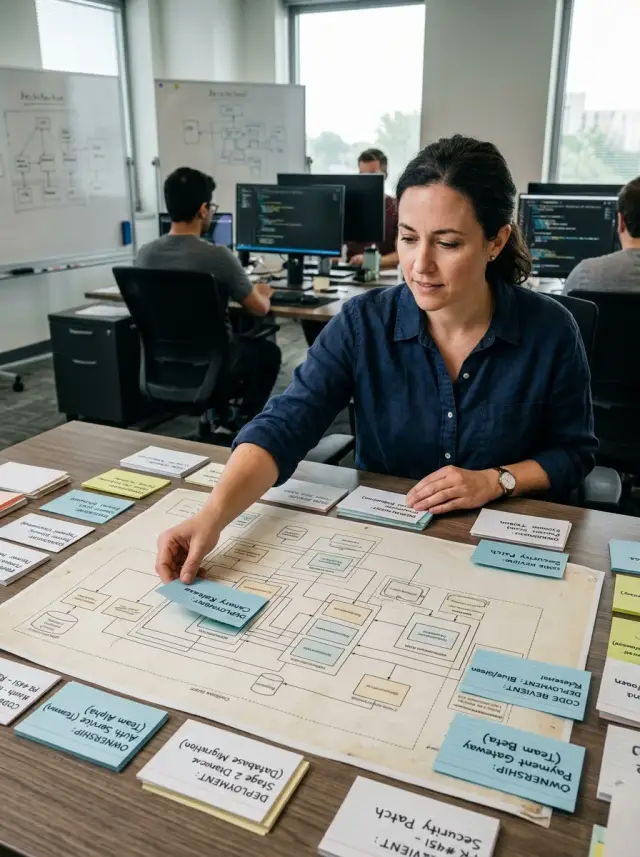
Table of Contents
Why adding people can make the mess worse
Hiring into disorder spreads disorder faster. A new engineer joins and asks who owns a service, how reviews work, and how to release safely. If three people give three different answers, the problem is not hiring. It's how the team works.
That's why a messy codebase is a hiring risk, not only a code risk. More engineers mean more changes, more questions, and more chances for confusion. If ownership is vague, every task starts with detective work. Someone fixes a bug in one area, breaks another, and then waits half a day to find the right reviewer.
New hires also copy what they see. If the team relies on manual release steps, they keep using manual release steps. If people skip tests to get reviews faster, they learn that speed matters more than safety. Culture spreads through daily habits, not through a doc somebody read once on day one.
You can usually spot the pattern quickly. Pull requests get bigger because small ones still sit in review. Deploys depend on one person who "knows the steps." Teams solve the same problem in chat every week, then forget the answer. Bugs bounce between people because nobody clearly owns the area.
Each of those problems gets heavier with every hire. One extra engineer may look like more capacity, but the team often loses time instead. Senior people answer the same questions, untangle the same handoffs, and rescue the same failed deploys. The new hire feels slow, even when they're good.
Slow reviews, shaky releases, and hidden rules also wear down trust. Engineers stop making small improvements because they expect delays. They avoid parts of the system that feel dangerous. Managers see missed dates and assume they need more headcount, when the real problem is that the team still works by memory, habit, and guesswork.
Headcount helps when the basics are clear. Without clear ownership, a stable deploy path, and a review flow people understand, adding engineers usually multiplies the chaos you already have.
What a messy codebase looks like in daily work
A messy codebase rarely looks dramatic from the outside. The app still runs. Customers still log in. The trouble shows up in small delays that keep stacking up until every change feels risky.
One common sign is unclear ownership. A bug appears in billing, but the billing logic touches three services, one old admin panel, and a background job nobody wants to claim. People ask, "Who owns this?" and the answer changes depending on who is online. New engineers feel this fast. They cannot tell where to ask questions, who approves changes, or which parts of the system are safe to touch.
Deploys often expose the deeper mess. The team says releases are "simple," but one person still runs half the process by hand. They know which command to skip, which server needs a restart, and which warning everyone ignores. If that person takes a day off, releases slow down or stop. That is not a process. That is memory.
Review flow gets messy in a different way. Pull requests sit for three or four days, then come back with mixed comments from different reviewers. One asks for a refactor. Another says the scope is too big. A third drops a style note and never returns. Nobody makes a clear call, so the work keeps bouncing.
The same mess shows up around the edges. Docs describe code that no longer exists. Tests pass in one environment and fail in another. Production changes appear without a ticket or written note. People learn rules by overhearing them in chat.
A growing team can survive one of these problems for a while. It struggles when all of them show up together. Then every fix starts with detective work, and new hires spend their first weeks guessing instead of shipping.
Fix ownership before you open new roles
Most messy codebases share one simple problem: nobody really knows who owns what. New people feel it on day one. They ask where to put a change, who can approve it, and who gets called when production breaks. If the answers change every week, the mess grows faster than the team.
Start by cutting the codebase into clear areas that one team can own. Use product or system boundaries, not random folders. Billing, auth, reporting, the mobile app, internal admin, and data pipelines are easier to own than giant buckets like "backend" or "platform."
Each area needs one direct owner and one backup. The owner does not have to write every line. That person keeps the area readable, decides when refactoring can wait, and answers hard questions. The backup steps in during leave, incidents, or busy release weeks. Without backup coverage, ownership breaks the first time someone is sick or buried in other work.
Write down the decisions that usually cause fights: who approves schema changes, who can cut a release, who leads a hotfix when production fails, and who makes the final call when two teams disagree. Keep it short and public. A one page ownership map beats a long wiki nobody reads.
Work across teams also needs a rule. Pick one and use it every time. A simple version works well: if a task touches another team's area, the owner of that area reviews the plan before coding starts and reviews the final change before merge. That adds a small pause early and saves days of rework later.
If a new engineer can look at a service and know who owns it, who backs it up, and who decides on risky changes, you have removed one of the biggest sources of team chaos.
Make deploys predictable
New engineers should not need hidden knowledge to ship a small fix. If your deploy process changes from person to person, every release feels risky, and the team starts to avoid shipping. That slows product work and makes the codebase even harder to untangle before hiring.
Pick one normal release path and make everyone use it. One branch flow, one build step, one deployment command or pipeline, one place to check status. If senior engineers use a special shortcut, newer people will copy it at the worst possible time.
Manual steps are where bad releases usually start. If someone still updates config by hand, runs database scripts from a laptop, or posts release details from memory, move those steps into scripts or CI jobs. A script can be ugly and still help. A checklist that depends on memory usually fails sooner or later.
A simple deploy path should answer four questions: what starts a release, who approves it, who can roll it back, and where the team checks logs and errors after launch. Keep those answers short and visible.
Approval rules matter more than most teams admit. Name one role or one small group that can approve a release. Name one person on duty who can roll it back without waiting for permission in a group chat. If nobody owns that call, people waste ten minutes debating while users stare at a broken screen.
Release notes should be short enough that people actually write them. Four lines are often enough: what changed, who changed it, any migration or risk, and how to roll back. Support, product, and the next engineer on call usually do not need more than that.
Predictable deploys also make onboarding calmer. A new hire can watch two releases, run the third with support, and understand how production works without fear. That is a much better start than handing them a stale wiki page full of exceptions.
Make code review fast and clear
Slow reviews teach people the wrong lesson. They stop asking for feedback early, stack up huge pull requests, and push stress into the deploy process.
Most teams do better with a size limit. A pull request should cover one change, not a week of mixed work. If a PR includes a bug fix, a refactor, and a schema change at once, the reviewer has to guess what matters. Keep the default small enough to read in one sitting. Many teams do well when they stay under roughly 200 to 400 changed lines, with exceptions when the change is mostly generated code or file moves.
When a change is bigger than that, split it on purpose. Move cleanup into one PR. Put behavior changes into another. Save broad renames and file moves for their own review, or they will hide real risk.
Reviewers also need a narrow job. They should ask a few basic questions. Does the change solve the stated problem? Can it break an existing path, data flow, or deploy? Are tests present where the risk is real? Is the code clear enough that the next engineer can change it safely?
Some things should not block a merge. Personal style preferences, minor naming debates, or comments like "I would do this another way" create noise. Let your formatter and linter handle the small stuff. If a comment is optional, mark it that way or move it into a later task.
Response time matters just as much as comment quality. Set one rule for normal work and one for urgent fixes. A normal PR needs a first review within one business day. An urgent production fix needs a named reviewer right away, even if that means one person owns fast approvals that week.
Messy teams can cut review time a lot with just these rules. One startup I saw stopped accepting oversized PRs and asked reviewers to separate blocking comments from suggestions. The tone got calmer, merges got faster, and new hires stopped learning that every review was a debate club.
If review feels heavy, the answer is usually not more reviewers. It is smaller changes, clearer standards, and faster replies.
Use a simple first month cleanup plan
A messy team does not need a grand rewrite. It needs four calm weeks of cleanup that remove daily friction before new engineers arrive. The goal is simple: make it easy for someone new to learn who owns what, how code gets reviewed, and how a change reaches production.
A useful first month can look like this:
- Week 1: Trace how work moves today. Write down service owners, release steps, who approves pull requests, and where work stalls for days.
- Week 2: Fix the loudest pain first. If deploys fail because one script only one person understands, replace it with a clear repeatable command and a short checklist.
- Week 3: Write down the rules people keep in their heads. New hires should know naming rules, branch rules, review expectations, rollback steps, and who to ask when something breaks.
- Week 4: Run one small change through the whole path. Pick a tiny feature or bug fix and move it from ticket to review to release without private chat rescue missions.
Keep the scope small. You are not trying to clean every old decision in 30 days. You are trying to stop the worst habits from spreading to the next person you hire.
The best test is boring work. Ask one engineer to ship something modest, like adding a field to an internal form or changing one email template. Watch where they hesitate. If they ask, "Who owns this service?" or "Which branch do I deploy from?" you found a rule that still lives only in someone's memory.
This is the kind of cleanup where a technical leader earns their keep. The useful move is rarely a giant process document. It is clearing the path so a small team can ship with less guessing. If a new hire can make one safe change in their first week without chasing five people for answers, the cleanup worked.
A realistic example from a growing team
A SaaS team had six engineers and two open roles. Revenue was moving up, customer requests kept piling in, and the founders felt pressure to hire fast. The real problem was not headcount. The real problem was that one core service, billing, belonged to everyone and to no one.
Any engineer could change it. Nobody kept the full picture in their head. When bugs showed up, the team searched old chat messages and guessed who might know the code.
Releases were even more fragile. One senior engineer had the only deploy setup people trusted, and it lived on his laptop. He had the right keys, the half documented script, and the memory of which steps people could skip when they felt lucky. If he was sick or busy, the release waited.
The team paused hiring for two weeks and fixed the flow first. They gave the billing service one clear owner and one backup. They moved deploy steps into CI so the process lived in the repo, not on a laptop. They wrote a short release checklist with rollback steps. They also changed review rules so each pull request needed one reviewer from the service area and one clear reason for any requested change.
That was enough to calm things down. A normal release stopped sounding like "Can Sam run this tonight?" and started looking like "checks passed, review is done, ship it from the pipeline." People spent less time waiting and less time guessing.
When the two new engineers joined, their first month looked very different from the month before. They picked up small tickets, opened pull requests, got clear comments, and watched the same deploy path everyone else used. No one told them to patch production by hand. No one asked them to message one person for secret deploy commands.
That change matters. New hires copy the habits they see right away. If they join chaos, they learn shortcuts and fear. If they join a team with clear ownership, a predictable deploy process, and a review flow that makes sense, they start helping in days instead of adding to the mess.
Mistakes that keep the chaos alive
Mess usually gets worse for one simple reason: leaders try to solve a working problem with more people. If the team still argues about who owns what, how code reaches production, or who can approve a change, every new hire learns the same bad habits on day one.
The most expensive mistake is starting a rewrite because the current code feels painful. A rewrite can hide weak ownership and a broken deploy process for a few months, but it does not fix them. The same unclear decisions usually show up in the new code too. Teams end up with two systems, twice the stress, and no real improvement in how work moves.
Another common miss is hiring senior engineers and expecting them to untangle team politics by force of experience. Good seniors can improve a lot, but they should not have to guess who makes product calls, who owns risky services, or whose approval actually matters. If leaders leave that fuzzy, senior hires spend their time negotiating instead of building.
Vague approval rules cause a quieter kind of damage. A team says it wants flexibility, so nobody writes down who reviews what, when a second reviewer is needed, or what blocks a deploy. That sounds easy until one pull request waits three days, another ships in ten minutes, and a new engineer learns that process depends on mood.
Documentation can turn into another trap. Some teams react to chaos by trying to document everything at once. That usually stalls real work. Write the few documents people need every week: service ownership, deploy steps, review rules, and where incidents go.
A small example makes the point. If a new backend engineer joins on Monday and spends the week asking three different people how to ship one safe change, the team does not have a code problem first. It has a leadership problem. Fix that, and the code gets easier to improve.
Quick checks before you send offers
Hiring too early can lock the mess in place. Before you add people, check whether the team can answer a few basic questions without guessing, waiting, or asking the same senior engineer for help again.
Use a short test:
- Ask three engineers who owns the code they touched this week. If you get three different answers, ownership still lives in people's heads.
- Ask whether the team can ship if the usual rescue person takes a day off. If deploys stop when one person is offline, you do not have a real team process yet.
- Check the review workflow. Reviewers should answer inside a defined window, such as a few working hours for normal changes or one business day for larger pull requests.
- Ask a newer person where release steps and rollback steps live. If they need five links, two old messages, and a private note from somebody on the team, the process is still fragile.
Picture the next hire joining on Monday and needing to update billing on Wednesday. They open the repo, but nobody agrees who owns that area. Their pull request sits for a day because reviews depend on one busy lead. Then they learn the release steps are in a stale document, while the rollback steps live in somebody's memory. That is not onboarding. That is delay with a salary attached.
Clean teams are not perfect. They are predictable. Engineers know who decides, how changes ship, when reviews happen, and where the recovery steps live.
If those four checks pass, hiring will probably help. If even one fails, spend a week fixing it first. That week often saves months of confusion after the offer is signed.
What to do next
Start smaller than you want. Do not try to clean the whole company before you open new roles. Pick one team, one service, and one release path. If that path becomes calm and repeatable, you can copy the same habits to the rest of the codebase.
Put one person in charge of the cleanup. That lead does not need to solve every problem alone, but they do need to own the plan, keep people honest, and send a short weekly progress note. One clear owner usually fixes more than a committee.
The first moves are simple. Write down who owns the service, who reviews changes, and who gets called when it breaks. Cut deploy steps until the team can ship the same way every time. Set a small review workflow with clear rules on response time and approval.
Keep the scope tight for at least a month. If your billing service needs three approvals, a chat message, and a manual server step before release, fix that lane first. New hires do better when at least one part of the system already feels stable.
If ownership, infrastructure, and review flow all break at once, do not dump that mess on a new manager or senior engineer and hope they sort it out. Sometimes a short outside reset is faster. Oleg Sotnikov at oleg.is works with startups and small teams on architecture, infrastructure, delivery flow, and AI first development, which is often the mix that needs attention before hiring starts.
Hire after the basics hold. When one team can explain ownership in a page, ship without drama, and move pull requests in hours instead of days, you are in a much better position to grow.
Frequently Asked Questions
Should we pause hiring if the codebase is messy?
Yes, usually for a short time. If new engineers join before ownership, deploys, and review rules are clear, they learn the same messy habits and slow the team down instead of helping.
What should we fix first before opening new roles?
Start with ownership. When people know who owns a service, who backs them up, and who approves risky changes, reviews and deploys get easier to fix. Without that, every task starts with guessing.
How can I tell if ownership is unclear?
You can spot it in daily work. People ask who owns a service, bugs bounce between teams, and the answer changes based on who is online. That means ownership lives in memory, not in a clear rule.
What does a good ownership map include?
Keep it short and public. For each service or product area, name one owner, one backup, and who makes the call on risky changes like schema updates, hotfixes, and releases.
How do we make deploys predictable without a big platform project?
Pick one normal release path and make everyone use it. Move manual steps into scripts or CI, write down rollback steps, and make sure one person on duty can roll back fast when a release goes wrong.
How fast should code reviews be?
Aim for a first review within one business day for normal work, and much faster for production fixes. Small pull requests help more than adding extra reviewers, because people can read and answer them in one sitting.
Should we rewrite the system before hiring?
No. A rewrite often hides the same team problems for a while and then brings them back in new code. Fix ownership, deploys, and review flow first, then decide whether any part truly needs a rewrite.
How much documentation do we actually need?
Less than most teams think. Write the few things people need every week: service owners, branch and review rules, release steps, rollback steps, and where incident notes live. If nobody reads it in normal work, cut it.
What should a new engineer be able to do in the first week?
Give them one safe, small change and watch where they get stuck. If they can find the owner, open a small pull request, get clear feedback, and ship through the normal pipeline, your basics are in decent shape.
When does it make sense to get outside help?
Bring someone in when the same problems repeat every week and nobody has time to reset the system. A fractional CTO can clean ownership, delivery flow, and infrastructure faster than a tired team trying to fix it between tickets.