Product architecture after the first enterprise deal
Product architecture after the first enterprise deal starts with limits. Learn what to configure, what to keep as paid service, and when to say no.
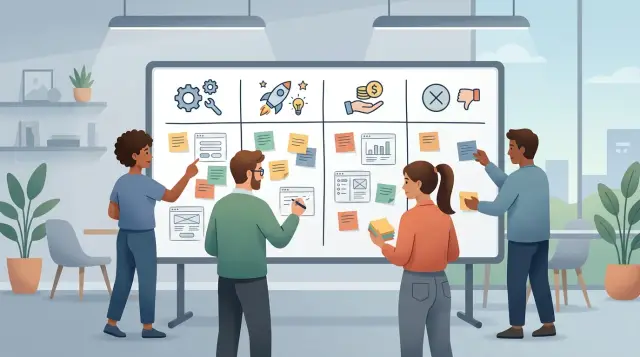
Table of Contents
What changes after the first enterprise deal
The first enterprise deal changes a product in a very specific way. Up to that point, customers mostly buy what already exists. After that deal, a customer starts asking how the product will fit their internal rules.
That usually means more controls, more approvals, and more exceptions than early users ever needed. A small team can absorb those requests faster than it should. The contract is large, the logo feels important, and nobody wants to risk the revenue. So the default answer becomes yes, even when the request only makes sense for one buyer.
Most of the asks sound reasonable on their own. Extra roles and permissions. Approval steps before changes go live. Custom fields, special exports, audit history, or account behavior that works differently from the standard product.
None of this is unusual in enterprise software. The trouble starts when every request lands as a special case instead of a product decision. One rule turns into five branches in the code. One custom workflow becomes a permanent support problem. A quick promise from sales becomes months of product debt.
That is why product architecture matters so much after the first enterprise deal. The team is no longer deciding only what to build. It is deciding what kind of product it wants to become.
Roadmap conversations change fast. Work that helped most customers can slip behind work that protects one contract. Founders feel the pressure because the revenue is real now, while the cost of bending the product shows up later. Engineers feel it too. They know a one-off setting can sit in the code for years, long after everyone forgets who asked for it.
A simple example makes the risk obvious. A SaaS team closes its first large annual contract. The buyer asks for a custom approval path and a separate admin rule for one department. The team adds both quickly. Six months later, every release touches that logic, QA takes longer, and new customers face a more confusing settings panel built around one account.
The first enterprise deal can help a startup grow up. It can also pull the roadmap away from the market if the team treats every request as a feature.
How to sort incoming requests
Enterprise buyers often ask for ten things at once, but those requests should not go into one pile. A single contract can hide legal terms, security gaps, reporting needs, workflow friction, and plain brand polish.
Start by rewriting each request in plain language. Skip product jargon and skip the proposed fix. "Customer needs SAML with role mapping" is already a solution. "Their staff must sign in with the company identity system and keep existing access rules" is the actual need.
Then sort requests into a few clear buckets:
- legal
- security
- workflow
- reporting
- branding
This changes the conversation right away. Legal and security requests usually come from procurement or IT review. Workflow requests come from the people using the product every day. Reporting requests come from managers who need exports, proof, or audit trails. Branding matters, but it rarely deserves the same urgency as access control or the work people do inside the product.
After that, label each request as either a one-buyer need or a market pattern. Be strict. One loud enterprise account can make an odd request sound universal. If three similar customers have the same problem, that is a pattern. If one buyer wants a custom approval screen that mirrors an internal process nobody else uses, that is usually service work or a polite no.
Then ask two blunt questions: who will use this every week, and who will maintain it? A feature that helps fifty users every day is very different from a feature one admin opens once a quarter. Maintenance matters just as much as demand. If your team will carry custom logic, extra support tickets, and special test cases for years, the request costs more than it looks.
A short note beside each item is enough: user, frequency, owner, and maintenance cost. It takes minutes and saves weeks of roadmap debate.
Teams that handle this well slow the request down before they speed it up. That pause keeps sales excitement from turning into permanent product debt.
Configuration, feature, service, or no
The first large customer can push a startup into bad habits quickly. One request becomes a custom branch, then another, and soon the team is supporting a private product for one buyer.
Good product architecture starts with a simple rule: every request goes into one bucket before anyone says yes.
Use configuration when several customers want the same outcome but need different settings. Approval limits, retention periods, user roles, notification rules, or regional policy options usually fit here. The workflow stays the same. Customers get control without the team building separate logic for each account.
Build a feature when the behavior belongs in the core product. If people will hit it during normal work, and more than one customer is likely to want it soon, it probably belongs on the roadmap. A real feature should help the next sale, not only the deal that just closed.
Sell a service when the work is mostly setup. Data migration, account mapping, permission design, policy translation, training, and process cleanup often look like product gaps, but they are usually project work. A customer may need help moving 200,000 records from an old system. That does not mean every future customer needs a permanent migration engine.
Say no when the request adds ongoing complexity for one account. A private workflow, a one-off reporting rule, or a custom permission model can look small in a sales call. Later, it adds testing work, support tickets, upgrade risk, and edge cases that never leave.
Before choosing any option, count the full cost instead of the build effort alone. A two-day change can turn into months of drag.
A few questions help:
- Will a few customers use this in the normal product flow?
- Can the team test it without adding special cases everywhere?
- Will support understand it without reading one customer contract?
- Is this mostly setup work that a paid service can cover?
- If the customer leaves next year, would you still keep it?
That last question is often the most honest one. If the answer is no, the safer move is usually service work or a polite no.
This is where experienced technical leadership matters. Someone has to protect the roadmap, price service work honestly, and stop one enterprise deal from quietly rewriting the product for everyone else.
A simple decision process
Most mistakes start the same way: a buyer asks for a feature, and the team starts designing before it understands the problem.
Pause there. Ask what the customer is trying to achieve, what blocks them today, and what would count as "good enough." A request for a custom approval flow may turn out to be a need for audit logs, role limits, or one extra step in an existing workflow.
A short process keeps the roadmap from bending around one buyer:
- Start with the outcome. Write the problem in one sentence without naming the requested build. "The customer needs managers to approve refunds above $500" is better than "Build a custom approval engine."
- Check demand beyond this deal. Ask whether two or three other customers would pay for the same result. If only one company needs it, you are probably looking at a service, a paid setup task, or a no.
- Price the full cost, not just the build. Count engineering time, QA time, edge cases, support tickets, docs, and future upgrades.
- Pick the smallest fix that works. Default to configuration before customization. If a new setting, role, template, or export solves the problem, that is usually better than a one-off branch.
- Write the decision before sales closes. Capture what you will build, what you will not build, who owns it, and what the customer should expect later.
This sounds strict, but it actually saves deals. Enterprise requests often arrive wrapped in urgency, and sales teams want a fast yes. A written decision gives everyone the same memory when the details start to shift.
If you need a quick test, ask one more blunt question: if this customer left in six months, would you still want this in the product? If the answer is no, treat it as a service, a temporary workaround, or something to decline.
Set boundaries before sales promises pile up
Sales promises spread faster than product decisions. One rep says yes to a custom approval flow, another offers a private dashboard, and soon the team is building side deals instead of a product.
Write down a clear approval line. The product team can approve small configuration changes inside existing limits, such as access rules, report layouts, or rollout settings. Anything that changes the data model, security model, support load, or long-term maintenance should go to the founder, CTO, or whoever owns product direction.
Sales also needs a short menu of things it can sell without asking. Keep it plain and specific. Approved configurations, onboarding help, data migration, training, and other paid services are fine if they do not change the core product.
One path for exceptions
Exceptions need one door. If sales can ask in random chats, promises will drift. Use one request path with the same details every time: what the customer wants, why they need it, how soon they want it, and what revenue depends on the ask.
Then apply the same rule every week. If it fits current settings, sell it as configuration. If the team can do it once without owning it forever, sell it as a service. If many customers will likely need it, treat it as a feature. If it bends the roadmap around one buyer, say no.
Put custom asks into one weekly review instead of scattered messages. Product, engineering, and sales should all be there. Thirty minutes is often enough when the rules are clear.
That meeting does more than sort requests. It forces better pricing, stops vague delivery dates, and makes it obvious how many "small" asks are really the same problem wearing different clothes.
Many teams skip this after the first enterprise win because every deal feels urgent. That is usually a mistake. One buyer can pay well and still ask for things that make the product worse for everyone else.
If you have a founder or a Fractional CTO involved, make this review gate explicit. Sales can move quickly without freelancing the roadmap.
A realistic example from a SaaS team
A small SaaS company sells operations software to growing businesses. Then it closes its first enterprise deal. The buyer is serious, the contract is larger than anything before it, and the request list arrives fast: SSO, custom fields, special exports for internal reporting, and tighter response times when something breaks.
The team does one smart thing early. It stops treating the whole request list as one package. Each item gets its own decision.
SSO goes into the product. Large buyers often expect it before security review even starts, and future customers are likely to ask for it too. It improves the product without changing how the core app works for smaller accounts.
The custom fields request looks bigger than it really is. After a few calls, the team learns that the buyer mostly needs better mapping between existing data and internal naming. They do not need a full rewrite of the data model. So the team keeps the product schema clean and offers paid help for data mapping, report setup, and export formatting.
That service work makes sense because the need is real, but it is specific to the buyer's internal process. Another company may want a different file layout, different column names, or a different report schedule. Building all of that into the app would leave smaller customers with settings they never touch.
One request gets a direct no. A single department inside the enterprise wants a custom approval flow with extra steps, role exceptions, and a legal review branch. The team checks the request against other customers and finds no real pattern. If they build it, they will own that complexity for years. They decline it and explain that the approval model will stay standard.
They also agree to stricter response times, but they treat that as a support commitment, not a product feature. That keeps the roadmap clean.
Six months later, the result is healthy. The enterprise customer got what it needed to launch. The SaaS team added one broadly useful feature, sold setup work where the need was company-specific, and refused the one-off process logic that would have bent the product around a single buyer. Smaller customers still get a simple product. That is the point.
Mistakes teams make after a big win
Things get messy when one buyer starts acting like the template for everyone else. A large customer brings money, pressure, and a long request list. Teams often confuse that urgency with product truth.
One common mistake is copying the buyer's org chart into the product. Suddenly the app has approval chains, role names, report paths, and handoff rules that match one company perfectly and fit almost nobody else. The team thinks it built for enterprise. In reality, it hard-coded one client's internal politics.
Another mistake is hiding custom logic behind settings and calling it configuration. A few toggles can help. Fifty toggles usually mean the product now has secret branches, edge cases, and support headaches. If a feature exists only because one customer needs a strange workflow, a setting does not make it general.
Money creates a third problem. Teams underprice services because they want to protect the deal, then engineers spend their week in customer calls, data cleanup, special imports, and manual workarounds. That work may still be worth doing, but it is service work. If you price it like a small add-on, you train the customer to expect custom help at product margins.
Cleanup gets ignored too. A team ships one-off code to hit a deadline, promises it will tidy things later, and never does. Six months pass. Nobody remembers why a strange exception exists, but everyone is afraid to remove it.
A few warning signs show up early:
- Roadmap priorities change after the loudest call, not after pattern review.
- Engineers need a private document to explain special customer behavior.
- Sales promises delivery before product and engineering agree on scope.
- Support cannot tell whether an issue is a bug or a paid exception.
The loudest customer should not set priority by volume alone. Revenue matters, but repeatability matters more. A request that future customers will need beats a request that one current customer demands at full volume.
If a request works only for one client, say that clearly. Sell it as a service, isolate the code, or decline it. It can feel awkward in the moment, but it protects the product from turning into a pile of private deals.
Quick checks before you commit
Big deals create pressure. A buyer asks for one extra workflow, one export, one rule, and each request sounds small on its own. The problem is cumulative. A few polite yeses can turn a clean product into a custom build for one account.
Before you commit, run a short filter. Look past the signed deal and ask whether other customers will use the same change within the next year. Ask whether support can explain it without pulling an engineer into every call. Check whether it fits normal QA, or whether it needs its own test matrix and account-only rules. Price the ongoing burden, not just the setup. Then picture the account leaving in six or twelve months and ask whether you would still keep the behavior in the product.
This check is blunt on purpose. Enterprise requests usually arrive with urgency, senior stakeholders, and revenue attached. That makes weak ideas look safer than they are.
Say a buyer wants a custom approval path that only matches its internal org chart. If other customers are unlikely to need it, support cannot explain it cleanly, QA needs separate cases, and pricing barely covers the build, you already have your answer. Sell it as a time-boxed service if that makes sense, or say no.
Teams usually regret the requests they cannot remove later. Keep that standard in mind before you promise anything.
What to do next
Start with the last 90 days. Pull every enterprise request into one shared sheet, even the small ones. Include product changes, onboarding asks, security questions, reporting tweaks, and anything sales promised during the deal.
Then sort each request into four buckets: feature, configuration, service, or no. That exercise usually settles the configuration-versus-customization argument faster than another meeting. Most teams find that far fewer requests belong in the product than they first assumed.
Then look at pricing. If engineers keep doing account-specific work inside product sprints, you have a pricing problem as much as a planning problem. Put a price on custom onboarding, data imports, special reports, and one-off integrations. When service work stays free, product work slows down and nobody sees the real cost.
If your team feels split, ask for an outside view. A good Fractional CTO can spot where one contract is quietly changing your architecture, team habits, and roadmap boundaries.
Oleg Sotnikov at oleg.is works with startups and small teams on product architecture, Fractional CTO support, and practical AI-first development workflows. If your first big deal has started to bend the roadmap, an outside review can help you clean up decision rules, price service work properly, and set firmer boundaries before one customer starts steering the company.
A simple document with these four buckets, pricing rules, and approval limits can save months of rework. That is a strong next step after the first enterprise deal.
Frequently Asked Questions
What is the biggest risk after the first enterprise deal?
The biggest risk is this: one large customer starts shaping the product for everyone else. If you keep saying yes to one-off workflows, reports, and permission rules, the code gets harder to test, support gets slower, and the product gets more confusing for new customers.
How do I tell if a request is a real feature or custom work?
Start with the customer's outcome, not the requested build. If several customers will use the same behavior in normal product flow, build a feature. If one buyer needs account-specific setup or manual work, sell a service instead.
When should we use configuration instead of custom code?
Use configuration when customers want the same result but need different settings. Roles, approval limits, retention periods, and report layouts often fit that model. If the request needs separate logic for one account, configuration will not save you.
What should count as a paid service?
Service work covers setup, migration, mapping, training, and process cleanup. The customer gets real value, but you do not have to carry that work inside the product forever. That keeps the roadmap cleaner and makes pricing more honest.
When should we say no to an enterprise request?
Say no when the request helps one account but adds years of product drag. A simple test works well: if the customer left next year, would you still want this in the product? If not, decline it or offer a time-boxed service.
How should sales handle enterprise asks without bending the roadmap?
Sales should sell from a clear menu of approved options. Let them offer standard configuration, onboarding help, migration, training, and other defined services without guessing. Anything that changes the data model, security rules, or long-term maintenance should go through product or the CTO.
Should we build SSO right away for enterprise customers?
Build SSO when your target market will keep asking for it and it fits the core product. Many enterprise buyers expect it early, so it often makes sense as a product feature. Do not treat every security request the same way, though; some asks belong in services or procurement terms, not in code.
How do we price enterprise-specific work?
Price the full burden, not just the first build. Count engineering time, QA, support questions, docs, and future upgrades. If engineers keep doing account-specific work inside product sprints for free, margins shrink and roadmap work stalls.
What is a simple process for reviewing enterprise requests?
Use one short review every week with sales, product, and engineering in the same room. Bring each request through the same filter: customer need, likely demand from others, full maintenance cost, and final bucket. That habit cuts vague promises and stops random side deals.
Do we need a Fractional CTO after the first big enterprise deal?
A Fractional CTO helps when founders feel pressure from revenue and the team starts arguing about exceptions. A good one can separate product work from service work, set approval limits, and keep one customer from quietly rewriting the architecture. That outside view often pays for itself fast.


