Engineering morale after AI tools: why teams feel worse
Engineering morale after AI tools can drop even when output rises. See how vague goals, bigger diffs, and tool churn add stress, and what to fix.
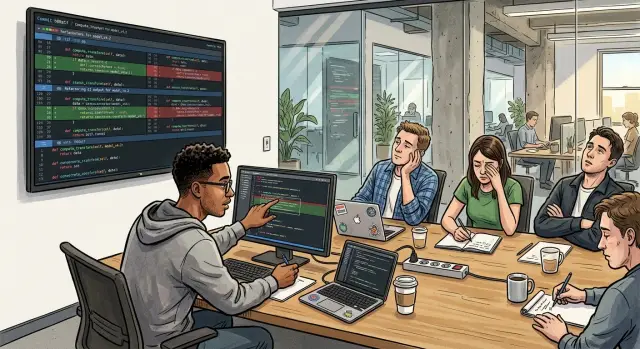
Table of Contents
What changes after AI arrives
The first change is speed. Drafts show up much faster than before: code, tests, bug fixes, notes, even review comments. Review does not speed up in the same way, so a gap opens between "something exists" and "something is ready to trust."
That gap changes how the job feels. A manager opens the board and sees more commits, more branches, and more pull requests. The easy conclusion is that the team can take on more work. Even if nobody says it out loud, engineers feel it in planning, tighter deadlines, and the quiet pressure to keep up with the new pace.
Daily work shifts too. Engineers spend less time starting from a blank file and more time checking machine output line by line. That sounds easier. Often it is not. Reading 400 lines that look plausible and finding the three lines that break a service can take more focus than writing 80 clean lines yourself.
Team norms also get blurry. Before AI tools, most teams had a shared sense of what "done" meant. One person wrote the code, another reviewed it, and both had a rough feel for the effort involved. After AI tools arrive, that shared sense gets weaker. Is a generated draft real progress, or just a suggestion? How much cleanup should happen before review? Who owns mistakes in generated code?
That is why morale can fall even while throughput rises. People see more activity, but they also feel more uncertainty. The work starts to seem less clear, less fair, and harder to judge. If a team does not reset expectations early, faster drafting turns into slower trust.
Why more output can feel worse
AI tools can double the amount of code a team touches in a day. That looks good on a dashboard, but people do not judge their day by output alone. They want to understand what changed, trust it, and move work to done without circling back later to clean up surprises.
A large AI draft often hides a few risky edits inside a lot of harmless code. The risky part may be small: a changed retry rule, a missing permission check, or a weak null case. When that sits inside a 600-line diff, the author moves faster, but the reviewer slows down and gets tense.
Many engineers like making things. After AI arrives, more of the day goes to reading generated code, checking odd choices, and fixing details the tool guessed wrong. Maker time turns into review time. Review matters, but it is usually less satisfying.
Delayed cleanup makes the feeling worse. A tool can produce code that works on the happy path and quietly misses the weird case that shows up later in logs or support tickets. Then the same team spends extra hours patching tests, fixing edge behavior, and rewriting parts they already considered finished. Fast output feels hollow when rework keeps taking the win back.
The pattern is common. The tool creates a big first draft quickly. A person spends longer than expected checking it. Review gets heavier because the diff is larger. Edge cases appear after merge instead of before it. The team ships more, but feels less done.
That gap between visible speed and lived effort wears people down. The repo gets busier, yet the work feels messier. When engineers spend their best hours sorting through large diffs instead of building with intent, output can rise while morale drops.
How vague expectations raise stress
Stress usually starts before any bug or missed deadline. It starts when a manager says "use AI more" and leaves the rest unclear.
Each engineer hears something different. One person uses AI for drafts and tests. Another uses it to generate whole chunks of code. A third avoids it because they do not know where the line is. That gap creates quiet tension fast.
When nobody defines success, people start guessing. Does "good" mean more tickets closed, bigger diffs, faster first drafts, or fewer bugs a week later? That guessing game wears people down.
Leaders often praise speed because speed is easy to see. Review effort is harder to see, so teams leave it out of planning and status updates. That sends a bad message. If AI helps someone produce 700 lines in an hour, another engineer still needs to read those 700 lines, test edge cases, and ask awkward questions in review. The author feels pushed to go faster. The reviewer feels buried. Neither side thinks the process is fair.
The same thing happens with diff size. AI makes it cheap to generate more code, so diffs grow unless a team sets a limit. If nobody says what "too big to review" looks like, engineers keep stretching the boundary until review quality drops.
A team needs plain answers to a few questions. What kind of AI use is normal in day-to-day work? How big can one diff get before it should be split? Does review time count in estimates and sprint plans? Which result matters more: raw speed or code that needs less cleanup?
Without those rules, engineers guess what counts as enough work. Some overproduce to look busy. Some spend extra hours cleaning AI output because they assume nobody will count that effort. Some stop asking questions because they do not want to sound slow.
Clear limits help more than pep talks. A simple rule like "keep AI-generated changes small enough for one careful review" already lowers stress. So does counting review time as real work instead of invisible work.
People do better when the team defines "enough" in plain language. Then engineers can focus on writing good code instead of reading a manager's mind.
Why bigger diffs wear people down
Large diffs drain attention faster than most teams expect. One prompt can update a handler, tests, types, docs, and config in the same pass. Output goes up, but review gets harder.
A human can follow one careful change across two files. Ten files with 600 new lines feel different. Even when the code looks neat, the reviewer has to hold more assumptions in mind at once. That mental load gets old fast.
When a pull request feels too large, people stop reading and start scanning. They check naming, structure, and whether tests pass. They do not always trace the logic from start to finish. That is where small bugs slip through.
AI makes this worse because it often writes code that looks calm and consistent. Comments read well. Tests look sensible. A wrong condition, a missing null check, or one stale field name can hide inside that polish.
A common case is simple. One prompt changes an API response. The tool also updates frontend types, tests, and docs. The diff looks complete, so the reviewer skims. A small mismatch reaches production.
Nobody made a wild mistake. The change just asked one person to verify too much at once.
Ownership gets blurry too. If AI wrote the first draft, the developer may understand the goal but not feel full confidence in every file. The reviewer assumes the author checked the details. The author assumes the reviewer will catch anything odd. That handoff gap creates stress.
Teams feel it in small ways first. Reviews take longer. Comments get shorter. People approve changes they would have questioned a few months ago. Then trust drops, and every large diff starts to feel heavier than the last one.
This is why many developers say AI saves time and still leaves them more tired. The issue is not just the amount of code. It is the size of the judgment call each review now demands.
How tool churn breaks focus
Most teams can handle one new tool at a time. Trouble starts when a new model, plugin, and editor workflow all arrive in the same month.
People barely learn one setup before someone asks them to switch again. A coding assistant changes its suggestions, a model update shifts output quality, and old prompts stop working as expected. Nobody has to make a big mistake for the team to lose time.
That kind of churn hits harder than many managers expect. Engineers build habits to stay fast. When the tools keep moving, those habits break, and even simple tasks take more attention than they should.
Uneven setup across the team makes it worse. One engineer uses Claude in the terminal, another works through an IDE plugin, and someone else scripts a custom flow with two models and a local cache. They may all produce code, but they do not review, debug, or explain it the same way.
The friction shows up in small moments. Review comments refer to prompts nobody else has. A bug appears with one model version and nowhere else. A teammate cannot reproduce how a change was generated. People spend an hour tuning prompts for a task that needed 20 minutes of normal coding.
The hidden cost is context switching. Instead of thinking about the product, engineers think about tool behavior. They compare outputs, test settings, and wonder whether a strange result came from their code or from a silent model change.
That is why teams can ship more lines and more tickets while the work feels less stable. Wins are harder to enjoy when the process changes every week.
Teams usually calm this down by picking defaults and sticking to them for a while. One shared toolchain, one approved model for common tasks, and a short prompt library beat six personal setups. Fewer options sound boring. Boring tools help people focus.
A simple team example
A five-person startup adds AI coding assistants because the team wants to ship more each week. For the first few days, the change looks great. Drafts appear faster, rough tests show up with the feature, and the commit count jumps.
Then a backend engineer opens a pull request for what sounds like a small change: add one billing rule and update the admin screen. The diff is 1,200 lines long. The tool touched files the engineer did not plan to edit, rewrote helper functions, changed naming in a few modules, and added test code nobody asked for.
The reviewer now has a hard job. She cannot tell which parts matter, which parts are safe, and which parts came from the assistant guessing. She sends the pull request back and asks for manual notes, smaller commits, and a short summary of what changed.
That request is reasonable, but it lands badly. The engineer already spent extra time checking the AI output, removing odd changes, and trying to make the code readable. Now he has to do more cleanup work before anyone even talks about the feature itself. He feels slower, even though he used a faster tool.
The founder sees a different picture. First drafts now appear in hours instead of days, so he doubles the weekly plan. On paper, that seems fair. In practice, the team has more code to review, more unclear changes to explain, and less time to think.
Tension builds in small ways. Reviews get shorter and sharper. Engineers stop trusting big diffs. People hesitate before opening pull requests because they expect pushback. Nobody says the tool is useless, because it clearly helps with raw output. Still, confidence falls when the team measures speed and ignores review load, cleanup time, and the stress of sorting through machine-made changes.
By the end of the week, commits increased. Confidence did not.
How to reset the workflow
Morale usually drops when teams add AI on top of messy habits. The fix is often smaller than people think. Put a few rules in place, make them visible, and test them for a short period.
Start with limits. Most teams do better with one coding tool and one support tool, not six experiments running at once. Pause new tool trials for two weeks so people can build muscle memory and stop second-guessing every prompt.
Set a soft cap on AI-heavy diffs. Many teams do well with 300 to 500 changed lines, or one clear unit of work. Ask every author for a short note in plain language: what changed, why it changed, and what a reviewer should check first. Track review time, bug rate after merge, and after-hours work such as late messages, commits, or hotfixes. Then review the rules after two weeks and keep only the ones that lowered stress.
The diff cap matters more than many managers expect. Large AI output can look finished while hiding too much at once. Smaller changes are easier to review, easier to roll back, and less likely to wear people out.
The author note matters too. A reviewer should not have to guess intent from generated code. Two or three clear sentences can save 20 minutes and remove a lot of friction.
This only works if someone owns the reset. On a small team, that might be the tech lead, founder, or a Fractional CTO. The owner does not need a big process. They need to check the numbers, ask where stress is showing up, and make one change at a time.
Treat this as an operating change, not a motivation problem. Clear rules beat encouragement alone. After two weeks, the team will usually tell you what is helping and what is just noise.
Mistakes that make it worse
Teams usually get into trouble when they measure the easiest thing instead of the right thing. If managers start praising line count, giant pull requests, or raw ticket volume, people learn the wrong lesson fast: more generated code looks like more progress.
Big diffs are the clearest example. A 2,000-line change made in 20 minutes can still take hours to review. The author feels pressure to move faster, and the reviewer gets buried in detail. After a few rounds, people stop feeling productive and start feeling stuck.
A few habits make that stress worse. Teams switch models or prompts in the middle of a deadline and change how work behaves from one day to the next. Juniors get asked to review huge AI-generated diffs on their own, even when they do not yet know what normal code should look like. Nobody teaches the team when to trust the tool, when to verify it, and when to write code by hand. Leaders assume every task fits AI, including messy refactors, vague bugs, and risky production changes.
Model switching gets ignored too often. A team can spend half a day relearning tone, code style, or failure patterns because someone decided to try a new model on Tuesday. That breaks trust. People stop building habits because the ground keeps moving.
Training matters more than many teams expect. Without clear rules, one developer accepts generated tests without reading them, another rewrites everything from scratch, and a third keeps asking if the tool is allowed for this task. That uncertainty wears people down.
A simple fix is to match the tool to the job. Use AI for first drafts, repetitive tests, small refactors, and documentation. Be far more careful with architecture changes, security work, and anything that creates diffs too large to review calmly before release.
If a team wants less review fatigue, it should stop rewarding volume and start rewarding clean, reviewable work.
A weekly check
Small morale drops rarely start with a big complaint. They show up in review queues, late bug fixes, and engineers who look busy all day but still leave feeling behind.
A short weekly check works better than a long quarterly survey. Ask the same questions every week, keep the answers simple, and look for movement over time.
Do reviewers finish most diffs in one sitting? If not, the team may be shipping too much generated code at once. Do engineers know when to write code by hand? If the answer changes from person to person, expectations are still fuzzy. Are bug fixes showing up after merge on work that looked "done" a day earlier? That often points to rushed review or overconfidence in generated output. Are people doing more after-hours cleanup than before? If yes, the speed gain may be costing more than it looks.
You do not need a heavy survey tool for this. A simple weekly check in a team meeting is often enough. The point is to make hidden effort visible before people get frustrated and stop speaking plainly.
What to do next
Start small. A full reset usually makes people more tired, not less. Pick one problem this week and fix only that.
If reviews feel heavy, set a temporary limit on AI-generated pull requests. Ask people to split work into smaller diffs or add a short note that explains what changed, what needs careful review, and what the tool got wrong.
Write the rules down so nobody has to guess. Keep them short. Define how large a pull request can be before it must be split, what checks the author does before asking for review, when someone should avoid AI for a task, which parts always need human judgment, and how fast the team expects reviews to happen.
That one page removes a lot of quiet stress. People stop wondering whether they are slow or behind when the real problem is that nobody agreed on the rules.
Then ask the team two direct questions: "Where does AI save you time?" and "Where does it drain you?" You will usually get mixed answers. One person may finish boilerplate twice as fast, while another spends an extra hour checking large diffs and chasing tool mistakes.
Use those answers to make one more small change next week. Keep what helps. Drop what adds noise.
If the team feels stuck, an outside review can help. Oleg Sotnikov at oleg.is works with startups and small teams on AI-first engineering workflows, infrastructure, and Fractional CTO support. A short review of your pull request flow, tool defaults, and review load can surface problems your team has stopped noticing.


