Engineering meeting map for small teams that saves time
Use an engineering meeting map to cut recurring meetings, sort talks by decision type, and move routine status updates into writing.
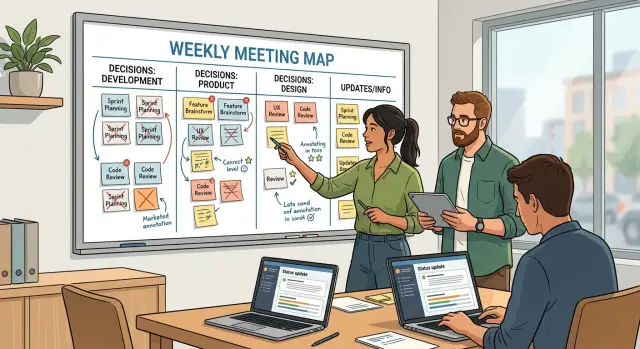
Table of Contents
Why small teams lose time in recurring meetings
Small teams feel every lost hour. When six engineers spend four hours a week in recurring meetings, that's almost three full workdays gone before anyone writes code, reviews a pull request, or fixes a bug. Meetings aren't the problem by themselves. The real problem is keeping them after the reason for them has faded.
Focus breaks more easily than most teams admit. A 30-minute call rarely costs only 30 minutes. People stop work early, switch context, join the call, then try to find their way back into a hard problem. One short sync in the middle of the morning can turn a solid two-hour work block into scraps.
Status talk is often the main offender. Many recurring meetings start with a useful goal, then slowly turn into round-robin updates: what I did yesterday, what I'm doing today, what's blocked. That sounds harmless, but it burns time fast and gives most listeners very little they actually need. If five people sit through updates that matter to one manager or one teammate, the cost adds up quickly.
The waste gets worse when builders join calls that don't end in a decision. Engineers, designers, and tech leads should talk when they need to solve something together. But a meeting that only broadcasts status pulls problem-solvers away from actual problem-solving. A written update often does the same job in five minutes, and people can read it when they have a natural break.
A recurring meeting usually stops earning its place when the same patterns keep showing up. People join late or multitask. The updates could fit in a short note. The group leaves without a decision, an owner, or any change in plan. Two people talk while everyone else listens. The meeting stays on the calendar because "we've always done it."
That gives you a simple test: does this meeting help the team decide, unblock, or coordinate work that truly needs live discussion? If not, it's probably taking more time than it gives back.
What to sort before you cut anything
A meeting map only works if you know what each recurring slot is supposed to do. If you cut first and sort later, teams usually lose decisions, not just meetings.
Put every recurring meeting on one page. Weekly standups, planning, backlog review, architecture chat, incident review, hiring sync, one-on-ones - list all of them in plain language so the whole team can see the load at once.
Then give each meeting one sentence that answers a simple question: what decision should come out of this time? "Share updates" is not a decision. "Choose the next sprint goal" is. "Approve the release" is. If nobody can write that sentence, the meeting is already on shaky ground.
A basic audit only needs a few notes for each meeting: its name and frequency, the decision it should produce, the few people who must join, whether most of the time goes to updates instead of decisions, and who owns the meeting and records the outcome.
Attendance gets clearer when you tie it to the decision. If the team needs a release call, the people who can approve scope, risk, and timing need to be there. Everyone else can read the notes later. Small teams waste a lot of time when six people sit in a call so two people can decide.
Pay extra attention to meetings where people mostly report progress. Those are often better as written status updates. If three engineers spend 20 minutes each saying what they did yesterday, that's an hour gone before anyone solves a problem.
Meetings with no owner deserve scrutiny. So do meetings that end without a clear outcome. A meeting without an owner drifts. A meeting without an outcome comes back next week unchanged.
A six-person startup team can do this review in under an hour. The result is simple and useful: you can see which meetings drive decisions, which ones only move information around, and which ones nobody would miss if they disappeared.
Sort meetings by decision type
Most recurring meetings feel messy because they try to do too many jobs at once. One call starts with status, drifts into planning, and ends with a rushed decision. That's where time goes.
A cleaner approach is to sort meetings by the decision they need to produce. If a meeting doesn't lead to a clear choice, it probably doesn't need live time.
For most small teams, three categories are enough. Planning and priorities meetings decide what happens next, what can wait, and who owns the work. Review meetings gather feedback or approval on a design, demo, draft, or release result. Unblock and risk calls deal with stuck work, slipping dependencies, or problems that need a fast call before they get worse.
That covers most real needs without filling the calendar. A weekly planning meeting, a review meeting, and a short unblock call often do the job.
Pure status reporting should be the first thing to leave the schedule. If people mainly take turns saying what they did yesterday, move that to writing. A short post in chat or a shared note usually works better because people can read it when they need it, not when the calendar tells them to.
Written updates also leave a record. If one engineer says, "API work is waiting on a schema change," everyone can find that later. Nobody has to rely on memory.
Keep each meeting in only one category. If a planning meeting turns into design review every week, split it. If a review call keeps becoming a risk discussion, move that part to a separate unblock session. Mixed meetings feel productive in the moment, but they leave people unsure why they were there.
A useful test is this sentence: "By the end of this meeting, we will decide..." If the ending feels fuzzy or includes two different decisions, the meeting needs a tighter job.
Audit your calendar step by step
Start with the last four weeks, not just this week. One busy release week can distort the picture. Four weeks gives you a better view of the team's normal rhythm, including planning, delivery, and the usual interruptions.
Export the calendar or copy it into a simple sheet. Include every recurring meeting, even the ones people treat as harmless because they only take 15 minutes. Those short meetings often spread across the whole team and cost more than one long discussion.
Count person-minutes, not just meeting count. A 30-minute standup with six engineers costs 180 minutes of team time. That number changes the conversation fast because it shows the real price of routine status talk.
Your sheet only needs a few columns: meeting name, frequency, attendees, total person-minutes, and one yes-or-no field for whether the meeting produces a clear decision.
That last column matters more than most teams expect. After each meeting, ask a blunt question: what changed because people met live? If nobody made a choice, assigned an owner, or cleared a blocker, the meeting probably drifted into reporting.
You'll also find meetings that keep happening out of habit. A weekly architecture sync may have made sense six months ago. If the same three people now use it to repeat updates they already posted in chat, merge it into another meeting or turn it into a written update.
Don't try to fix the whole calendar at once. Pick one meeting and change one thing: shorten it, merge it, or remove it. Small tests work better because people can compare the old version and the new one without guessing.
For example, if a six-person team spends 30 minutes every morning on status, switch that meeting to written updates four days a week and keep one live check-in. That change gives back hours without cutting off real discussion.
Run the test for two weeks and write down what happens. Track missed decisions, surprise blockers, and time saved. If the team still ships smoothly and people ask fewer "why are we here?" questions, keep the change.
When written updates beat live status talk
Most status meetings drag because people spend 30 minutes saying things the team could read in two. If the update doesn't need debate, put it in writing.
For small teams, status is usually the first thing to move out of the room. One slow meeting can take a real chunk out of the day.
Written updates work best when the work is routine, the change is small, and nobody needs to make a call on the spot. A note like "finished the login fix, waiting on review, blocker in staging" gives the team enough context without pulling everyone into a call.
Ask people to post their update before the meeting starts, not during it and not after. That gives everyone time to scan for trouble, ask a quick question, or spot a dependency early.
Keep the format simple: what moved since the last update, what comes next, and any blockers or risks. If help is needed, say so plainly.
Make blockers easy to spot. Put them on their own line, use the same label every time, and be direct. "Blocked on database access" is clear. "Some issues with setup" is not.
When nobody needs to choose between options, reply in writing. A designer can answer a copy change, a developer can confirm a bug fix, and a product manager can approve a small scope note without turning it into a meeting.
Live time should go to work that actually needs people in the same room. Use it for tradeoffs, shifting priorities, risk calls, and decisions with real cost. Those conversations are hard to replace with a thread.
One practical test is simple: if five people join a call and four only give a status update, cut that part first. Keep the meeting only for the two or three issues that need discussion.
This shift sounds small, but it often gives back hours each week. More important, it makes meetings feel useful again instead of automatic.
A realistic week for a six-person team
On Monday, a six-person team keeps one meeting with real weight: weekly planning. It takes 45 minutes, and that's fine because it changes priorities. The product manager brings customer requests, one engineer raises a risk with a backend change, and the team leaves with a clear order of work for the week.
The daily status call used to eat 30 minutes every morning. Now it lasts 10. Each person answers only three things: what moved, what's blocked, and whether any decision needs a real discussion. If nothing changed, they say that and move on.
By late morning, the product manager collects written updates in one shared thread. Everyone posts before lunch. These notes are short, but they do more than the old status call did because people can scan them later instead of trying to remember what someone said on Tuesday.
Tuesday and Wednesday stay quiet. Most days, the short standup is enough. If two engineers hit a pile of blockers, they open a 15-minute unblock call for themselves and nobody else joins. That small habit matters. The designer and product manager keep working instead of sitting through a problem that doesn't need them.
Thursday often shows whether the new rhythm is working. If the written updates are clear, the team spots drift early. If a ticket is stuck for two days, the product manager asks for a decision in chat first. Only then do they book time, and only with the people who can fix it.
Friday feels different from the old schedule. People still talk, but they talk when there's something to solve. There's less context loss because updates live in writing, and fewer interruptions because meetings no longer fill every gap in the calendar.
Over one week, the team saves about 10 person-hours just by shrinking the daily call. They also save the harder thing to measure: attention. That usually shows up in faster reviews, fewer half-finished tasks, and a calmer end to the week.
Mistakes that create confusion after meeting cuts
The fastest way to create chaos is to cancel a meeting before you name who decides. Teams often remove a weekly sync, hit the first disagreement, and freeze. Nobody knows who can set priority, approve a change, or break a tie. The meeting was doing that job, even if nobody said it out loud.
Another mistake is treating chat like a full replacement for every live conversation. Chat is fine for small updates. It's bad for decisions when the context ends up split across threads, direct messages, and scattered replies. Two people read one part, three people read another, and by the next day the team carries three different versions of the same plan.
Written status updates help, but only if everyone uses the same format. Without that, one person writes a novel, another drops a sentence, and someone else posts nothing at all. Keep it boring and easy to scan: what changed, what's blocked, what needs a decision, and who owns the next step.
Invite lists create a quieter problem. A team may agree that only the people doing the work need to attend, then leave the old eight or ten names on the calendar anyway. People keep joining because the invite still exists, not because they need to be there.
Old recurring invites also linger too long. Someone says, "We do written updates now," but the Tuesday status call still fires every week. A few people join out of habit. Others skip it. Soon the team has both systems running badly.
Meeting cuts only save time when the new rules replace the old ones on the same day. Name the decider, trim the invite list, delete the stale calendar hold, and publish the written update template. Most confusion starts when teams do only half of that.
Quick checks before you remove a meeting
Delete the wrong meeting and the team pays for it later. People start asking the same question in three places, decisions get fuzzy, and someone waits a day for an answer that used to take ten minutes.
Start with the purpose. If no one can say, in one sentence, what decision the meeting exists to make, it's probably a status habit, not a decision forum.
Then look at the room. If the same people stay quiet every week, they may not need to be there. Silence isn't always bad, but repeated silence usually means the agenda belongs to two or three people, not the full group.
Written updates replace more than people expect. If most of the agenda is just "what changed since last week," a short note in a shared document or chat thread usually works better. People can read it when they have context, and meeting time stays open for blockers or choices that need debate.
Before you cut anything, ask a few blunt questions. Can one person state the decision the meeting makes? Do most attendees stay silent week after week? Would a short written update cover most of the agenda? Can two or three people solve the issue outside the full group? Did the last two meetings change any plan or priority?
That last question matters more than teams think. If two meetings in a row produced no change, keep the information flow but drop the ritual. Replace it with a written update and a simple fallback: anyone can call a short discussion when a real decision appears.
A six-person team often sees this fast. Their weekly sync runs 45 minutes, but only three people speak. They switch to a written update posted before lunch, then pull in a short call only when a release risk, scope change, or blocked dependency shows up.
Remove meetings with a clear replacement, not a guess. Name who writes the update, where people read it, and when the team moves an issue back into live discussion.
Next steps for a calmer weekly rhythm
Don't cut the whole calendar at once. Pick one recurring meeting that's mostly status talk, change that first, and watch what happens for two weeks. A small team can learn more from one clean test than from a big reset that confuses everyone.
A weekly project sync is often the easiest place to start. If six people spend 30 minutes repeating ticket updates, that's three hours gone each week. Replace that meeting with written status updates, then keep a short live meeting only when someone needs a decision, a tradeoff, or help from another person.
Write the new rules down. Keep them plain and specific so nobody has to guess the format or timing. Post updates before a set time. Use the same structure every time: done, next, blocked. Call a meeting only if a blocker needs discussion. Tag only the people who can help decide or unblock.
That's what makes the change stick. Without clear rules, old habits creep back in and the team ends up with both the meeting and the written update.
Then measure the results. Track hours spent in recurring meetings, but also watch for a less obvious problem: slower decisions. If the team saves two hours a week but waits an extra day for answers, the new setup needs work.
Two numbers are usually enough: hours saved each week, and delays caused by missing or late decisions.
Decision meetings should stay small and short. Invite only the people who own the choice, know the facts, or will do the work next. Ten focused minutes with three people beats 30 drifting minutes with eight.
If the new rhythm still feels messy, outside help can shorten the reset. Oleg Sotnikov at oleg.is works with startups and small businesses as a fractional CTO and advisor, so this kind of process cleanup often sits next to product, architecture, and team decisions.
The best sign that this is working is simple: fewer meetings, faster answers, and more time for actual engineering.
Frequently Asked Questions
How do I know a recurring meeting should go?
Cut it if it no longer helps people decide, unblock, or coordinate work that needs live talk. If the group mostly gives updates, leaves without an owner, or repeats the same call out of habit, move that work to writing or remove the meeting.
Which meetings should stay live?
Keep live meetings for planning, review, and unblock or risk discussions. Those calls earn their time when people leave with a choice, an approval, or a fix for stuck work.
What should a written status update include?
Use one simple format: what changed, what comes next, and what is blocked. Ask everyone to post before a set time so the team can scan for trouble early instead of reading updates after the fact.
How should I measure meeting cost?
Count person-minutes, not just meeting count. A 30-minute call with six people costs 180 minutes, and that number shows the real price of routine status talk fast.
Does everyone need to attend planning?
No. Invite the people who can make the decision, know the facts, or will do the next piece of work. Everyone else can read the notes and join only when their input changes the plan.
Can chat replace meetings?
Chat works for small updates and simple answers. It breaks down when people need to weigh tradeoffs, settle scope, or make a call with shared context, so use a short meeting for those moments.
What is the safest first meeting to cut?
Start with the meeting that spends most of its time on status. A weekly project sync or a long daily standup usually gives the fastest win because written updates can cover most of that ground with less interruption.
How long should a daily standup be?
Aim for about 10 minutes, not 30. Keep it tight around what moved, what is blocked, and whether anyone needs a real discussion later.
What mistakes cause confusion after meeting cuts?
Teams get into trouble when they cancel the meeting but do not name who decides, leave the old invite on the calendar, or let everyone post updates in different styles. Replace the old routine on the same day with a named decider, a shared format, and a rule for when to call a live discussion.
When should a small team ask for outside help?
Bring in outside help when your team saves meeting time but decisions slow down, ownership stays fuzzy, or the calendar keeps growing back. A fractional CTO or advisor like Oleg Sotnikov can sort the meeting flow alongside product, architecture, and team responsibilities.


