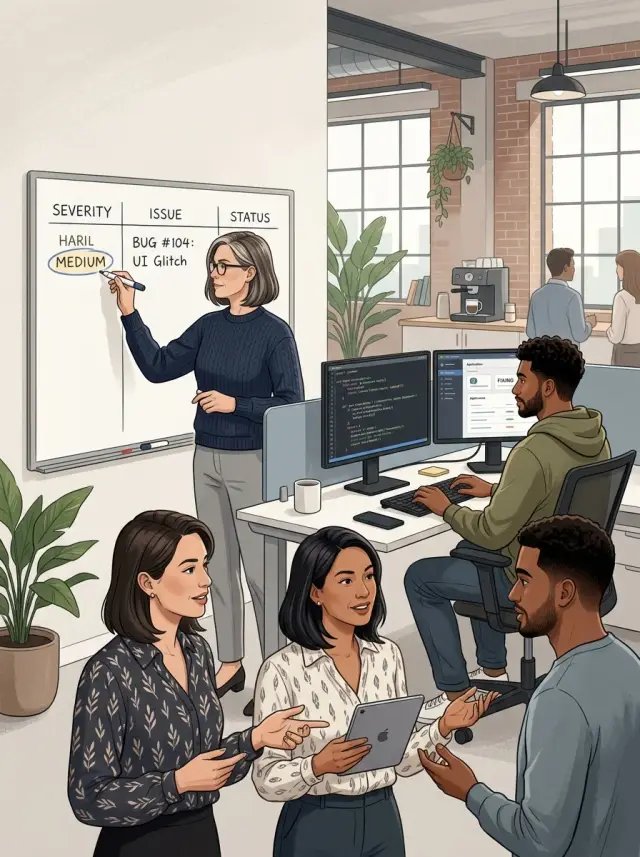
Domain ownership in AI teams still needs a human lead
Domain ownership in AI teams stays costly because someone still sets priorities, accepts risk, and makes the calls AI cannot make alone.

Table of Contents
Why this becomes a problem fast
AI can make a team move faster than ever. It can draft code, tests, docs, support replies, and product notes in minutes. But speed does not remove tradeoffs. It makes them show up sooner.
That is why ownership gets painful so quickly in AI-heavy teams. The output starts to look cheap. The decisions do not. When five paths all look possible, someone still has to choose one and live with the result.
Most teams feel the same pressure from three sides: budget, risk, and timing. How much time and money should go into this problem? What can break, and who pays for that mistake? Do we ship now, wait a week, or cut scope?
AI can offer smart options for each of those questions. It cannot carry the business cost of getting the choice wrong. A model will not sit on the customer call after a bad release. It will not explain a missed deadline to investors. It will not own the refund queue when a shortcut turns into a mess.
This gets sharper in AI-first operations, where a small team can produce a surprising amount of work. A founder may see more tickets closed, more features drafted, and more experiments running at once. That feels like progress. Then the harder question shows up: which work matters enough to keep, what risk is fine for now, and when "good enough" is actually enough.
Without a clear owner, problems start to bounce around. One person asks the model for a fix. Another asks for a cleaner version. A third asks whether the issue matters at all. The team burns hours producing answers without making a decision.
That drift is expensive. Nobody says yes. Nobody says no. People keep polishing drafts, changing prompts, and reopening the same question in slightly different words.
The bottleneck is not typing speed or coding speed. It is judgment. Until one human owns the call, a team can move fast and still go in circles.
What domain ownership really means
A team can ask AI to write code, draft tests, summarize calls, and sort feedback. None of that creates ownership. Ownership starts when one person says, "This area is mine to understand, decide, and improve," and the rest of the team knows who makes the final call.
Writing tickets is only a small part of the job. The owner keeps the full story in mind over time: what users complain about, where the numbers look weak, which shortcuts the team already took, and what will break if the team pushes one metric too hard. AI can collect those facts. It cannot choose between them when they pull in different directions.
Take billing or onboarding at a startup. Sales wants fewer steps. Finance wants tighter controls. Support wants fewer edge cases. Engineering wants less custom logic. Those demands collide all the time. The owner decides which tradeoff fits the business now and explains that choice clearly enough for everyone else to move.
This is why leadership in AI teams still costs real money. The hard part is not producing more output. The hard part is holding context for months, spotting when a local fix hurts the wider business, and staying steady when pressure rises. A good owner remembers past decisions and uses them to avoid random swings in priority.
Ownership also includes blame. If the choice goes wrong, the owner does not hide behind a model, a dashboard, or a vague committee. They review what happened, correct the path, and carry the result. Teams move faster when that accountability is clear.
In AI-first operations, this human role often matters more, not less. When code and analysis get cheaper, teams can create more options than before. Someone still has to reject bad ones, protect the business, and decide what matters this quarter.
Why AI cannot fully take this job
A model can draft options all day, but it never owns the loss when the wrong choice burns six weeks, upsets a customer, or creates a contract problem. That gap matters. The expensive part is not writing the first answer. It is choosing one path, rejecting the others, and living with the result.
AI also changes direction too easily. Change the prompt, add one document, or ask for a different tone, and the advice can shift in a big way. That flexibility helps during brainstorming. It becomes a problem when a company needs a steady call on pricing, product scope, hiring, security, or delivery dates.
A human owner carries context that does not fit neatly into a prompt. Customers may feel frustrated long before support tickets show it. A legal risk may look small on its own but become serious when paired with a sales promise. A team may say it can take one more project while everyone is already close to burnout. AI can describe these factors if someone spells them out. It does not notice the quiet warning signs on its own, and it does not feel the weight of them.
Hard calls usually mix money, people, and timing. Shipping a rough feature now might save a deal, but it can also pile work onto a tired team and create support debt next month. Delaying that feature might protect quality, yet cost revenue this quarter. There is no single correct answer sitting inside a model. Someone still has to decide which pain the company can afford.
That is why strong AI team leadership still needs a human lead. A founder, product owner, or fractional CTO does more than review outputs. They set the boundary of acceptable risk, decide which tradeoff fits the business, and keep that decision steady when new prompts produce new opinions. Without that owner, a team gets lots of plausible answers and no real accountability.
Where the hard calls usually happen
Hard calls show up when two reasonable options both hurt. AI can rank choices, estimate risk, and draft a plan in seconds. It still cannot own the cost of being wrong.
Launch dates are a common pressure point. Sales may already promise delivery, marketing may book the announcement, and the product still has gaps. An AI tool can suggest shipping a smaller scope or delaying for quality. A human owner has to judge something harder: will a smaller release keep trust, or will it look like the team missed the mark?
Outages create a different kind of stress. When a service breaks, teams often face a blunt tradeoff between speed and safety. You can patch fast and restore users now, or slow down, inspect the full chain, and lower the chance of a second failure. The right choice depends on context. If money moves through the system, safety usually wins. If a small internal tool is down for ten minutes, speed may matter more.
Big customers force hard calls too. A large account may ask for a special workflow, custom pricing logic, or a one-off feature that breaks the product plan. AI can predict revenue upside. It cannot protect the product from turning into a pile of exceptions. The owner has to say yes, no, or not now, then live with the result.
Budget limits make this sharper. Many teams only have enough money for one of two fixes: remove a painful user problem or clean up a technical weak spot that may cause trouble later. Both matter. One person still has to pick.
Strong AI-first operations use tools to speed up analysis. They do not remove responsibility. When the stakes rise, the person who owns the domain still decides what the company will disappoint today so it can stay healthy next quarter.
A simple example from a startup
A small SaaS company runs with a lean team. Engineers use AI to write routine code, support uses AI to draft replies, and QA uses AI to build test cases and spot regressions. On a normal week, that setup feels fast and cheap.
Then the team pushes a pricing change too quickly. Annual plans start charging the wrong amount for some customers, a few discounts stop applying, and support tickets jump by lunch. Revenue reports no longer match what finance expects, and now the problem is bigger than a bug.
The AI tools do not agree on what to do first. The coding assistant wants an immediate patch in the billing logic and says it can ship one in two hours. The support assistant suggests pausing outbound messages, issuing credits, and sending a clear explanation to affected customers. The QA tool flags edge cases around renewals, taxes, and old coupons, then warns that a safe fix needs a broader test pass.
All three suggestions make sense on their own. None of them decides what the business should risk.
The product owner steps in and makes the call. She stops the new pricing for fresh signups, fixes the invoice calculation first, and delays the cleaner long term pricing model until the team can test it properly. She also tells support which customers get refunds automatically and which cases need manual review.
That choice has a cost. The company loses some short term revenue, the launch slips, and a few customers still get annoyed. But one person owns the order of work, the customer impact, and the tradeoff between speed, trust, and cash.
This is why ownership still costs money even when much of the execution is automated. AI can suggest actions, rank likely causes, and draft messages. It cannot own the fallout when the team picks one bad option over another.
A fractional CTO can help pressure test the plan, especially when billing touches architecture, analytics, and support workflows. The hard call still belongs to the person who owns the domain and can say, "We will do this first, and I will answer for it tomorrow."
How to assign ownership in an AI-heavy team
Start with the places where a bad call costs money, breaks trust, or takes the product offline. That is where ownership matters most. If a team lets AI write code, answer support, review logs, and draft product changes, someone still needs the authority to say yes, no, or roll it back.
Begin with risk, not org charts. In most companies, the first domains are revenue, trust, uptime, product behavior, and data quality. Give each one a single owner. Not a group chat. Not three people with partial authority.
That owner needs clear decision rights in writing. Keep them plain. Write down what they can decide alone, when they need a second review, and which outcome they own. For example, the billing owner might pause a risky pricing rollout without asking permission first, while refund policy still needs finance input. The uptime owner might approve an emergency rollback during an incident, while deeper architecture changes wait for a scheduled review.
The point is simple: when the data is messy and the clock is running, everyone should know who makes the call.
Mistakes teams make when they chase full automation
Teams that push for full automation often make the same bad bet. They treat ownership like admin work. It is not. The expensive part is still judgment. Somebody has to decide what matters, what can wait, and what risk the company will accept.
One common mistake is calling a domain "shared" because three people touch it. That sounds fair. In practice, it usually means nobody owns the final call. When complaints rise, pricing breaks, or a release starts hurting conversion, the team wastes time asking who decides. Shared effort can work. Shared accountability usually does not.
Another mistake is letting model output set priorities. AI can sort bugs, summarize calls, and suggest what looks urgent. It cannot feel the business pain behind the data. A noisy issue may get pushed to the top because users mention it often, while a quieter problem leaks revenue every day. A human lead has to review the stack and say, "No, this one goes first."
Startups also rotate owners too often. Someone builds context for a week, hands it off, and expects the next person to catch up from chat logs and generated docs. That rarely works. Context lives in awkward details: old customer promises, ugly edge cases, legal limits, sales pressure, and the reasons behind past tradeoffs. If owners keep changing, the team keeps relearning the same lessons and calling it progress.
Speed-only metrics make this worse. Teams celebrate more tickets closed, more code merged, and more releases pushed. Those numbers can look good on a dashboard while hiding rework, support load, and quiet damage to trust inside the team. If a feature ships fast and gets rewritten two weeks later, the team did not move faster. It just paid twice.
A quick check before you say it is covered
A domain is covered only when one person can explain what matters now, what can wait, and why. If nobody can do that in plain language, the team has activity, not ownership.
The next test is authority. The owner must be able to say no when two reasonable options compete. If they need a committee for every tradeoff, decisions slow down until the loudest person wins.
Incidents make the gap obvious. When a release breaks billing or support automation starts sending bad replies, the team should already know who makes the call. Waiting for the right group chat often turns a small issue into a customer problem.
It helps to write down the tradeoffs behind the current plan. A short note is enough: what you chose, what you rejected, and what risk you accepted. Without that record, AI summaries drift, human memory drifts, and the team starts reopening the same debate every week.
A simple check is to ask four questions:
- Who makes the final call when the data is messy?
- Who carries the history of past decisions?
- Who can overrule the AI suggestion?
- Who owns the cost of a wrong choice?
If those answers are fuzzy, the domain is not really covered.
You can spot missing ownership in other ways too. Priorities change from meeting to meeting. People ask, "Who approved this?" after a release. Incidents bounce between engineering, product, and support. Nobody can explain why the team chose the current path. Those are not process issues. They are ownership issues.
What to do next
Start where a bad decision hurts most. In one company, that is pricing. In another, it is hiring, security, compliance, or product scope. If nobody owns those calls, the team can move fast and still drift into a costly mistake.
Pick one person for each domain and keep the scope narrow. "Growth" is too broad. "Trial conversion for self serve users" is clear. "Infrastructure" is too broad. "Production uptime and cloud spend" is clear. Narrow scope makes decisions cleaner, and real authority makes ownership real. If someone needs approval from three people before acting, they do not own it.
A simple starting setup works well:
- Name the 3 to 5 domains where wrong calls cost the most.
- Give each domain one owner, one written goal, and one clear limit on what they can decide alone.
- Use AI to gather context, compare options, and surface risks.
- Make the owner choose, explain the tradeoff, and take responsibility for the result.
That last step matters more than many teams admit. AI can prepare options well. It can summarize customer calls, spot trends in support tickets, and model likely outcomes in minutes. It should not blur who made the call. When a team says, "the system recommended it," that usually means nobody wants to own the choice.
Founders often keep too much of this in their own heads. That works for a while. Then every hard decision queues up behind them. If you see that pattern, bring in help before it slows the company down.
This is the kind of work Oleg Sotnikov does at oleg.is as a fractional CTO and startup advisor. He helps startups and smaller companies put clear ownership around product, infrastructure, and AI-driven development work so teams can move faster without giving up human judgment.
If a domain can change your revenue, risk, or product direction, put one human name on it now.
Frequently Asked Questions
What does domain ownership mean in an AI team?
Domain ownership means one person owns the final call for a specific area, such as billing, onboarding, or uptime. That person keeps the history, weighs tradeoffs, decides what happens now, and answers for the result.
Why can’t AI fully own a domain?
AI can draft options, compare risks, and suggest a plan, but it does not carry the cost of a bad choice. A human still has to pick one path, reject the others, and deal with customers, revenue, and team impact when things go wrong.
Which domains need a human owner first?
Start with the areas where a bad decision costs money, breaks trust, or takes the product offline. For many teams, that means pricing, billing, uptime, product behavior, security, and data quality.
Can two people share ownership?
Usually, no. Two people can work in the same area, but one person should make the final call. When teams split accountability, decisions slow down and problems bounce between people.
How can I tell a domain has no real owner?
Look for fuzzy answers when you ask who decides, who remembers past tradeoffs, and who can overrule an AI suggestion. You will also see priorities change often, incidents bounce across teams, and people ask who approved a release after it already shipped.
What should a domain owner be allowed to decide?
Give the owner written decision rights. Say what they can decide alone, when they need another review, and what outcome they own. Keep it plain so the team knows who acts when the data is messy and time is short.
How narrow should a domain be?
Keep it narrow enough that one person can explain the goal, the tradeoffs, and the risks without hand-waving. “Growth” is too broad, but “trial conversion for self-serve users” works. “Infrastructure” is too broad, but “production uptime and cloud spend” works.
What mistakes do teams make when they chase full automation?
Teams often treat ownership like admin work and let model output set priorities. They also rotate owners too fast, call domains “shared,” and chase speed metrics that hide rework, support load, and trust damage.
What metrics can hide ownership problems?
More tickets closed and more code merged can look good while the team rewrites features, handles more support issues, or keeps reopening the same problem. Track business results too, such as fewer billing errors, steadier uptime, lower refund volume, or less rework after release.
When should a founder bring in a fractional CTO?
Bring in outside help when every hard decision waits on the founder, when owners keep changing, or when pricing, uptime, and product scope start to collide. A fractional CTO can pressure test tradeoffs, set decision rules, and help the team move faster without losing judgment.