Why delivery slows after senior hires join founder-led teams
Why delivery slows after senior hires often starts with unclear authority, hidden context, and late changes inside founder-led teams.
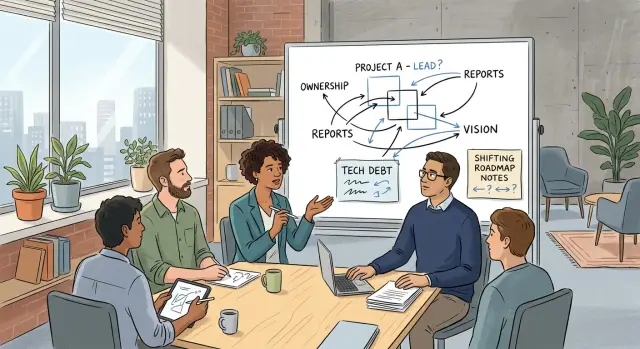
Table of Contents
What slows down after the new hire arrives
A founder hires someone senior to speed things up. On paper, that should help. The team gets more experience, better judgment, and fewer beginner mistakes.
Yet things often slow down for a while. Tickets sit longer. Decisions take extra rounds. Small product changes turn into long discussions. Everyone feels busy, but less work reaches users.
That gap is confusing because nobody thinks they caused it. Founders feel they finally brought in help, so delivery should move faster. The new hire sees loose process and tries to add order. The rest of the team starts checking with two people instead of one, and simple work picks up waiting time at every handoff.
Most slowdowns come from three places: unclear authority, hidden context, and last-minute changes.
Unclear authority creates hesitation. The founder still makes many calls, but the new leader also expects to own part of the roadmap, team, or architecture. Engineers stop and ask, "Who decides this now?" Even a one-day delay on ten small questions adds up.
Hidden context makes the new hire look slower than they are. Founder-led teams often run on memory, side chats, and instincts built over years. A founder knows why a customer request matters, which partner is sensitive, or why a strange workaround exists. None of that lives in a doc. The new person has to discover it the hard way.
Late changes finish the job. A task starts, someone remembers an old promise, sales brings in a new request, or the founder changes direction after a customer call. The team switches course in the middle of the work. Senior people usually push back on this, which is healthy, but it also makes the friction visible for the first time.
The fix is rarely more meetings or tighter tracking. You need to find where work starts waiting, who lacks context, and who can still change scope at the last minute. Once those points are clear, delivery usually picks up again.
Where authority gets blurry
Delivery often slows after a senior hire for a simple reason: the org chart changes, but decision power does not. The founder says, "You own product" or "You own engineering," yet every hard call still comes back to the same desk. The new leader has the title, but not the final say.
That creates hesitation fast. A manager sees two bosses: the founder, who has history and control, and the new senior hire, who has the role on paper. When both can approve or block a decision, people stop guessing. They wait.
At first, the slowdown looks small. A roadmap item sits for one extra day. A design review gets pushed until the founder joins. An engineer asks the manager for a decision, then asks the founder again "just to be safe." Those pauses stack up.
You can usually spot the problem before anyone names it. People ask the same "Who decides this?" question again and again. Managers push routine tradeoffs upward instead of making the call. Meetings end with "let's check with the founder" even when a senior lead is in the room. A person with a senior title gets blamed for outcomes they could not control.
This is where titles and real authority drift apart. A VP, CTO, or product lead may own hiring, planning, and delivery in theory. In practice, the founder still approves scope, pushes favorite ideas into the sprint, or reverses choices after the team has started work. Once that pattern appears, managers protect themselves. They avoid firm calls because those calls can be overturned.
The team reads that behavior quickly. Engineers learn that moving fast is risky when ownership is fuzzy. Designers hold drafts until they get "the real answer." Product people write softer plans with more caveats. Nobody wants to move in the wrong direction, so everyone moves later.
A simple test helps. Ask three people who can say yes, who can say no, and who breaks a tie. If you get three different answers, authority is blurry. Delivery will stay slower than it should until one person truly owns the call.
The context nobody wrote down
Founders often carry the product's full backstory in their head. They remember why a feature exists, which customer pushed for it, what failed six months ago, and which shortcut felt safe enough to ship. None of that feels special to them because they live with it every day.
A new senior hire walks in with a clean view of the product, but not the hidden history behind it. On paper, a decision may look odd or weak. In reality, it may be the result of five old tradeoffs, one angry customer, and a rushed launch that kept the company alive.
That gap creates rework fast. The new leader tries to improve a flow, rename a priority, or clean up a messy area. Then the founder steps in and says, "We already tried that" or "That breaks our biggest account." The team has to stop, reopen the work, and patch the plan.
The worst part is that the missing context rarely lives in one place. It sits in old chat threads, voice notes, quick calls, half-finished docs, and the founder's memory. So the new hire does not just lack information. They make reasonable decisions with incomplete information, which costs time, trust, and momentum.
A small product team can lose a week on this without noticing. A senior product lead asks engineering to simplify onboarding. Design updates the screens, engineering starts the build, and sales hears about it late. Then the founder remembers that one required field exists because a large customer needs it for compliance. The team rolls part of the work back and scrambles to explain the change.
You do not need perfect documentation. You need shared memory in the places where reversals happen most. Write down why past product decisions were made, which customers or deals shaped them, what technical limits the team cannot ignore, who can approve changes to scope or release timing, and which ideas the team already tested and rejected.
That is enough to let a smart new leader make good calls without stepping on invisible wires.
How last-minute changes break momentum
A team can absorb a surprise now and then. Trouble starts when the founder changes direction on Wednesday after everyone already committed on Monday.
One engineer stops a backend fix. A designer drops a checkout review to mock a new landing page. Product rewrites ticket order and tries to explain the switch. By the end of the day, three people touched new work, and none of them finished the old work.
Senior hires usually expect the plan to hold unless something serious changed. If the plan moves late for smaller reasons, they stop trusting it.
That loss of trust spreads fast. Engineers keep work smaller because they assume it may get interrupted. Designers wait before polishing details because the request may change again tomorrow. Product managers spend more time re-planning than deciding.
The cost is bigger than the new task itself. Switching focus has a reset tax. Product has to restate the goal and answer fresh questions. Design has to reopen files and rethink flows that felt done. Engineering has to reload context, pause testing, and leave partial work behind. A two-hour request can easily burn a full day once the whole team switches with it.
Small startups confuse emergencies with preferences all the time. A real emergency has a clear cost if nobody acts now: payments are failing, a major customer cannot use the product, a security issue puts data at risk, or a launch promised for today is broken.
"I want this version for a demo" is often not an emergency. "This headline feels weak" is not one. "I just thought of a better flow" may be a good idea, but it should usually wait for the next planning point unless the current plan is clearly wrong.
When late changes keep landing, the team learns a bad habit: do not trust the roadmap, do not finish deep work, and do not estimate with confidence. Momentum fades long before output drops on paper. You see it in slower handoffs, more half-done tasks, and a calendar full of resets.
A simple example from a small product team
Picture a small SaaS team with six people. The founder still approves most product calls, a new VP just joined, and four builders do the work: two engineers, one designer, and one QA.
On Monday, they plan a two-week sprint. The founder wants a better billing page because two trial users got stuck there. The new VP wants to clean up onboarding first because activation is weak. Nobody settles which priority wins if those plans clash.
By lunch, the team starts both. One engineer updates billing flows. The second engineer works on onboarding steps. The designer makes screens for onboarding, and QA writes tests for both.
On Wednesday, the founder comes back from a sales call with a new request. A big prospect wants an audit log before signing. She drops the note into chat and asks for it by Friday because it "sounds small."
The VP disagrees. He tells the team to finish onboarding and keep the sprint stable. The founder then messages one engineer directly and says, "Start the audit log now. We'll sort the rest later." The engineer does not want to ignore the founder, so he switches.
That one switch causes more damage than it first appears. The designer stops onboarding work to sketch audit screens. QA throws out half the test plan. The billing changes sit unreviewed because the engineer who knew that code now helps with the new request.
By Thursday afternoon, the VP rewrites the audit log ticket with different rules. He wants filters, exports, and admin permissions. The founder only wanted a simple event list. The engineer rebuilds part of the work, and the designer changes the layout again.
Friday feels busy, but almost nothing ships cleanly. Billing is half fixed. Onboarding is half polished. The audit log exists, but it misses the export the VP asked for. QA finds bugs in two places because everyone rushed and nobody had one clear answer on what "done" meant.
The team ends the sprint annoyed, not lazy. They lost time in direct messages, rework, and waiting for a final call. That is what this slowdown usually looks like in practice: more leadership on paper, less clarity in the work.
How to reset roles in one week
You do not need a reorg to stop the drag. In most small teams, one week is enough to remove the confusion that slows decisions and makes people wait on each other. If delivery slowed after a senior hire joined, start with three questions: who can decide, what do they know, and when can work change?
Start with one page that names the decider for the few choices that shape delivery. Keep it plain and keep it public. One person decides product scope. One person decides staffing and who works where. One person decides release timing. One person breaks ties when those calls conflict.
People can give input. That is fine. The problem starts when five people give input and nobody knows who ends the debate.
Next, list every active project and put one owner beside each one. One owner means one owner, not two names and a vague split. If the founder still wants final approval on a project, write that down too. Hidden veto power wastes days.
By the middle of the week, collect the context that still lives in the founder's head. Ask why each project sits at the top of the stack, what tradeoffs the team already accepted, which customer promises are real, and which dates can move. New senior hires often look slow when they are actually guessing around missing context.
Then set one rule for changes after sprint planning. Keep it strict enough to protect focus. A good rule is simple: no new request enters the sprint unless the requester says what will stop or move out. If something is a real emergency, say why it is an emergency and who approved it.
A small team can do this quickly. On Monday, the founder, product lead, and engineering lead write the decision map. On Tuesday, they assign one owner to each live project. On Wednesday, they fill in the missing history behind current priorities. By Friday, the team can see where work still gets stuck.
Use the end of the week to check a few gaps:
- Which decision still bounced between two people?
- Which project still had unclear ownership?
- Which late change broke the new rule?
Fix those gaps right away. If the same confusion shows up again next week, change the role definition, not the person.
Mistakes that make the slowdown worse
Teams often make the slowdown worse themselves. A founder hires someone senior, expects faster delivery, then keeps the same habits that worked with a tiny team.
One common mistake is keeping the old approval chain. The new VP, Head of Product, or engineering lead joins, but every meaningful call still goes back to the founder. The team notices this quickly. They stop asking the new leader for final decisions and wait for the founder instead. Work sits in review, small issues turn into meetings, and the senior hire becomes a relay person.
Another mistake is assuming the new leader already understands the founder's reasoning. Founders carry months or years of context in their heads. They know why one customer matters more, why a feature stayed small, or why the team avoids a certain market. If nobody writes that down, the new hire fills in the blanks with normal logic. Then people wonder why their choices feel "off."
Priority changes make things worse when they happen in private chats. A founder sends one message to sales, another to design, and a third to the new leader. Each person acts on a different version of the plan. By Thursday, the team is fixing work that made sense on Monday. One shared place for changes sounds basic, but teams skip it all the time.
Titles also cause trouble when they come before decision rights. Calling someone "Head of Engineering" means little if they cannot say no to a rushed request, move a deadline, or choose between two approaches. The team sees the title, tests the boundary, and learns who actually has authority.
The last trap is treating every customer request as urgent. A founder-led team often grows up close to customers, which is good. But if every request jumps the queue, nobody can finish planned work. A small product team can lose a full week this way: one custom request on Tuesday, a "quick" change on Wednesday, and a promised fix on Friday.
If the founder still approves everything, context still lives in one person's head, and priorities still change in side conversations, senior hires will look slow even when they are doing the job correctly.
Quick checks for the next two sprints
Run the same short review at the end of each of the next two sprints. If the slowdown is real, you will see the same pattern twice. That matters more than one bad week.
Keep this review small. Ten minutes is enough if the team answers plainly and writes the answers down.
- Ask each person who can make the final call on the work they touched this sprint. If people give different names, or say "it depends," authority is still blurry.
- Ask why the current priorities matter right now. The answer should fit in one or two lines, not live in the founder's head.
- Check whether planned work changed after sprint planning. Note what changed, when it changed, and who approved it.
- Ask whether two leaders gave direction that pulled the team in different ways. One conflict can slow an entire week.
- Look at unfinished work and ask why it stayed open. If people mostly waited for answers, reviews, or approval, the delay is not a capacity problem.
Do not turn this into a long retro. You are not chasing perfect process. You are looking for repeated friction in a founder-led team.
A simple scoring method helps. Mark each check green, yellow, or red. Green means the team answered fast and agreed. Yellow means the answer exists but people hesitated. Red means nobody knew, or people named different owners.
After two sprints, compare the colors. If authority stays yellow or red, reset who decides product, tech, and delivery. If priority reasons stay fuzzy, write them where the team can see them before planning starts. If scope keeps changing mid-sprint, require one approver for changes and make that person visible.
Pay close attention to waiting time. Senior hires rarely slow delivery because they do less work. Delivery slows because other people pause, check, re-check, and wait for permission. That pattern is easy to miss when everyone looks busy.
If you want one number to watch, count how many tasks slipped because nobody got an answer within a day. That tells you more than velocity right now.
What to do next if the team stays stuck
If the slowdown lasts more than a sprint or two, do not add another layer of process. Most teams do not need another tracker, another planning ritual, or a full reorg. They need less confusion.
Start with one page that names current priorities and decision rights. Keep it plain. Who can change scope? Who approves technical tradeoffs? Who breaks ties when product and engineering disagree? If those answers live in chat, memory, or side conversations, the team will keep waiting.
Then put the founder and the senior hire in one direct meeting and close the gaps. No audience, no performance. They should leave with a shared view on three things: what matters this month, which decisions the new hire owns alone, and which decisions still stay with the founder.
After that, ask the team a blunt question: where do you wait most often? The best answers are specific. "We wait a day for product answers." "We wait for the founder to approve small changes." "We rewrite work after late feedback." Pick the biggest delay and fix that first.
A short reset often works:
- Write the one-page decision map.
- Set 30 minutes for founder and senior hire to settle ownership.
- Ask the team where work gets stuck in real projects.
- Remove one source of waiting before the next sprint starts.
Do not try to solve five problems at once. If design reviews stall every release, fix that. If roadmap changes land on Thursday afternoon, stop that. One clean fix can give the team confidence again.
If the team still feels stuck after two sprints, an outside advisor can help. A Fractional CTO can spot authority gaps, missing context, and bad planning rules without getting pulled into company politics. Oleg Sotnikov at oleg.is works with startups and small businesses on exactly that kind of operating problem, and a short outside review is often cheaper than another month of slow delivery.
The team does not need a grand reset. It needs clear calls, fewer handoffs, and a week where priorities stop moving.
Frequently Asked Questions
Why does delivery often slow down right after a senior hire starts?
Because the title changes faster than decision rights. People start checking with both the founder and the new leader, and each extra check adds waiting time. The tasks may stay simple, but approvals and context get slower.
How long should this slowdown last?
A short dip for a week or two is normal while the new person learns the product, team, and history. If the same delays keep showing up after two sprints, look at ownership, missing context, and mid-sprint scope changes instead of blaming the hire.
What is the clearest sign that authority is blurry?
Ask three people who can say yes, who can say no, and who breaks a tie. If you get different answers, the team will wait for safety instead of moving.
Who should make the final call: the founder or the new leader?
Pick one decider for each area and write it down where the team can see it. If the founder still wants the final say on scope or architecture, say that plainly, because hidden veto power creates rework.
Why can a strong senior hire still look slow at first?
They usually lack the backstory that lives in the founder's head. Old customer promises, failed experiments, and messy tradeoffs often show up late, so the new leader makes reasonable calls with partial information and then has to redo the work.
Are last-minute requests always a problem?
No. Real emergencies deserve fast action, like broken payments, a security issue, or a blocked customer. Most demo tweaks, copy edits, and fresh ideas can wait until the next planning point.
What should we document first for a new leader?
Start with the reasons behind current priorities, customer promises the team must keep, technical limits that affect delivery, and who can approve scope changes. You do not need perfect docs; you need enough shared memory to stop the team from relearning old lessons.
How do we stop side-chat changes from derailing the sprint?
Use one public place for every scope change and make the requester name what work will stop or move out. That rule forces a real tradeoff and stops private messages from sending different people in different directions.
What should we track over the next two sprints?
Watch waiting time more than raw output. Count how many tasks slipped because someone waited more than a day for an answer, review, or approval, and note who had to make that call.
When should we ask for outside help?
Bring in outside help if you reset decision rights, capture the missing context, and still see the same delays after two sprints. A Fractional CTO can spot where authority, planning, or handoffs still block progress and give you a practical fix without a full reorg.


