Custom contract terms that quietly change your product
Custom contract terms can add hidden product work through discounts, approvals, and reporting asks. Learn what to catch before you sign.
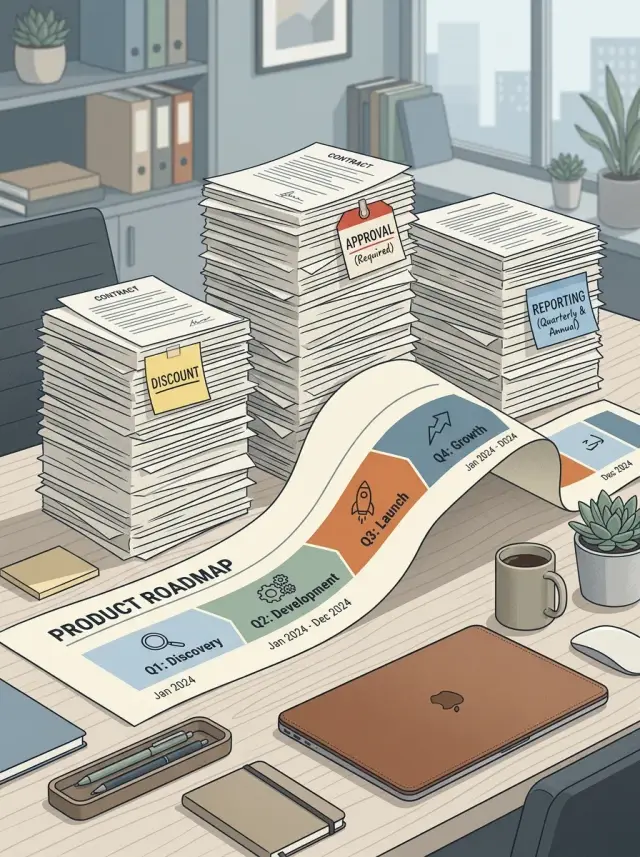
Table of Contents
Why contract language changes the product
A contract can reshape a product before anyone writes code.
Sales hears "just one clause" and sees a deal that could close this week. Product and engineering hear a promise they now have to keep every day. That gap is where trouble starts.
Most custom contract terms look small on paper. A buyer asks for a discount tied to response times. Legal adds an approval step before updates. Procurement wants extra reports every month. None of that sounds like product work at first. In practice, each request creates code, support effort, or a manual process that someone has to own.
Sometimes the cost is obvious. The team adds a custom export, a special billing rule, or a separate release flow. More often, the cost spreads quietly. Support uses a workaround. Finance tracks an exception. Engineers check one account by hand because the contract says they must.
One promise also has a way of spreading. Sales closes a deal with an exception, and soon that exception starts to feel normal. The next customer asks for the same thing, or something close enough. Before long, the team is supporting behavior that never came from the roadmap, user research, or product strategy.
Picture a startup that agrees to send one enterprise customer a weekly performance report. At first, it feels like an account task. A few months later, two more customers want the same report, support can't do it by hand anymore, and engineering ends up building reporting tools that were never planned.
That is how the roadmap moves without anyone saying so. The product does not change because the team made a clear choice. It changes because contract language slipped operating work into the deal, one exception at a time.
Where extra work hides
Extra product work rarely starts with a feature request. It often starts inside pricing, approvals, service wording, or renewal terms. Because these terms sit next to legal and commercial language, teams treat them as paperwork instead of product decisions.
Discounts are a common trap. A customer asks for a lower price, but the tradeoff is a special billing cycle, a custom invoice format, or usage tracking your product does not have yet. Finance agrees, sales wants the deal, and the team ends up building plan logic that only one customer uses.
Approval clauses create a different kind of drag. If a customer can approve release notes, interface text, emails, or workflow changes, the team loses the ability to ship small updates quickly. Even a minor copy fix can sit in review for days.
Reporting requests grow fast too. "Monthly export" can become a dashboard, scheduled CSV files, audit logs, retention rules, and a person checking numbers by hand when the customer spots a mismatch. The contract may call it reporting. The team still has to build and maintain it.
Service terms often pull people into manual work the product never meant to cover. You promise help with imports, data cleanup, exception handling, or account setup. On paper, that sounds minor. In real life, one customer can consume five hours a week.
Renewal language causes a quieter kind of pain. A rushed promise made in year one can stay alive for years because the contract renews on the same terms. People forget why the exception exists, but they still keep it running.
A simple rule helps: if a clause changes how you bill, ship, report, or handle edge cases, it is not "just legal language." It is work.
When discounts come with strings
A discount can look harmless. Then the contract says the lower price applies only if you add a custom order flow, a special invoice format, or a manual approval step for one customer. Sales hears "discount." The team inherits product work.
This happens all the time with custom contract terms. A pricing concession gets framed as a commercial decision, but the promise only works if product, billing, support, or ops change how they work every day.
"Free setup" is a good example. It sounds like a simple sales sweetener. In practice, it can mean data imports, field mapping, admin training, custom templates, or one-off scripts. If setup is free and undefined, the customer often expects your team to do whatever it takes to get them live.
Special pricing creates the same problem inside billing. One customer wants usage billed on the 15th. Another wants invoices split by department. Another wants discounts applied only after internal approval. If your billing system cannot handle that today, someone has to build it, test it, and support it.
Price protection causes a slower kind of drag. If you promise a customer they can keep an old rate while your plans change, you may carry outdated packages for years. That blocks cleaner pricing later and creates exceptions that finance and support have to remember at every renewal.
Say a customer asks for 20% off if they sign this quarter. The contract also says setup is included, invoices must match their internal codes, and the discounted rate stays in place if they expand. What looked like one discount now touches onboarding, billing, packaging, and future sales.
Before anyone approves the deal, ask a few plain questions. What must the team build, or do by hand, to keep this price? Does "free setup" mean a fixed task list or unlimited help? Can billing handle the promise without custom logic? Will this term block future pricing changes? And who owns the work after the contract is signed?
If nobody can answer those questions clearly, the discount probably costs more than it looks.
How approval clauses slow the team
Approval clauses look small on the page, but they can change how a team ships. If a customer can review releases before launch, your release schedule stops being fully yours.
That sounds manageable when the clause covers a press mention, a case study, or logo use. Problems start when "approval" spreads into the product itself. A customer first asks to approve wording, then button labels, then default settings, then parts of the workflow because those choices affect how their brand appears to users.
A SaaS team can get stuck fast. One company agreed to customer review for a branded portal. Within weeks, the customer wanted to sign off on email text, dashboard labels, and a small onboarding step. None of those items felt huge on their own, but together they turned routine product work into a waiting game.
Security sign-off causes a similar delay. Customers often want review before changes that touch their data, and that can be fair. Trouble starts when the clause covers every patch, library update, or minor UI fix. Then a bug that takes an engineer one hour to fix can sit for eight business days while someone on the customer side gets around to reviewing it.
Emergency fixes need a separate path. If your app has an outage, a security issue, or a broken payment flow, your team must be able to act first and notify later. Waiting for approval in that moment is not caution. It is extra risk.
The safest contracts keep approval narrow. Name exactly what needs review. Limit it to customer-specific branding or integrations. Set a short response window, such as two business days. Treat no response as approval. Exclude bug fixes, security patches, and legal or compliance updates.
This is where approval clauses in contracts do more than legal teams expect. They shape product operations, release speed, and support load. On a small team, one vague approval clause can quietly create a second product manager on the customer side.
How reporting asks turn into features
Reporting terms often look harmless in a contract. Then the team starts building them and finds out the "report" needs new data, new screens, new exports, and someone to maintain it every month.
A monthly report is a common trap. If you promise churn numbers, usage by team, or renewal risk, you first need to collect that data in a consistent way. Many products do not track all of it on day one. The report sounds like an account task, but the work lands on engineers, product managers, and support.
CSV exports create the same problem in a quieter way. A customer asks for "just one export" so they can load your data into their own system. Soon they want extra columns, custom fields, naming rules, and a format that matches their internal process. That can change your data model, not just your reporting page.
Audit logs are bigger than they sound. If a contract says you must show who did what and when, you may need to record nearly every user action across the product. That affects permissions, storage, retention, search, and support. It also creates a painful moment later when a customer asks for logs from six months ago and your system never stored that level of detail.
Executive summaries sound less technical, but they can be just as expensive. A buyer wants a quarterly summary with trends, risks, and recommendations for leadership. If the product cannot generate that on its own, a product manager or founder ends up pulling screenshots, checking numbers, and writing notes by hand. One customer asks for this, then another does too.
A startup might agree to send a monthly adoption report to close a deal. Three months later, the team has built a new export, added missing event tracking, and spends two hours every month cleaning the data before sending it. The contract asked for a report. The team built a feature set.
Customer reporting requirements almost never stay fixed. So ask four direct questions before you sign. What data do we collect today, and what data do we need to add? Can the product generate this report by itself, or will a person assemble it? Who owns the report after launch? If the customer wants changes later, does the contract treat them as new work?
That last point matters a lot. Reporting promises can quietly become permanent product commitments unless someone sets the owner, the format, the frequency, and the limit on future changes.
How to review custom terms before signing
Small clauses often create bigger obligations than the price suggests. A line about monthly reports, customer sign-off, or a special discount can turn into product work, support work, and billing work at the same time.
Start by rewriting every promise in plain English. If the contract says "provide release approval before deployment," translate that into the real task: "our team waits for customer sign-off before shipping changes." This simple step makes hidden work much easier to spot.
Then map each promise to the people who will carry it. Product checks whether the term changes what the product must do. Engineering checks whether it needs new code, testing, security review, or ongoing maintenance. Support checks whether the customer will need setup help, training, or manual follow-up. Finance checks whether discounts, credits, or special billing rules reduce margin or add admin work. One decision-maker then weighs the tradeoff and says yes or no.
After that, label each term as new code, new process, or both. Reporting often starts as a process, then turns into code when the team gets tired of doing it by hand. Approval clauses do the same thing. At first, someone sends emails and waits. Later, engineering gets asked to build status tracking, permissions, and audit history.
Estimate two costs, not one. Ask how long the first build will take, then ask what the team will keep paying every week or month. A custom export might take two days to build and another hour each week to support. Discount terms and product scope often drift the same way. What starts as a price concession can become extra features, priority fixes, and manual reporting for the same lower price.
Put the full tradeoff in front of the person who owns product and budget before anyone signs. If one customer term changes code, process, or reporting, treat it like roadmap work. Price it, staff it, and approve it on purpose.
A simple deal that turns into roadmap work
A startup wants to close a promising customer, so the sales team agrees to a 20% discount. That sounds manageable. Then the customer asks for monthly usage reports, and someone adds a clause that says they can review major updates before release.
Nothing looks dramatic on the signature page. The deal still feels like one account with a price cut. But the contract has already changed the product.
Engineering now has work that was never on the roadmap. The team needs a clean export for usage data, a format the buyer can read, and a process for exceptions when the numbers do not match what the customer expects. The approval clause creates another layer. Someone has to decide what counts as a major update, hold releases during review windows, and track who approved what.
The extra work then spreads across teams. Engineers build report logic and export tools. Product managers plan around customer review dates. Support answers follow-up questions about every monthly report. Sales starts treating the custom setup like a normal close.
This is how custom contract terms turn a small commercial concession into product work. Nobody asked for a feature in plain words. They asked for comfort, visibility, and control. The contract translated that into tasks.
The hidden cost is rarely the first report. It is the repeat work after that. Support gets pulled into data questions every month. Engineers patch edge cases for one customer. Product loses weeks because a release waits for outside approval. A discount that looked like a way to win revenue starts eating margin.
For a small team, one deal like this can bend the roadmap fast. If two or three customers get similar terms, the team stops building the product it planned and starts maintaining promises buried in contracts. That is why contract review for startups should include product, engineering, and support, not only sales and legal.
Mistakes teams make before they sign
Most teams look at price first. They check the discount, payment dates, and contract length, then move on. The real trouble usually sits in the operating terms. A sentence about approvals, special reports, or response timing can change how the product works every week, not just on day one.
Another common mistake is counting build time and ignoring upkeep. A custom export might take one developer a day or two to add. Keeping it working through schema changes, testing it on each release, answering support questions, and explaining odd results can cost much more over the next year.
Vague words do damage faster than people expect. Terms like "reasonable," "timely," or "as requested" feel harmless during negotiation. After the contract is signed, they turn into arguments. The customer reads them as a standing promise. The team reads them as best effort. Product and engineering pay for the gap.
Large customers can also set product rules without anyone saying it out loud. One approval step for one account becomes a permanent branch in the workflow. One reporting ask becomes a dashboard request for everyone else. Soon the product bends around the loudest contract instead of a clear plan.
Teams also miss ownership. Sales agrees to win the deal. Legal edits the wording. Engineering hears about it later. Nobody owns contract exceptions from end to end, so odd clauses slip through. This is where a startup needs one person, often a CTO or product lead, to say yes, no, or "yes, if we fund it and schedule it."
A short review catches most of this. Ask which clause changes screens, workflows, data, or support. Ask what it will cost to build and maintain for 12 months. Ask what each vague word means in days, limits, or deliverables. Ask whether the term is truly for one customer or whether it will affect the whole product. And make sure one person has final approval for exceptions.
Quick checks before you say yes
A contract can look small on paper and still create weeks of extra product work. That usually happens when custom contract terms sound harmless but push the team into building, approving, or reporting things no one planned.
Before anyone signs, run a fast filter:
- Does this term change the roadmap this quarter?
- Will the team need manual work every month to keep the promise?
- If one customer gets this exception, will the next one ask for it too?
- Can you put a clear price on the extra work?
- If you say no, does the deal still make sense?
The first question matters more than many founders expect. A discount tied to a feature, a customer-specific report, or an approval step can push planned work aside. If one contract moves the roadmap, treat it like a product decision, not just a sales decision.
Monthly manual work is another warning sign. A clause that asks for a custom export, a review meeting, or a special compliance summary may look minor. Someone still has to do it every month. Ten minutes here and twenty minutes there add up fast.
The repeat test is simple and brutal. If three more customers asked for the same exception, would you accept it? If the answer is no, you probably should not hide it inside standard terms. Put it in a paid add-on or reject it.
Pricing forces honesty too. If the team needs two engineer days, a product review, and support time, write that down and price it. If nobody can price it, nobody understands the work yet.
Good contract review for startups is often just this: spot the extra work early, name it clearly, and keep the option to say no. Healthy deals can handle clear boundaries.
What to do next with a tricky contract
Do not let one person approve it alone. A tricky contract needs a short review with sales, product, and engineering in the same room because each team sees a different cost. Sales sees revenue. Product sees roadmap impact. Engineering sees the hidden work that lands in the sprint after signing.
Start by turning soft language into hard limits. If the contract says the customer can request "reasonable" reports, define what that means. Name the report, how often you will send it, who prepares it, and what format you will use. If the clause says the customer must approve changes, spell out which changes need approval and how many business days they get to respond.
A simple rule helps: every exception needs an owner, a price, and a stop point. Someone must own the work. The customer must pay for it if it is outside the normal product. And the contract should say when the extra obligation ends, or when it moves into a new paid scope.
Keep fallback language ready for the next deal. That saves time and stops the team from arguing over the same clause every month. Good fallback wording is plain and narrow. It says what is included, what is excluded, and what becomes a paid change order.
If these clauses keep pushing your roadmap around, it can help to bring in an outside technical review before you sign. Oleg Sotnikov at oleg.is works with startups and small teams as a Fractional CTO, and this kind of contract-to-delivery tradeoff is exactly the sort of issue that benefits from an experienced second look.
The point is simple. If a clause changes code, process, support, or reporting, it changes the product. Treat it that way before the signature, not after.
Frequently Asked Questions
What counts as a custom contract term?
Anything that changes how you bill, ship updates, report data, or handle exceptions counts. If a clause creates new code or recurring manual work, it is product work even if legal or sales added it.
Why can a small clause change the product roadmap?
Because the promise does not stay on paper. Someone has to build it, test it, explain it to the customer, and keep it running every month.
That is how one discount, report, or approval step starts moving the roadmap without a clear product decision.
Are discounts usually safe?
Not always. A discount stays simple only when your current billing, setup, and support flow already handle it.
If the lower price depends on custom invoices, split billing, free setup, or price protection, the discount usually costs more than it looks.
What should we ask before agreeing to free setup?
Start with plain questions. What exactly does setup include, who does the work, how many hours will it take, and when does the extra help stop?
If nobody can answer that in a sentence or two, do not call it free setup. Price it or narrow it before you sign.
How do approval clauses slow releases?
Once a customer can review releases, your team stops shipping on its own schedule. Even small copy fixes or UI tweaks can sit and wait for outside sign-off.
Keep approval narrow. Limit it to customer-specific branding or integration changes, set a short response window, and exclude bug fixes and security patches.
When does reporting turn into a real product feature?
A report becomes a feature when the product does not already collect the data or generate the output on its own. Then engineers add tracking, exports, filters, storage, and support steps.
If a person has to clean data or assemble the report by hand every month, you already have a product and ops problem.
Who should review custom terms before signing?
Bring sales, product, engineering, support, and finance into the review. Each group sees a different cost, and one owner should make the final call.
Without that shared review, sales wins the deal and the rest of the team inherits the work later.
How do we spot hidden manual work in a contract?
Read the clause and rewrite it in plain English. Then ask who will do the work every week or month to keep that promise.
Words like "reasonable," "timely," and "as requested" usually hide manual work. Replace them with a named deliverable, a schedule, and a limit.
Should we roll contract exceptions into our standard offering?
Usually no. If you would reject the same exception from three more customers, do not hide it inside standard terms.
Put it in a paid add-on or say no. That keeps one deal from turning into a rule for the whole product.
What should we do if a contract clause feels vague or risky?
Tighten it now instead of waiting for trouble. Add a short written clarification that defines the report, approval scope, timing, owner, and end point.
If the clause already pushes code, support, or billing in a new direction, get a technical review before you sign. An experienced Fractional CTO can spot costs that sales and legal may miss.


