Cross-functional weekly meetings that keep teams aligned
Cross-functional weekly meetings help product, support, and engineering catch repeat issues early, assign owners, and avoid avoidable escalations.
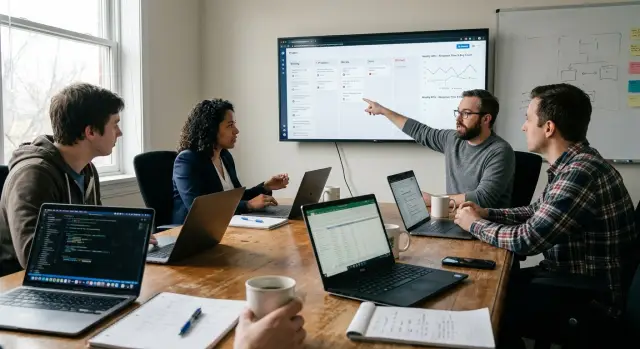
Table of Contents
Why teams drift apart
Teams rarely drift apart because people do not care. They drift because each group sees a different slice of the same problem.
Support hears customer pain first. The team sees repeat tickets, refund requests, and the odd workarounds people invent just to finish a basic task. When that information stays inside the support queue, everyone else misses the warning signs.
Product works under roadmap pressure. There is always a launch to protect, a promise to keep, or a request from sales that feels urgent. That pressure is real, but it can push day to day customer pain lower on the list, especially when the pain appears as ten small tickets instead of one loud incident.
Engineering sees another reality. Developers know where the code is fragile, which systems already run close to the edge, and what work is still waiting in the backlog. A fix that looks obvious from the outside may need database changes, testing, or a risky update in an old part of the product. If nobody else hears that context, frustration builds fast.
The trouble starts in the gaps between those views. Support says, "Customers keep hitting this." Product says, "We already planned this quarter." Engineering says, "We cannot patch that safely by Friday." All three can be right, and the customer still gets a broken experience.
Without a weekly cross-functional check-in, those gaps grow quietly. A delayed fix creates more tickets. More tickets turn into refunds, angry calls, or a rushed escalation to leadership. By then, the team is reacting under pressure instead of making a calm decision earlier.
Small misses do not stay small for long. One unclear bug report can push product toward the wrong priority. One roadmap change can leave support giving outdated answers for a week. One engineering constraint that stays hidden can turn a customer promise into something the team cannot keep.
Alignment slips when teams work from different inputs. It gets better when they compare notes often, while the problem is still cheap to fix.
What the weekly cadence should fix
A good weekly meeting gives product, support, and engineering one shared view of what is happening now. Support has ticket patterns, product has roadmap context, and engineering has system limits and delivery risk. If those facts stay in separate tools and chat threads, people make reasonable decisions from an incomplete picture.
The meeting should put the same recent issues, customer patterns, and open work in front of everyone at once. That sounds basic, but it removes a lot of wasted motion. People stop arguing about whose report is right and start deciding what to do.
It should also catch repeat issues early. A bug that shows up in five support tickets this week can become fifty next week, especially if it affects onboarding, billing, or a common workflow. Support usually feels that pain first. Product may treat it as noise, and engineering may see a small defect. A weekly review gives the team one place to connect those signals before customers get fed up and managers get dragged into escalation threads.
The cadence also cuts down on scattered decision-making. When choices happen across random messages, each team walks away with a different assumption. Product thinks a fix ships this week. Engineering thinks it still needs review. Support tells customers something that no longer matches reality. One short meeting creates a clear moment to agree on scope, timing, and what matters now.
Discussion is not enough. Each issue that needs action should leave the meeting with one owner, one next step, and one due date. If nobody owns it, it drifts. If the date is vague, it slips.
You can feel the difference quickly in a busy startup. Support sees failed imports on Monday. Engineering notices a slow background job on Tuesday. Product hears that trial users drop off on Wednesday. Each signal looks small on its own. Put them together in one weekly review, and the team can spot the underlying problem, choose a fix, and give customers one consistent answer.
What to gather before the meeting
A useful meeting starts before anyone joins the call. If product, support, and engineering walk in with only opinions, the conversation drifts fast. A short shared note works better than a pile of dashboards.
Keep the prep small. One page is enough if it shows what changed, what hurts users now, and what might turn into a bigger problem next week.
Support should bring patterns from recent tickets, not a giant export. Two or three themes are usually enough. Include rough volume, whether the issue is growing, and which customer group feels it most. "Login confusion after password reset" is much better than "auth issues."
Put revenue blockers near the top. Failed checkout, broken trials, billing errors, onboarding steps that trap new users, or anything that keeps customers from reaching first value should get attention first. Small annoyances can wait. These usually cannot.
Product should add a compact list of recent changes that users can actually feel. That might be a new flow, a renamed setting, a pricing rule, a permission change, or a small interface update that looked harmless but changed behavior. Many support spikes start with a release nobody thought was worth mentioning.
Engineering should bring delivery risks in plain language. Skip the deep technical detail. Say what might slip, which dependency looks unstable, and what that means for customers or internal teams. A one week delay on a reporting fix matters if support already sees complaints about missing data.
Real examples help people stop arguing in the abstract. Bring one or two customer cases that show what the person tried to do, where they got stuck, how long the problem lasted, whether support found a workaround, and what business impact followed.
That shared input does two jobs at once. It keeps the meeting short, and it gives everyone the same picture before emotions rise.
Who should join and what they bring
Small groups work better. Once this meeting grows past four people, it usually turns into a status roundtable and the useful detail gets buried. For most teams, three people are enough: one from product, one from support, and one from engineering.
That mix works because each person sees a different kind of problem. Put them together once a week, and issues show up before customers get angry or the team starts arguing over priorities.
Product should bring the main priorities for the next week or two. This does not need a roadmap deck. It just needs the few things the team is trying to move forward right now. If priorities changed since the last meeting, say it plainly so nobody keeps working from an old plan.
Support should bring patterns, not a long list of tickets. Ten tickets about the same onboarding bug are one issue, not ten. Good support input sounds like this: "We saw the same complaint 14 times this week, and most users got stuck at the same step."
Engineering should bring effort, constraints, and risk. A rough answer is often enough: this is a one day fix, this needs a larger change, or this looks small but could break billing, login, or reporting.
The group should leave with agreement on what needs action before the next meeting. Invite other people only when a live issue needs their input. If a payment problem needs finance, or a customer promise needs sales, bring them in for that one meeting and then go back to the smaller group.
One more rule matters a lot: if someone in the room cannot make decisions, replace them. This meeting works best when each seat has context and enough authority to commit to a next step.
How to run the meeting in 30 minutes
Thirty minutes is enough when the group stays strict on decisions. The meeting is not the place to retell every ticket or defend last week's choices. It is where product, support, and engineering compare notes, pick the next moves, and keep small problems from turning into escalations.
The best meetings feel a little boring. That usually means people came prepared, used the same inputs, and did not wander into side debates.
A simple split works well:
- Spend the first 5 minutes on last week's open actions. Mark each one as done, blocked, or still active. If something slipped, get the reason in one sentence and decide whether it still deserves time this week.
- Use the next 10 minutes for the top three issues only. Pick the ones that affect customers now, create repeat support work, or threaten delivery dates. Stick to facts, not guesses.
- Take 10 minutes to agree on one action for each issue. One issue might lead to a bug fix, a product decision, or a support update, but it should end with a single next step people can actually finish.
- Use 3 minutes to name one owner and one due date for every action. Say both out loud and write them down while everyone is still in the room.
- Save the last 2 minutes for a written recap. Capture decisions, owners, due dates, and any topic that needs a separate follow-up.
If the group gets stuck on one issue, cut it off fast. Move the deeper discussion into a smaller follow-up with only the people who need to solve it. The weekly meeting should keep momentum. It should not absorb all the work.
The written recap matters more than most teams expect. When support, product, and engineering leave with the same summary, fewer details get lost. The next week starts faster, and nobody wastes the first ten minutes trying to remember what the team already decided.
A simple example from a busy week
On Tuesday morning, a team rolls out a small checkout change. The goal is simple: remove one extra step before payment and lift conversion a bit. Nothing looks wrong in the release notes, so everyone moves on.
By Tuesday afternoon, support starts seeing a pattern. Customers say they paid, but the order page shows an error, so some of them try again. That creates duplicate charges for a small group of users, and refund requests start piling up.
Support does not treat those tickets as random noise. The team brings two things into the weekly review: the count of similar complaints and the exact words customers keep using. That alone changes the conversation, because the problem is now concrete.
Product can then confirm what changed and when. The product manager says the checkout update went live at 10:15 a.m. and affected users who applied a discount code and changed their shipping country before paying. That narrows the search fast.
Engineering checks logs and replay data during the meeting and finds the edge case. The checkout page recalculates totals after the country change, but an older payment token still points to the first amount. Most users never hit that path, which is why normal testing missed it.
The team leaves with clear actions. Engineering ships a patch and adds a test for that exact flow. Product pauses the related experiment until the numbers settle. Support updates reply templates so customers get a clear explanation, and finance gets a short note so refunds move faster.
By the next day, refund volume drops. Support stops writing custom replies for every ticket, and engineering sees the error rate return to normal.
That is why this cadence works when teams bring the same inputs every time. Nobody spends twenty minutes arguing about whether a problem is real. They can see the same pattern, trace it to one change, fix it, and tell customers what happened.
Mistakes that waste time
The fastest way to ruin a weekly alignment meeting is to turn it into a live tour of every ticket. People stop listening quickly, and the meeting becomes a status readout instead of a decision point. Group issues by pattern instead: repeat customer complaints, blocked releases, unclear product behavior, or bugs tied to one recent change.
Another drain is a long debate about why something happened while nobody picks the next action. Root cause matters, but not every issue needs a full detective story in the room. If support says refunds increased after a checkout update, the group should leave with a short plan: who checks logs, who talks to affected users, and when they report back.
Surprise topics burn time too. When someone drops a new problem into the meeting with no examples, no numbers, and no clear impact, the room starts guessing. Guessing feels busy, but it rarely helps. If the issue matters, bring a few facts: how often it happens, who it affects, and what changed recently.
Meetings also fail when everyone talks and nobody owns the follow-up. A good discussion with no owner is just a polite way to delay work until next week. Every action needs one name next to it. Not a team, not two people, and not "we."
Too many attendees create a different problem. When product, support, engineering, sales, success, and several managers all join, the conversation gets careful and slow. People explain context that half the room does not need, and simple calls sit in limbo. Keep the core group small. Pull in others only when they can answer a specific question or approve a decision.
The better default is plain: group similar issues before the meeting, bring evidence instead of hunches, stop debates once the next step is clear, and assign one owner with one due date.
Quick checks after each meeting
A meeting helps only if people leave with clear next steps. Spend five minutes right after the call checking the notes against reality. That small habit catches loose ends before they turn into another week of confusion.
One person should own each issue. If the note says "engineering" or "product," the work will drift. Write one name, even when several people will help.
Dates need to be real too. "Soon," "this sprint," or "when we have time" is not a due date. Put an actual day on the follow-up, or admit that it is not scheduled yet.
Support should not leave guessing what to tell customers. Give the team a short reply they can use, plus any limit or promise they should avoid. That keeps the message consistent and stops accidental over-commitment.
If the discussion changed urgency, product should update priorities right away. Waiting until the next planning session often creates a mismatch: support treats the issue as urgent while the roadmap still says it can wait.
Engineering needs to log the work before context fades. A ticket, task, or note in the tracker is enough, but it has to exist. If nobody records it, part of the next meeting will be spent trying to remember what was agreed.
A quick post-meeting check is simple: each issue has one owner, each action has a real date, support has approved reply guidance, product has updated priority if urgency changed, and engineering has logged the follow-up work. If one item fails that check, fix it before everyone signs off. That usually takes two minutes and can save days of back and forth later.
What to do next if alignment still slips
If the meeting still feels messy after a week or two, do not fix it by adding more meetings. Most teams need a steadier rhythm, not a bigger calendar.
Keep the same slot for four weeks before you judge it. A weekly habit needs a little time before people show up prepared, bring the right issues, and trust that the room will actually solve something.
Use one shared note and one issue list for the whole month. Do not split notes across chat threads, docs, and ticket comments. When product, support, and engineering each keep their own version of the truth, small gaps turn into arguments.
Start every meeting by reviewing missed actions from the prior week. Keep that part short and plain: what was supposed to happen, what did happen, and who owns the next step now. If the same action slips twice, the owner is usually unclear or the task is too big.
A lot of these meetings fail for a boring reason. People spend half the time reading status updates that everyone could have read earlier. If that keeps happening, trim the meeting. Put routine updates in the shared note before the call, and use the live time only for blockers, tradeoffs, and decisions.
If alignment still slips after a month, the problem may not be the meeting at all. It may be fuzzy ownership, unclear priorities, or too many people trying to approve the same work.
That is where an outside view can help. Oleg Sotnikov at oleg.is works as a fractional CTO and startup advisor, helping teams tighten ownership, product architecture, and operating cadence without adding more process than they need.
Frequently Asked Questions
Why should we hold this meeting every week?
Use it when product, support, and engineering keep learning about the same problem at different times. A weekly review gives everyone one shared picture before a bug, refund spike, or broken workflow turns into an escalation.
Who should join the meeting?
Keep it to three people when you can: one from product, one from support, and one from engineering. Add someone else only if that person can answer a specific question or approve a decision on the spot.
What should support bring to the meeting?
Bring patterns, not a long ticket dump. Two or three themes, rough volume, who feels the issue most, and one real customer example usually give the team enough to act.
What should product bring?
Product should bring recent changes users can feel and the main priorities for the next week or two. If a plan changed, say it plainly so support and engineering do not work from old assumptions.
What should engineering bring?
Engineering should explain effort, risk, and constraints in plain language. A rough call like "one day fix" or "risky because it touches billing" helps the group make a practical choice fast.
How long should the meeting take?
Thirty minutes is enough for most teams. Spend a few minutes on last week's actions, talk through only the top issues, then leave with one owner, one next step, and one due date for each item.
What if one issue takes over the whole meeting?
Cut it off and move the deep dive to a smaller follow up. The weekly meeting should keep decisions moving, not turn into a long debugging session for one problem.
How do we decide which issues come first?
Start with problems that hurt customers now or block revenue, like checkout failures, billing errors, broken trials, or onboarding traps. Small annoyances can wait when something stops people from paying or reaching value.
What should the recap include after the meeting?
Write down the decision, the owner, the due date, and what support should say to customers. If the notes say "we" or use a vague date like "soon," fix that before people leave.
What should we do if alignment still slips after a few weeks?
You probably do not need more meetings. Keep the same slot for a few weeks, use one shared note, review missed actions at the start, and trim status updates from the call. If the same problems keep coming back, an outside fractional CTO like Oleg Sotnikov can spot fuzzy ownership and help tighten the cadence.


