API schema drift: catch payload breaks before release
API schema drift often starts with one renamed field. Use CI checks and staging payload captures to catch breaks before a hidden dependency fails.
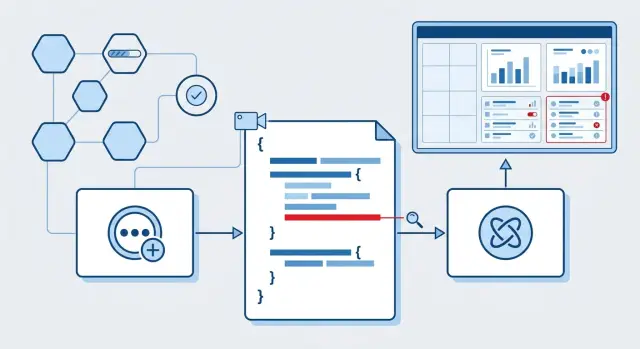
Table of Contents
What schema drift looks like in real systems
Most schema breaks do not start with a big rewrite. They start with a small cleanup that looks harmless. A team changes customerId to clientId, updates its own code, sees green tests, and ships.
Nothing looks wrong at first. The service that owns the API still returns valid JSON. Its main screens still work. Basic automated checks still pass because they use fresh mocks or only cover the most common path.
The problem sits somewhere else. Another service still reads the old field name. Maybe it fills in an invoice, routes a support case, or attaches usage data to the right account. That code may run only when a user upgrades, retries a failed payment, or imports older data. The dependency is real, but it stays hidden until that less common path runs in production.
That is what schema drift usually looks like. One side changes faster than the other side notices. Nobody broke the system on purpose. Each team changed a small part and assumed the contract was still close enough.
A simple example makes the risk obvious. Service A used to send this payload:
{ "userId": 42, "plan": "pro" }
Later, a developer renames the field:
{ "accountId": 42, "plan": "pro" }
Service B still looks for userId. On the normal checkout path, a fallback fills the missing value, so tests stay green. On a rare renewal flow, there is no fallback. The renewal fails after release, and support only sees that some customers cannot complete a step that worked yesterday.
This kind of break is sneaky because the failure often shows up far from the change. Logs may show a null value, an empty object, or a silent skip instead of a clear error. By the time someone traces it back to the renamed field, the release is already out and the bug feels random.
Why hidden dependencies slip through
Most payload breaks start with one small edit in one service. A field gets renamed, a nested value moves, or a null turns into an empty array.
The team that made the change usually updates its own code and tests. That feels safe, but other parts of the system may still depend on the old shape. A worker, mobile app, admin screen, or partner sync can keep reading that old field for months without anyone noticing.
The dependency exists. It just stays invisible until two versions meet at the wrong time.
A few habits make this worse:
- Teams reuse old JSON examples in tests, so test data drifts away from real traffic.
- Mocks keep returning the old response, and CI stays green for the wrong reason.
- Services ship on different days, so one side changes long before the other side sees it.
- Docs usually trail the code, especially for "small" payload edits.
Ownership is another weak spot. One team owns the endpoint, another owns the client, and a third owns a background job that also reads the same payload. Each team checks its own part, but nobody checks the full request and response shape from end to end.
A common case looks harmless. One service renames customer_type to segment and updates its tests. Another repo still uses a frozen mock with customer_type, so its tests pass too. Staging may stay quiet if those versions never meet there. Production is where the mismatch finally shows up.
Fast teams run into this all the time. Passing tests often prove only that each service works on its own. They do not prove that the handoff between services still works.
What to watch in every payload
A payload can look fine in logs and still break another service. Small changes hide in plain sight: a renamed field, a deeper nested path, or a type that shifts from "42" to 42.
Start with names and paths. If user.email becomes account.email, or items[0].price moves under totals.price, code that reads the old path now gets nothing. The same thing happens when a field still exists but moves one level down. Top-level fields are only part of the story. Nested objects often cause the real trouble.
Then look at fields other services quietly depend on. A field may be marked optional in a schema, but another service may still expect it every time. When that field disappears, the failure often looks unrelated. An invoice may stop sending, or a report may show blank rows, even though the API call itself returned 200.
Type changes deserve the same attention. A string that becomes a number can break sorting, formatting, or simple text joins. Null handling matters too. Older code may handle an empty string just fine, then crash or skip logic when it gets null instead.
A short checklist helps:
- Compare full field paths, not just field names.
- Treat missing fields as breaks, even when a replacement field exists.
- Flag type changes early, especially string-to-number swaps.
- Test
null, empty string, missing field, and empty array as separate cases. - Check whether older parsers reject unknown fields instead of ignoring them.
That last point surprises people. Many parsers ignore extra data, but some strict validators reject the whole payload when they see one new property. If your team still supports older internal tools, test that case on purpose.
One practical habit goes a long way: keep real sample payloads for the flows you care about, such as create, update, search, errors, and webhooks. If a changed payload still matches those examples, you lower the odds of shipping a quiet break.
How to check payloads in CI
Schema drift often starts with a small change that looks harmless in review. A field gets renamed, a nested object moves, or a nullable value turns into a string. The code still compiles, but another service reads the old shape and breaks later.
The safest CI checks start with real traffic samples, not made-up test data. Save a few request and response bodies from normal flows in staging or a stable dev setup. Pick common cases and one or two edge cases, then keep those samples in the repo so the team can review them like code.
Put schema files next to the code that owns them. If a handler returns an order payload, keep the schema near that handler. If a client reads that payload, keep the expected shape near the client tests. That makes changes easy to spot in a pull request.
A practical CI flow
A good pipeline is usually small and strict:
- Generate current payloads from tests or fixtures.
- Compare them with saved schemas and sample snapshots.
- Fail the build when a field disappears, gets renamed, or changes type.
- Allow additive changes only when consumers can ignore them.
- Require the schema update in the same pull request.
Run this in the producer repo and the consumer repo. The producer proves it still sends the agreed shape. The consumer proves it can still parse what the producer sends today. If only one side checks, the gap stays hidden until release.
Snapshot tests help, but snapshots alone get noisy. Schema validation catches structure changes with less churn. A simple mix works well: use snapshots for a few real payloads and schema checks for the full contract.
This matters even more if your team is using AI coding tools. They can rename fields cleanly across one codebase and still miss another service that depends on the old name. That is why practical guardrails matter: keep the check close to the code, fail early, and make the contract visible to everyone who touches it.
If the build fails on a payload change before merge, you fix it in minutes. If it slips to production, you spend the afternoon reading logs.
How to use staging captures without noise
Staging captures work best when the sample set stays small. You do not need every request your app can produce. Pick a few real flows that cover the places where breakage hurts most, such as signup, login, checkout, invoice creation, or a webhook from a partner service.
That small set gives you signal instead of clutter. If you capture hundreds of payloads, people stop reading the diffs. Then the drift slips through anyway.
Keep samples clean and easy to compare
Remove secrets and personal data before you store anything. Strip tokens, email addresses, phone numbers, IDs that point to real people, and any free-text fields that may contain private details. If a field changes every run, mask it or replace it with a fixed placeholder.
Then group samples by endpoint and use case, not by date. One folder per endpoint is usually enough, with names that explain the scenario. A file called create-order-guest.json tells you much more than capture-17.json.
Keep the set small:
- one sample for the common path
- one sample for an edge case you care about
- one sample for each partner callback or webhook
- one sample for old clients if you still support them
Review payload diffs after every API change, even small ones. A renamed field, a missing nullable value, or a moved nested object can break a service that no one remembered to mention. The diff does not need to be perfect. It needs to be easy to read.
Refresh captures on purpose, not by accident. If your test run rewrites all stored samples automatically, people will approve changes they did not inspect. Keep the old capture until someone confirms the new payload is correct and explains why it changed.
A good rule is simple: new code can fail because of an unexpected diff, but it should never update the reference files on its own. That one habit prevents a lot of quiet breakage, especially when several services depend on fields that are not in any formal contract.
A simple example with one renamed field
A small rename can break production faster than a big rewrite. The order service sends a payload with customerPhone, and a developer cleans it up to phone because the new name feels shorter.
Nothing else changes. The endpoint still returns a valid response, the status codes stay the same, and the order service tests all pass.
The problem sits in billing. That service still reads customerPhone when it prepares receipts and payment follow-up messages. After the rename, billing gets the payload, finds no customerPhone, and quietly stores an empty value.
Each service looks fine on its own, but the connection between them changed.
Unit tests often miss this for a simple reason: old mocks lie. Billing tests still use sample payloads copied months ago, and those fixtures still include customerPhone. Order service tests also pass because they only check that a phone value exists, not which field name other services expect.
A CI check catches the problem earlier. It compares the current payload against the known contract or a recent staging capture, sees that customerPhone disappeared, and fails the build before release.
The fix does not need drama. Most teams can handle it with a short transition:
- ship
phoneandcustomerPhonetogether - update billing to read
phone - watch staging and production logs for old field usage
- remove
customerPhonein the next release cycle
That extra release is usually worth it. It gives downstream services time to catch up, including the ones nobody remembered during planning.
A realistic team rule helps here: do not ship a hard field rename unless CI proves every consumer moved first. It sounds strict, but it prevents the kind of bug that appears only after real orders start flowing.
Mistakes teams make
Schema drift usually starts with edits that feel harmless. A team renames one field, changes an optional value to null, or drops a field nobody seems to use. The break shows up later in a worker, report, or mobile client that nobody checked that day.
A common mistake is trusting unit tests built on handmade fixtures. Those tests verify the shape people remember, not the payloads services actually send. A fixture can sit untouched for months while the real API changes types, adds nested fields, or starts returning null where it used to send an empty string.
Teams also give staging too much credit. Staging helps, but it rarely has the same messy data, old client versions, retries, and odd user states as production. If staging is the only place you look for contract problems, you are testing a thin slice of reality.
Documentation creates a quieter failure. Someone updates the docs after a payload change and assumes the work is done. The test samples, mock responses, and recorded examples stay old, so the next developer builds against the wrong payload with full confidence.
Null and optional fields trip teams more often than renamed fields. A field can still be present in the schema and still break consumers when its meaning changes. Null instead of an object, a missing nested field, or an empty array where code expects one item can cause bad logic long before anyone sees an obvious error.
Another mistake is changing payloads with no rollback plan. Before a team ships a contract change, it should know how to restore the old response, support both versions for a short time, or gate the change behind a flag. Without that plan, a five-minute deploy can turn into a day of cleanup.
A short review before merge catches a lot:
- Compare CI samples with recent captured payloads, not just old fixtures.
- Check nested types, nulls, and missing optional fields.
- Decide how you will roll back before you change the contract.
This work is not glamorous, but it saves real time. Twenty minutes spent checking payload validation in CI usually beats two days spent tracing a broken dependency after release.
Quick checks before you deploy
A release is the worst time to learn that one service still expects customer_id while another now sends clientId. Most schema drift is small on paper and expensive in production. A two-minute check before deploy often saves an hour of tracing logs later.
Look at the payload diff, not just the code diff. A harmless refactor inside one service can still change what other services receive, store, or validate.
Before you push a release, check five things:
- Did any field name change, even by case or style, like
user_idtouserId? - Did any required field disappear, move, or become nullable?
- Did a type change, such as a string ID turning into a number?
- Did you compare fresh staging captures with payloads from the last release?
- Did both service owners read the diff and agree that the change is safe?
The staging comparison matters more than many teams expect. Tests usually cover the happy path, but staging captures show what the system actually sends after serializers, feature flags, and defaults do their work. If the current staging payload does not match the last good release, pause and explain every difference.
The shared review matters too. One team may see a rename as cleanup, while the downstream team sees a breaking change hidden inside a familiar response. A short review between both owners catches that gap fast.
Block the deploy if any diff feels hard to explain in one sentence. If you cannot say why a field changed, whether it stays required, and who depends on it, the change is not ready.
This check works because it focuses on what crosses service boundaries. That is where silent breakage usually starts.
What to do next
Pick one workflow that hurts when it breaks, and start there. A signup flow, invoice creation, or order handoff is enough. You do not need to map every service this week.
Then capture a baseline from two places: the payloads your tests already send in CI, and real requests and responses from staging. CI tells you what your team expects. Staging shows what your system actually sends when several services talk to each other.
Keep the first rollout small:
- Save a known-good request and response for one workflow in version control.
- Add one check that fails when a field disappears or a name changes.
- Compare CI payloads with recent staging captures on every release branch.
- Assign one owner for the producer and one owner for the consumer.
- Write down who approves a schema change before it ships.
Keep the first rule narrow. Removed or renamed fields cause a lot of damage, so start there. If customerId becomes clientId and one older worker still reads the old name, your tests may stay green while production data quietly breaks.
Ownership matters more than teams expect. When nobody owns both sides of an API change, drift turns into a guessing game. One person should answer, "Can we change this field?" Another should answer, "What depends on it today?"
Do not chase perfect contract testing on day one. A lean setup catches most of the pain: baseline payloads, one drift rule, staging samples, and clear owners. That is usually enough to stop the silent breaks that waste a full afternoon.
If you need outside help setting this up without adding layers of process, Oleg Sotnikov at oleg.is works as a Fractional CTO and startup advisor on lean CI, production infrastructure, and AI-augmented development workflows. For small teams, that kind of practical review is often enough to catch contract problems before they turn into release-day bugs.