AI staff planning when engineers ship more, not just faster
AI staff planning should shift work across QA, product, and ops so teams do not cut roles blindly and create new bottlenecks.
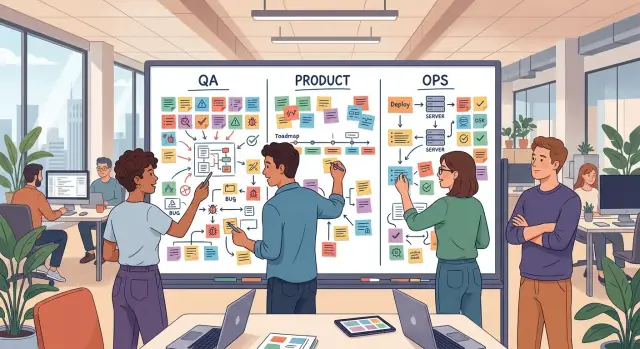
Table of Contents
Why faster engineering creates a new staffing problem
AI changes output first. It doesn't remove the rest of the work.
When engineers can produce twice as many features, fixes, and experiments, someone still has to review that work, test it, release it, watch it in production, and deal with the fallout when something breaks. That is where AI staff planning often goes wrong. Leaders see more tickets closed and assume they can cut headcount or freeze hiring. On paper, the math looks clean. In practice, the pressure moves sideways.
A team that ships more code usually creates more work for QA, product, ops, and support. Engineers may look faster than ever, while QA falls behind by three days, product can't review specs quickly enough, and ops spends nights handling release issues. Nobody feels short on work. They feel short on slack.
The problem gets worse when AI output is uneven. Some code is fine on the first pass. Some needs cleanup, deeper review, or a rollback plan. If the team skips that work because output looks high, speed turns into rework.
Where the extra work actually goes
When engineers close tickets faster, the workload doesn't disappear. It moves to the people who check the work, answer product questions, ship releases, and handle user fallout.
QA usually feels it first. More code changes mean more test runs, more regression risk, and more odd behavior at the edges. Even when AI helps engineers write cleaner code, testers still need to confirm that flows work together and that one fix didn't break something three screens away.
Product gets pulled in harder too. Faster output creates a faster decision loop. Engineers ask for answers sooner, surface more alternatives, and hit unclear requirements earlier. A product owner who kept up before can become a bottleneck once the team starts producing twice as many workable changes each week.
Ops grows in a quieter way, but it still grows. More shipped changes usually mean more deployments, more monitoring checks, more release coordination, and more rollback calls when something slips through. A team can write code faster and still slow down in production because nobody planned for the extra release load.
Support often sees the strain before anyone else. Users hit edge cases that planning missed, especially when features ship in smaller and more frequent batches. Those reports bounce back to product, QA, and engineering, which adds another loop of work.
You can see this quickly in a small startup. Engineers finish more tickets each sprint. QA has to test more combinations and bug fixes. Product answers more scope and priority questions. Ops handles more deploys and post-release checks. Support gets more reports from real usage.
That is why AI staff planning should focus on work volume, not just engineer output. If one part of the team speeds up, the rest of the system has to absorb that pace. Teams that miss this often cut the wrong role and create a new bottleneck a month later.
How to map workload before changing headcount
Good AI staff planning starts with work, not org charts. If engineers now produce twice as many changes, the rest of the team rarely stays flat. Review, testing, release prep, support, and product decisions usually grow first.
Start with the last two or three release cycles. Write down the real work each role handled, not the job title on paper. A product manager may have spent hours clarifying edge cases. A senior engineer may have acted as QA. An ops person may have cleaned up rushed releases at night.
Use a simple table with four columns: task, owner, time spent, and release impact. Keep it plain. If a task happened every cycle, count it. If it blocked a release once and ate half a day, count that too.
Then split the work into two groups. One group is work AI clearly sped up, such as writing first drafts of code, tests, or docs. The other is work that still needs human judgment, such as reviewing risky changes, deciding product tradeoffs, checking odd bugs, and approving releases. This is where many staffing mistakes show up.
Numbers help more than opinions. Track a small set for each release cycle:
- Bugs found after merge or after release
- Average review time for pull requests
- Releases delayed, rolled back, or patched fast
- Support tickets tied to recent changes
- Time product or design spent answering new questions
Look for pileups, not just totals. If coding time fell but review time doubled, moving another person out of QA will hurt. If product decisions sit open for days, more code output will only create a larger queue.
Change one responsibility at a time. Move test case writing, or release checks, or triage ownership. Then watch the numbers for one or two cycles before you move the next piece. Small shifts show cause and effect. Big reorganizations hide it.
This is often where outside CTO help is useful. The goal isn't to cut heads fast. It's to show where human attention still limits throughput. A team that ships more code needs a map of follow-on work, or the bottleneck just moves one step downstream.
How QA changes when code output jumps
When engineers ship more code each week, QA rarely gets lighter. It changes shape.
The first gap shows up in coverage. More features, more fixes, and more edge cases land in the same release window. AI can help engineers write tests faster, but coverage still lags behind code volume. Generated tests often stick to the happy path because that path is easiest to infer from the code. Real users do stranger things. They refresh at the wrong moment, switch devices, enter messy data, or leave a task halfway through.
That is why manual QA still matters. Testers catch flow breaks, confusing states, and odd user paths that automated checks miss. A checkout may pass unit tests and still fail when a discount, an expired session, and a mobile browser collide.
QA also spends more time on triage when AI creates noisy fixes. A developer can ship five small patches in a day, but each patch can touch something unexpected. QA then has to sort real regressions from harmless changes, confirm severity, and decide what blocks a release. That judgment takes time.
The work usually shifts in a few clear ways. Regression testing needs tighter priorities. Bug reports need clearer severity rules. Release candidates need stricter stop-or-go checks. Test environments need to match production more closely.
This is why QA leads often need better release gates, not fewer hours. If code output jumps but release rules stay loose, testers become a last-minute safety net and the team misses problems until customers report them. A better setup defines what must pass before release, which areas always get manual checks, and which bugs can wait.
In AI staff planning, cutting testers first is usually a mistake. Keep routine clicking low where automation helps, but protect the work that needs human judgment: triage, exploratory testing, and release control. When code arrives faster, QA becomes more important, not less.
What product and design need to keep pace
When engineers ship more code each week, product and design feel the pressure early. AI staff planning often breaks down here because leaders watch output but miss the extra decisions behind that output.
Product work has to get smaller and clearer. A rough idea that once sat in grooming for days can reach build stage almost at once when engineers use AI well. If the brief is fuzzy, the team doesn't move faster. It just produces the wrong thing sooner.
That changes the product manager's job. They need to turn broad requests into tighter calls on scope, rules, and priority. They also need to answer questions faster, because engineers no longer spend as much time stuck on basic implementation.
Design changes in a similar way. The bottleneck often isn't the main screen. It's the messy detail around it: error states, empty states, mobile layouts, role permissions, strange user inputs, and the words people actually read. Copy matters more than many teams expect, because vague labels and weak error messages create support work later.
Before work reaches the build stage, a short filter helps. What user problem does this solve? What is in scope right now? Which edge cases need a decision first? What copy or UX detail could confuse people? Who can reject the idea if it isn't strong enough?
Backlogs can also get worse, not better. Engineers usually finish the easy items first when AI raises throughput. What remains is a pile of harder, less defined work. On paper, the backlog shrinks. In practice, the unclear part grows.
Picture a five-person team that used to finish ten tickets in a sprint and now finishes those same ten in four days. If product review still happens once a week and design only checks polished flows, engineers either wait or fill in the blanks themselves. Both options waste time.
That is why a healthy engineering team structure depends on stronger product and design flow, not just more coding speed. In many cases, better rejection and clearer decisions remove more friction than adding another engineer.
Why ops, support, and release work grow
When engineers produce more code each week, the rest of the team doesn't stay flat. Release work grows first. More changes mean more deployment steps, more environment variables, more feature flags, and more chances for one small config mistake to break something real.
This is another place where AI staff planning often goes wrong. Leaders see faster coding and assume they can cut people around the edges. In practice, the pressure moves into release checks, production monitoring, support, and incident handling.
A team that shipped once a week could get away with loose habits. A team that ships many times a day cannot. Someone has to confirm that settings match across staging and production, that rollback steps still work, and that the right people know what changed.
Monitoring gets harder when release volume rises. Alerts that worked fine before can turn noisy fast. Teams need to tune thresholds, group duplicate errors, and remove alerts that wake people up for no reason. If nobody does that work, the team starts ignoring the alert channel, which is worse than having fewer alerts.
Support feels the change too. New features create new questions, edge cases, and user confusion. Support teams need short notes that explain what changed, what users might see, and what the common failure points are. Without that handoff, support has to guess, and engineers get dragged into basic ticket triage all day.
Incident response needs a named owner, even on a small team. AI can speed up change, but it can't own the moment when production breaks at 2 a.m. One person should decide who investigates, who updates customers, who rolls back, and who writes the follow-up after the fix.
A few pressure points show up again and again:
- Deployments fail because config changed in one place but not another.
- Alert volume rises, but nobody cleans up the rules.
- Support hears about a feature from users before the team briefs them.
- Incidents bounce between engineers because ownership is vague.
Lean teams can handle high output, but only if release discipline keeps pace. This is one place where experienced CTO input helps: not by adding process for its own sake, but by making sure ops, support, and release work have clear owners before faster shipping turns into slower recovery.
A simple team example
A 12-person startup adds AI coding tools, and four engineers suddenly close about twice as many tickets as they did a month earlier. The dashboard looks great. Leaders see the jump in output and pause a planned QA hire because engineering seems to have caught up.
The slowdown shows up almost right away. The product changes so often that test coverage falls behind. Support starts sending more bug reports into the same channel where product questions already sit. The product manager spends hours sorting defects and answering edge-case questions instead of making feature calls.
Releases get messier too. Engineers finish work faster, but nobody has more time to check release notes, watch logs, or decide which fixes can wait. Small bugs don't look serious on their own, yet they pile up. A release that should take one afternoon now drags into two days because the team keeps stopping to triage new issues.
Nothing is wrong with the engineers. AI made code output jump, so the work around that code jumped too. QA has more to test. Product has more decisions to make. Ops has more release activity and more chances for something small to break.
The fix isn't a blunt headcount cut. The startup gets better results when it rebalances the team. It brings in QA help, even if that starts as one person with a clear testing role for a quarter. It gives bug triage a real owner instead of dumping it on the product manager. It sets a simple release routine so ops work doesn't depend on whoever happens to be online.
That is AI staff planning in practice. When output doubles, the answer is rarely "hire fewer people." It is usually "put people where the new work went."
Mistakes that create new bottlenecks
The first bad cut is usually QA. Teams see AI write unit tests and assume they can shrink test work right away. That looks neat on a spreadsheet, but it breaks fast in real life. More code means more behavior to check, more edge cases, and more chances for small regressions in login, billing, permissions, and mobile screens. AI can help write tests. It doesn't replace real review.
Product gets squeezed next. Engineers ship more drafts, more experiments, and more small changes, but product and design often keep the same meeting load. Then PMs spend half the week in status calls while backlog questions pile up. Designers rush approvals. Acceptance criteria get thin. The team doesn't slow down because engineers got weaker. It slows down because decisions, review, and prioritization didn't grow with output.
Ops gets hit in a quieter way. If engineers merge more work, someone has to handle more releases, config changes, alerts, rollback checks, and support handoffs. Teams often expect ops to absorb that extra load without better release tooling. That is where queues start to form. A team can ship code every day and still wait on deployment windows, manual checks, or one tired person who knows the production setup.
Another common mistake is changing several roles at once. If you cut QA, reduce product time, and ask ops to cover more releases in the same month, you won't know what caused the slowdown. You only know the team feels messy.
A better move is boring, but it works. Change one staffing assumption at a time. Track where work waits for review or approval. Watch escaped bugs, release delays, and on-call load. Keep product and QA close to the pace engineers can now sustain.
An outside lead can help here because they can spot the real queue before a team cuts the wrong function and spends the next quarter undoing it.
Quick checks before you move roles
A jump in output doesn't mean you can pull people out of QA, product, or ops right away. Many teams see review time drop in one place and rise somewhere else. Engineers merge faster, but product managers answer more edge-case questions, QA spends longer checking odd behavior, and ops handles more releases.
Use a short check before you move anyone.
Track review time by role, not just total cycle time. If engineers spend 20 minutes less per change but QA or product spend 30 minutes more clarifying behavior, you didn't save time. You moved it.
Compare escaped bugs from before and after AI coding tools. Unit tests may look fine while more issues leak into real user flows, billing rules, permissions, or odd account states.
Ask support what changed in tickets. Volume matters, but ticket type matters more. "How do I do this?" points to product clarity. "This broke after the last update" points to release risk.
Watch releases and on-call load. If deploys slip, incidents rise, or nobody owns rollback steps, the team already has a gap.
A small example makes this clear. Two engineers start using AI and ship twice as many small changes each week. On paper, headcount looks fine. A month later, the PM spends half the week answering edge cases, one QA person becomes the bottleneck, and the on-call engineer dreads every Friday release. That is an AI staff planning problem, not a people problem.
Wait for these signals to stay stable across a few release cycles before you move roles. If bug leakage stays low, support tickets stay normal, and ops stress doesn't rise, then a staffing change may be safe. If those numbers drift in the wrong direction, faster engineering is only pushing work into another queue.
What to do next
Don't change the whole org chart at once. Start with one team, run one release cycle, and measure what actually changed. Good AI staff planning starts small, because output can rise fast while QA, product, and ops work pile up more slowly and stay hidden for a few weeks.
Track a short set of numbers during that test cycle. Count shipped tickets, bugs found after merge, QA wait time, release prep time, and support or ops tasks tied to the release. If one line moves up while another starts to drag, you found the next bottleneck.
Write down role boundaries before people start filling every gap by habit:
- Engineering owns implementation, code review, and basic test coverage.
- QA owns risk checks, test depth, and release confidence.
- Product owns scope, priorities, and acceptance rules.
- Ops owns deployment, monitoring, and incident response.
These lines don't need to be rigid, but they do need to be clear. When teams skip this step, the fastest engineers end up doing release work, product cleanup, and bug triage on top of coding. Output looks high for a sprint or two, then delivery slows down again.
A neutral outside view can help when the team argues from instinct instead of evidence. Oleg Sotnikov at oleg.is works with startups and small businesses on fractional CTO work, infrastructure, and AI-augmented software delivery. In a situation like this, an outside review is useful when you need to see where work is actually piling up before you hire, move roles, or cut costs.
After that first cycle, keep the changes that reduced waiting. Roll back the ones that only moved the queue from one person to another.


