Startup advisor to operator: a safe way to widen the role
Startup advisor to operator works best in stages. Start with review calls, test pace and trust, then hand over decisions with clear scope.
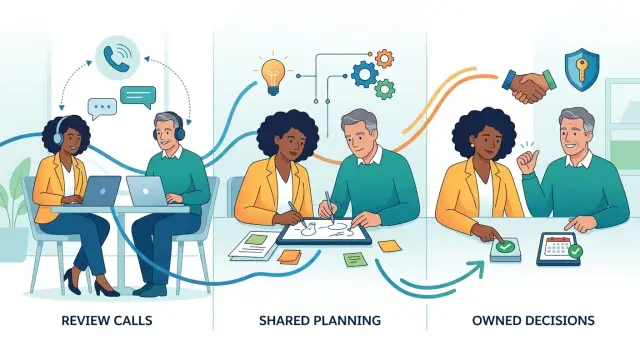
Table of Contents
Why this shift gets messy fast
Founders usually ask for outside help when the product feels stuck, hiring gets shaky, or delivery starts slipping. They want clear judgment and someone who has seen the pattern before. But many founders still keep every final call, even on small issues. That splits responsibility from the start.
An advisor can spot bad planning, fuzzy roles, or weak team habits in one meeting. They still can't change behavior from the outside. One call a week won't fix how people estimate work, raise risks, or ship code if the same approvals stay in place.
Teams notice this faster than founders do. They hear the advice, then go back to the founder because that's where decisions have always lived. So the roadmap, hiring call, or release plan stalls while everyone waits for permission that never came during the meeting.
That's why the move from startup advisor to operator gets awkward. The title expands before authority does. A founder may want operator-level results, but offer only review access, partial data, and no direct control over priorities, budget, or people.
A fractional CTO transition often breaks for the same reason. The advisor gets judged on delivery but can't hire, change process, or tell a team lead to stop a bad plan. The founder stays overloaded, the team stays cautious, and nobody owns the next move once the meeting ends.
This gets worse when the company wants habit change, not just a better opinion. If engineers still wait for the founder to settle every disagreement, the advisor can't create a faster rhythm. If product changes still need founder approval line by line, the team learns that meetings are for discussion, not action.
Words make this worse. "Help more" can mean "join two extra calls" to one side and "own this function" to the other. Those are different jobs.
A small startup can feel the problem in a week. An advisor says the team should cut scope and ship a simpler release. Everyone agrees. Three days later, nobody has updated the plan, no one has told engineering what changed, and the founder is still the only person allowed to make the final call.
That's the mess. The advice exists, the problems are clear, and smart people are in the room, but action still has no owner. Until someone has the right to decide and the team knows it, the handoff stays half-finished.
What changes when advice becomes ownership
Someone on review calls can stay one step away from the mess. They look at options, point out tradeoffs, and give an opinion. The founder or team lead still makes the call, takes the risk, and lives with the result.
Ownership changes that completely. Once someone owns a function, their job is not to comment on plans. Their job is to make decisions, set deadlines, clear blockers, and answer for the outcome.
This is where teams get confused during a startup advisor to operator shift. The calendar may look similar at first. The conversations do not. A review call often ends with, "Here are three paths." Owned work ends with, "We picked this path, Sam will do it by Thursday, and we will cut scope if the API slips again."
Advice can stay broad. Ownership has to get specific.
An operator needs room to do a few things that an advisor often can't:
- choose between competing priorities
- say no to work that doesn't fit the plan
- move deadlines when reality changes
- push people to follow through
If the founder wants full control over every decision, the role has not expanded yet. It's still advisory work with more meetings.
You can see this quickly in a fractional CTO transition. On the advisory side, someone may review architecture, comment on hiring plans, and flag risks in weekly calls. On the operator side, that same person may pause a feature, open a search for a backend hire, cut a vendor, or change the release order after an outage. Those are real decisions with real cost.
Good ownership also leaves visible proof. Features ship. Hiring moves. Cloud spend drops. The team deals with fewer repeat incidents. If nothing changes except the amount of advice, nobody owns the result.
One more shift matters: the operator must be able to reset priorities. Startups change direction all the time. New sales calls come in. A customer escalates. A launch slips. If the person carrying the work can't say, "We stop this and handle that first," they do not have enough authority to succeed.
That can feel uncomfortable for founders. It should. Handing over decision power is a real change, not a nicer title. If both sides want better execution, ownership needs clear space, clear limits, and visible results within weeks, not vague improvement someday.
How to test the move step by step
Most founders get into trouble when they widen a role in one jump. A safer move is to test the relationship in one small area first, with real work, real access, and one date when both sides decide what happens next.
Use a short trial that looks like actual operations, not loose advice. Four weeks is often enough to see pace, trust, and whether the founder and advisor solve problems in a similar way.
Start with one review call on a fixed rhythm. Once a week works well for most teams. After each call, ask for short written notes with decisions, risks, and next actions. If the notes stay vague, the role is still too soft.
Then pick one area to test. Choose something narrow enough to judge quickly, such as delivery, hiring, or cloud spend. Don't hand over the whole product or team at once.
Next, give the advisor one real decision they can make without chasing approval. That might mean reordering a sprint, saying no to a contractor, or cutting unused services below an agreed budget cap. If every choice still comes back to the founder, nothing changed.
Open the tools, numbers, and team chats they need. Access matters more than titles. If the person can't see backlog health, costs, incidents, and team context, they will guess instead of operate.
Finally, put a date on the role decision. At the end of the trial, decide whether to grow the role, keep it advisory, or stop. Don't let it drift.
A small startup bringing in a fractional CTO often tests ownership on cloud spend first. That's a smart place to start because the result is easy to see. If the advisor can cut waste, explain the tradeoffs, and keep the team moving, that says more than ten review calls.
This is where the startup advisor to operator shift becomes real. The founder learns whether this person can make sound calls with limited time and imperfect information. The advisor learns whether the company will give enough access to own outcomes, not just opinions.
If the trial goes well, widen the role by one more layer, not five. Add another area, another team, or a larger budget. Slow growth feels less dramatic, but it prevents messy handoffs and hard feelings later.
What access and authority the operator needs
If you want someone to own results, give them the inputs and room to act. A startup advisor to operator shift fails when the person carries responsibility on paper but still works through secondhand updates, delayed approvals, and polite guesses about what is really happening.
Direct access comes first. The operator needs to talk to engineers, design, product, support, and whoever hears customer complaints. If every question has to pass through the founder, decisions slow down and facts get softened. Small problems then sit for a week and turn into missed releases or repeat outages.
They also need the real numbers, not a cleaned-up summary. Delivery problems usually look smaller in meetings than they do in the actual data.
A good operator should be able to see the current deadlines and owners, the budget and committed spend, recent outages and recurring bugs, the backlog as it exists today, and which customers or internal teams are waiting on what.
This doesn't mean the founder gives up control of the company. It means the operator gets enough truth to make decent calls. If a fractional CTO transition starts without that access, the person can give opinions, but they can't improve outcomes.
Authority also needs clear edges. Budget is the easiest place to start. Set a spend limit and make the approval rules boring and simple. For example, the operator can approve tools or contractor work up to a fixed amount, and anything larger gets same-day founder approval. If nobody knows the rule, people stop and wait.
Priority changes need the same clarity. Say the operator can pause low-impact work when uptime, security, or a launch date is at risk. Then stick to it. If the founder reverses those calls in private messages, the team learns that ownership is fake.
Public backing matters more than most founders expect. Imagine the operator moves two engineers off a pet feature to fix a shaky release process. The team may grumble, but they will adapt if the founder says, "Yes, this is the call." If the founder says nothing, people keep lobbying upward and the handoff breaks.
The role is real when the operator can see the work, speak to the people doing it, spend within clear limits, and change priorities without fighting for permission every day. Without that, it's still advisory work with extra blame.
A simple startup example
A founder at a small SaaS company brings in an advisor for a weekly Friday product review. The calls go well. The advisor spots weak priorities, asks sharp questions, and helps the team cut ideas that don't matter.
Still, releases keep slipping.
The problem isn't strategy. It's the gap between Friday and the next Friday. On Monday, engineering wants to delay a feature and fix a billing bug first. On Tuesday, design asks whether to simplify onboarding or keep the original scope. On Wednesday, sales pushes for a customer request that would throw off the sprint. Nobody wants to make the tradeoff call, so the team waits for the founder.
The founder is already busy with hiring, fundraising, and customers. By the time a decision comes, two days are gone. Work piles up, people guess, then someone redoes it. That's where the advisor vs operator role becomes very clear. Advice helps, but nobody owns the midweek choices.
So they test a small change instead of making a big title change.
For 30 days, the advisor takes over delivery planning for one product area only. The founder keeps company strategy, budget, and hiring. The advisor gets enough authority to run the work day to day. That includes setting sprint scope, saying no to late feature requests, choosing between speed and polish, and pushing blocked decisions to the right person within hours instead of days.
The team also gives the advisor full access to the tools they need. They can see the backlog, join standups, read support issues, and talk directly with engineering and design. Without that access, the trial would turn into another review role with a different name.
The first week feels a little awkward. The founder jumps into a few threads. The team still asks for permission out of habit. By week two, the pace changes. Fewer tasks sit in limbo. Meetings get shorter because people know who decides. One release goes out on time. The next one goes out with fewer last-minute changes.
At the end of the month, the founder doesn't need a long debate. The team moved faster, missed fewer deadlines, and spent less time waiting. So the founder expands the role from review calls to owned decisions in a wider part of the product.
That's usually the safest startup advisor to operator move: one area, one trial, clear authority, and results the team can feel.
Mistakes that break the handoff
The startup advisor to operator move usually breaks for a simple reason: one side wants relief, but neither side changes how decisions happen. An advisor can give smart input from the outside. An operator needs room to act, clear goals, and enough truth to carry the risk.
The most common mistake is asking for ownership while keeping every approval with the founder. If the new operator still needs permission for hiring, priorities, budget, or customer promises, they do not own the outcome. They own the blame. That setup gets old fast.
Scope also widens too early. A founder has two good calls with an advisor, likes the energy, and hands over product, engineering, hiring, and process in the same month. That sounds efficient. It usually creates confusion, because trust has not had time to form under real pressure.
Pressure is where handoffs get tested. A delayed release, a missed sales target, or a hard people issue shows whether both sides work at the same pace. It's better to learn that with one area of ownership than with half the company.
Another mistake is hiding the ugly parts. If the founder doesn't share cash pressure, churn, debt, team conflict, or a weak customer pipeline, the operator makes clean plans on dirty data. Then everyone wonders why the plan missed.
This happens more often than people admit. A founder says, "Own engineering," but rewrites priorities after every sales call. An advisor steps into an operator role, but gets no access to numbers or customer feedback. The team hears two bosses giving different directions in the same week.
Changing goals every week breaks trust fast. Teams can handle a hard target. They can't handle a moving one. If the target changes, the founder should explain why, what stays fixed, and who now makes the call.
A quieter mistake is judging the role by activity instead of results. More meetings do not mean a better handoff. A calendar full of check-ins can hide the fact that nobody shipped a release, closed a hiring gap, or fixed the support backlog. Count outcomes instead. Did cycle time drop? Did delivery get more predictable? Did one bad process stop wasting ten hours a week?
A good handoff feels a little uncomfortable, because someone actually gave up control. If that discomfort never shows up, the role probably didn't change at all.
A quick check before you widen the role
Most failed handoffs don't fail on talent. They fail because the founder widens the role before the working conditions are clear.
That's why the move from startup advisor to operator should pass a few plain tests first. If even one of them gets a vague answer, keep the role narrow for now.
Five checks that catch trouble early
Ask whether this person can hear bad news and stay calm. If a missed deadline, a broken release, or a budget overrun turns into blame or drama, the team will hide problems. An operator needs the truth fast, even when it's ugly.
Check access next. If the new operator can reach the team only through the founder, a chief of staff, or one manager, decisions will stall. They don't need unlimited access, but they do need a direct path to the people who build, ship, sell, or support the work they own.
Then test decision clarity. Every person involved should be able to say, in one sentence, which calls belong to the founder and which belong to the operator. If people answer with "it depends" or give different versions, you're not ready.
Put the scope and money limits on one page. Keep it plain. List what this person owns, what they can spend without asking, what still needs approval, and which areas stay off limits. If it takes six pages to explain, the role is too fuzzy.
Set the review date before the trial starts. Not "soon" and not "after we see how it goes." Pick a real date, such as 30 days from now. That deadline forces both sides to look at results instead of running on gut feel.
A small example helps. Say a founder wants an advisor to take over delivery for one product team. A safe trial might give that person authority over sprint planning, bug priority, and contractor hours up to a set amount for four weeks. The founder still keeps hiring, pricing, and roadmap changes. At the end of the month, both sides review speed, team friction, and decision quality.
This is also where an outside operator, including a fractional CTO, proves they can work inside your company instead of around it. If the team shares bad news early, access is direct, ownership is clear, and the trial has a fixed end date, widening the role starts to look earned rather than assumed.
Next steps that keep the risk low
The safest move is usually smaller than founders expect. In a startup advisor to operator shift, start with one written agreement about the first slice of ownership, not the whole role. Pick one decision area, define what the person can decide alone, confirm what access they need, and set a review date before the work starts.
A short trial works better than an open-ended promise. Four weeks is often enough to see whether the pace matches, whether the founder answers fast enough, and whether the advisor can make calls without dragging every issue back into a meeting.
Keep the starting scope plain and specific. Name the exact area they own, such as release planning, vendor selection, or incident response. Give them the tools and data they need on day one. State which spending, hiring, or product limits still stay with the founder. Agree on how often you review decisions together, and set the date when both sides decide whether to widen the role.
After that, expand ownership one area at a time. If the first month goes well, add one more lane. A good sequence is technical delivery first, then team process, then budget or hiring input. That order keeps risk lower because the operator earns trust on work the team can see every week.
The founder still needs to stay close, but in a useful way. That means answering blockers fast, joining hard calls, and giving context the operator doesn't have yet. It does not mean reopening every decision after it is made. If the founder overrules small calls all week, the operator doesn't really own anything.
One simple rule helps: review patterns, not every single action. If three decisions in a row feel off, talk about the judgment behind them. If the decisions are sound, let the lane stay owned.
This is where many fractional CTO transition plans go wrong. The title changes first, but the authority never catches up. People notice that gap fast, and then the team starts routing every decision back to the founder.
If you need outside CTO help, Oleg Sotnikov at oleg.is can start with advisory work, learn the team, and take on owned decisions only after trust, access, and decision rights are in place. That's usually how the clean handoff happens.
Frequently Asked Questions
When should an advisor start owning decisions?
Start the shift when you want someone to make day-to-day calls, not just comment on them. If releases stall between meetings, people wait for founder approval, or nobody owns follow-through, move one narrow area from advice to ownership and test it first.
What is the real difference between an advisor and an operator?
An advisor gives judgment and points out tradeoffs. An operator picks a path, assigns work, resets priorities, and answers for the result. If the person cannot change scope, timing, or ownership, they still work as an advisor.
Why does this handoff usually break?
Most handoffs fail because the founder keeps the final say on too many small calls. The team hears advice, then runs back to the founder for permission. That leaves the outside leader with responsibility on paper and no room to act.
What should a founder hand over first?
Pick one area that you can judge fast. Delivery planning, cloud spend, vendor cleanup, or one product lane usually works well because you can see the result within a few weeks.
How long should the trial run?
Four weeks gives you enough time to see pace, trust, and decision quality without making a huge commitment. A shorter trial often feels like extra meetings, not real ownership.
What access does the operator need?
Give direct access to the team, the backlog, costs, incidents, and customer signals that affect the work. If they only see cleaned-up summaries or secondhand updates, they will guess instead of run the function.
How much authority should I give at the start?
Set clear limits before the trial starts. For example, let them reorder sprint work, pause low-value tasks, or approve spend up to a fixed amount. Keep founder approval for bigger budget, hiring, pricing, or company-level strategy until trust grows.
How do we know the trial worked?
Look at outcomes, not calendar activity. Did the team ship on time, cut waiting, close blockers faster, lower spend, or reduce repeat issues? If the work moves and people stop waiting for founder approval, the trial works.
What should the founder keep during the first test?
Keep company strategy, major budget calls, and the broad roadmap at first. That lets the founder stay close to risk while the new operator proves they can run one lane well.
What if the team still asks the founder for every decision?
Name the new decision owner in public and back their calls when the team pushes back. If people still route every choice to the founder, stop and fix that habit right away. The team needs one clear path for decisions.


